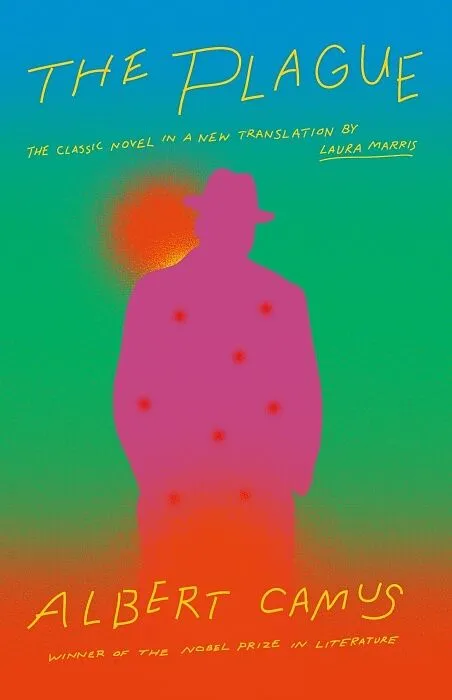
The Plague
Beschreibung
Informationen zum Autor Born in Algeria in 1913, ALBERT CAMUS published The Stranger --now one of the most widely read novels of this century--in 1942. He was awarded the Nobel Prize in Literature in 1957. On January 4, 1960, he was killed in a car accident. L...Format auswählen
- BroschiertCHF 19.20
- E-Book (epub)CHF 10.90
Wird oft zusammen gekauft
Andere Kunden kauften auch
Beschreibung
Informationen zum Autor Born in Algeria in 1913, ALBERT CAMUS published The Stranger --now one of the most widely read novels of this century--in 1942. He was awarded the Nobel Prize in Literature in 1957. On January 4, 1960, he was killed in a car accident. LAURA MARRIS is a writer and translator. Her book-length translations include Louis Guilloux's novel Blood Dark , which was short-listed for the 2018 Oxford-Weidenfeld Translation Prize. Her translation of Jean-Yves Frétigné's biography of Gramsci is forthcoming from the University of Chicago Press in 2021. She teaches creative writing at the University at Buffalo. Klappentext "The first new American translation in more than seventy years, bringing the Nobel Prize winner's iconic novel to a new generation of readers"-- Leseprobe PART ONE The curious events that make up this chronicle occurred in 194_, in Oran. By all accounts, they had no place there, being a bit out of the ordinary. At first glance, Oran is, in fact, an ordinary town and nothing more than a French prefecture on the Algerian coast. The city itself is undeniably ugly. Through the outward calm, it can take some time to notice what sets this commercial city apart from so many others along every latitude. How to picture, for example, a city without pigeons, without trees and gardens, where you encounter neither the beating of wings nor the rustling of leaves, in short, a neutral space? The changing seasons are only visible in the sky. Spring announces itself by the quality of the air or by the baskets of flowers the peddlers bring from the surrounding areas; this spring is hawked at market. In summer, the sun scorches the toodry houses and covers the walls with gray ash; then you can only survive in the shade of closed shutters. In fall, it's the opposite, a deluge of mud. The fine days come only in winter. One useful way to get to know a city is to find out how people work there, how they love there, and how they die there. In our little city, perhaps because of the climate, all these things are done together, with the same frenetic and absent attitude. In other words, people here get bored and concentrate on developing their habits. Our fellow citizens work hard, but always to make themselves richer. Above all, they are interested in trade and their first concern, in some form or other, is to do business. Naturally, they also have a taste for simple pleasures: they love women, the movies, and swimming in the sea. But very sensibly, they save these pleasures for Saturday night and Sunday, trying, on other days, to make a lot of money. In the evening, when they leave their offices, they meet up in the cafés at the same hour, they stroll on the same boulevards, or they sit out on the balconies. The desires of the youngest are violent and short, while the vices of the eldest don't surpass bocce ball leagues, charity banquets, and clubs where people risk high stakes on their luck at cards. You might say this isn't specific to our city and that in general all of our contemporaries are like that. Of course, nothing is more natural these days than to see people work morning till night before choosing to waste, at cards, in cafés, or in small talk, what time they have left to live. But there are some cities and countries where, from time to time, people get a hint of something more. Usually, it doesn't change their lives. There is only the hint, but at least it's a start. Oran, on the other hand, is apparently a city without hints, which is to say, a completely modern city. As a result, there's no need to specify the way we love around here. Men and women either devour each other quickly in the socalled act of love, or they engage in a long, two-person habit. Between these extremes, there is often no middle ground. That's also not very original. In Oran as in many places, without time and reflection, people have no choice but to ...
Autorentext
Born in Algeria in 1913, ALBERT CAMUS published The Stranger--now one of the most widely read novels of this century--in 1942. He was awarded the Nobel Prize in Literature in 1957. On January 4, 1960, he was killed in a car accident.
LAURA MARRIS is a writer and translator. Her book-length translations include Louis Guilloux's novel Blood Dark, which was short-listed for the 2018 Oxford-Weidenfeld Translation Prize. Her translation of Jean-Yves Frétigné's biography of Gramsci is forthcoming from the University of Chicago Press in 2021. She teaches creative writing at the University at Buffalo.
Klappentext
*“We can finally read the work as Camus meant it to be read. Laura Marris’s new translation of The Plague is, quite simply, the translation we need to have.” —Los Angeles Review of Books*
The first new translation of The Plague to be published in the United States in more than seventy years, bringing the Nobel Prize winner's iconic novel to a new generation of readers. • "A redemptive book, one that wills the reader to believe, even in a time of despair." —The Washington Post
The townspeople of Oran are in the grip of a deadly plague, which condemns its victims to a swift and horrifying death. Fear, isolation, and claustrophobia follow as they are forced into quarantine. Each person responds in their own way to the lethal disease: some resign themselves to fate, some seek blame, and a few, like Dr. Rieux, resist the terror.
An immediate triumph when it was published in 1947, The Plague is in part an allegory of France's suffering under the Nazi occupation, as well as a timeless story of bravery and determination against the precariousness of human existence. In this fresh yet careful translation, award-winning translator Laura Marris breathes new life into Albert Camus's ever-resonant tale. Restoring the restrained lyricism of the original French text, and liberating it from the archaisms and assumptions of the previous English translation, Marris grants English readers the closest access we have ever had to the meaning and searing beauty of The Plague.
This updated edition promises to add relevance and urgency to a classic novel of twentieth-century literature.
Leseprobe
PART ONE
 
The curious events that make up this chronicle occurred in 194_, in Oran. By all accounts, they had no place there, being a bit out of the ordinary. At first glance, Oran is, in fact, an ordinary town and nothing more than a French prefecture on the Algerian coast.
The city itself is undeniably ugly. Through the outward calm, it can take some time to notice what sets this commercial city apart from so many others along every latitude. How to picture, for example, a city without pigeons, without trees and gardens, where you encounter neither the beating of wings nor the rustling of leaves, in short, a neutral space? The changing seasons are only visible in the sky. Spring announces itself by the quality of the air or by the baskets of flowers the peddlers bring from the surrounding areas; this spring is hawked at market. In summer, the sun scorches the toodry houses and covers the walls with gray ash; then you can only survive in the shade of closed shutters. In fall, it’s the opposite, a deluge of mud. The fine days come only in winter.
One useful way to get to know a city is to find out how people work there, how they love there, and how they die there. In our little city, perhaps because of the climate, all these things are done together, with the same frenetic and absent attitude. In other words, people here get bored and concentrate on developing their habits. Our fellow citizens work hard, but always to make themselves richer. Above all, they are interested in trade and their first concern, in some form or other, is to do business. Naturally, they also have a taste for simple pleasures: they love women, the movies, and swimming in the …