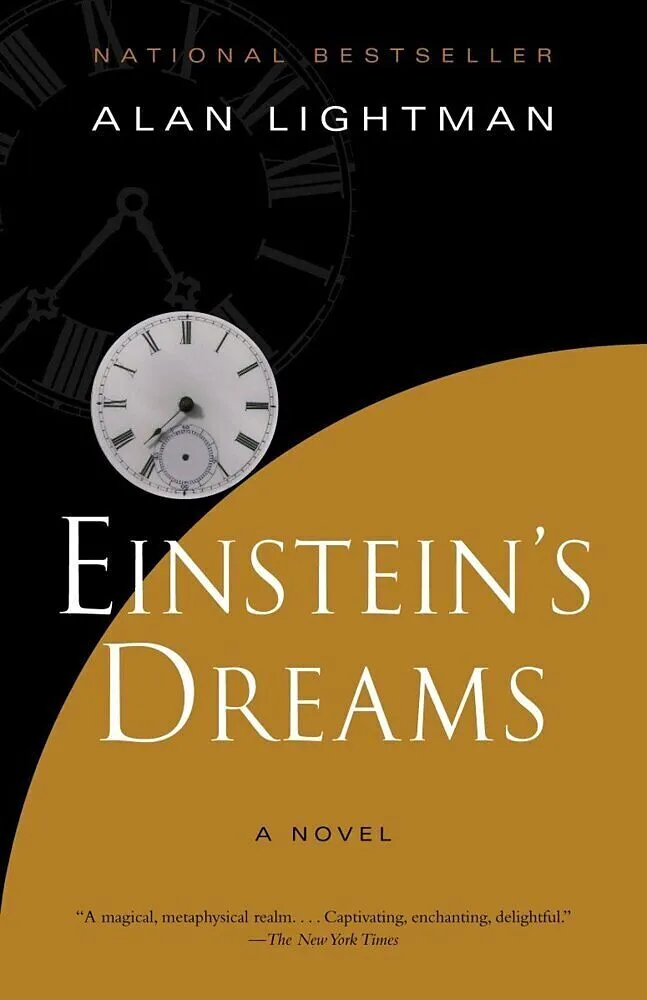
Einstein's Dreams
Beschreibung
Zusatztext A magical! metaphysical realm...Captivating! enchanting! delightful. The New York Times Endlessly fascinating. A beguiling inquiry into the not-at-all theoretical! utterly time-tangled! tragic and sublime nature of human life. -- The Boston Globe Li...Format auswählen
- Kartonierter EinbandCHF 22.30
Wird oft zusammen gekauft
Andere Kunden kauften auch
Beschreibung
Zusatztext A magical! metaphysical realm...Captivating! enchanting! delightful. The New York Times Endlessly fascinating. A beguiling inquiry into the not-at-all theoretical! utterly time-tangled! tragic and sublime nature of human life. -- The Boston Globe Lightman is an artist who paints with the notion of time. -- Los Angeles Times Informationen zum Autor ALAN LIGHTMAN is the author of seven novels, including the international best seller Einstein's Dreams and The Diagnosis , a finalist for the National Book Award. He has taught at Harvard and at MIT, where he was the first person to receive a dual faculty appointment in science and the humanities. He is the host of the public television series Searching: Our Quest for Meaning in the Age of Science . He is a professor of the practice of the humanities at MIT. Klappentext A modern classic, Einstein's Dreams is a fictional collage of stories dreamed by Albert Einstein in 1905, about time, relativity and physics. As the defiant but sensitive young genius is creating his theory of relativity, a new conception of time, he imagines many possible worlds. In one, time is circular, so that people are fated to repeat triumphs and failures over and over. In another, there is a place where time stands still, visited by lovers and parents clinging to their children. In another, time is a nightingale, sometimes trapped by a bell jar. Now translated into thirty languages, Einstein's Dreams has inspired playwrights, dancers, musicians, and painters all over the world. In poetic vignettes, it explores the connections between science and art, the process of creativity, and ultimately the fragility of human existence. Leseprobe 14 April 1905 Suppose time is a circle, bending back on itself. The world repeats itself, precisely, endlessly. For the most part, people do not know they will live their lives over. Traders do not know that they will make the same bargain again and again. Politicians do not know that they will shout from the same lectern an infinite number of times in the cycles of time. Parents treasure the first laugh from their child as if they will not hear it again. Lovers making love the first time undress shyly, show surprise at the supple thigh, the fragile nipple. How would they know that each secret glimpse, each touch, will be repeated again and again and again, exactly as before? On Marktgasse, it is the same. How could the shopkeepers know that each handmade sweater, each embroidered handkerchief, each chocolate candy, each intricate compass and watch will return to their stalls? At dusk, the shopkeepers go home to their families or drink beer in the taverns, calling happily to friends down the vaulted alleys, caressing each moment as an emerald on temporary consignment. How could they know that nothing is temporary, that all will happen again? No more than an ant crawling round the rim of a crystal chandelier knows that it will return to where it began. In the hospital on Gerberngasse, a woman says goodbye to her husband. He lies in bed and stares at her emptily. In the last two months, his cancer has spread from his throat to his liver, his pancreas, his brain. His two young children sit on one chair in the corner of the room, frightened to look at their father, his sunken cheeks, the withered skin of an old man. The wife comes to the bed and kisses her husband softly on the forehead, whispers goodbye, and quickly leaves with the children. She is certain that this was the last kiss. How could she know that time will begin again, that she will be born again, will study at the gymnasium again, will show her paintings at the gallery in Zürich, will again meet her husband in the small library in Fribourg, will again go sailing with him in Thun Lake on a warm day in July, will give birth again, that her husband will again w...
#8220;A magical, metaphysical realm...Captivating, enchanting, delightful.” —The New York Times
“Endlessly fascinating. A beguiling inquiry into the not-at-all theoretical, utterly time-tangled, tragic and sublime nature of human life.” --The Boston Globe
“Lightman is an artist who paints with the notion of time.” --Los Angeles Times
Autorentext
ALAN LIGHTMAN is the author of seven novels, including the international best seller Einstein’s Dreams and The Diagnosis, a finalist for the National Book Award. He has taught at Harvard and at MIT, where he was the first person to receive a dual faculty appointment in science and the humanities. He is the host of the public television series Searching: Our Quest for Meaning in the Age of Science. He is a professor of the practice of the humanities at MIT.
Klappentext
A modern classic, Einstein's Dreams is a fictional collage of stories dreamed by Albert Einstein in 1905, about time, relativity and physics. As the defiant but sensitive young genius is creating his theory of relativity, a new conception of time, he imagines many possible worlds. In one, time is circular, so that people are fated to repeat triumphs and failures over and over. In another, there is a place where time stands still, visited by lovers and parents clinging to their children. In another, time is a nightingale, sometimes trapped by a bell jar.
Now translated into thirty languages, Einstein's Dreams has inspired playwrights, dancers, musicians, and painters all over the world. In poetic vignettes, it explores the connections between science and art, the process of creativity, and ultimately the fragility of human existence.
Zusammenfassung
**NATIONAL BESTSELLER • A modern classic explores the connections between science and art, the process of creativity, and ultimately the fragility of human existence.
“A magical, metaphysical realm ... Captivating, enchanting, delightful.” —The New York Times
**
Einstein’s Dreams is a fictional collage of stories dreamed by Albert Einstein in 1905, about time, relativity and physics. As the defiant but sensitive young genius is creating his theory of relativity, a new conception of time, he imagines many possible worlds. In one, time is circular, so that people are fated to repeat triumphs and failures over and over. In another, there is a place where time stands still, visited by lovers and parents clinging to their children. In another, time is a nightingale, sometimes trapped by a bell jar.
Now translated into thirty languages, Einstein’s Dreams has inspired playwrights, dancers, musicians, and painters all over the world. In poetic vignettes, it explores the connections between science and art, the process of creativity, and ultimately the fragility of human existence.
Leseprobe
14 April 1905
Suppose time is a circle, bending back on itself. The world repeats itself, precisely, endlessly.
For the most part, people do not know they will live their lives over. Traders do not know that they will make the same bargain again and again. Politicians do not know that they will shout from the same lectern an infinite number of times in the cycles of time. Parents treasure the first laugh from their child as if they will not hear it again. Lovers making love the first time undress shyly, show surprise at the supple thigh, the fragile nipple. How would they know that each secret glimpse, each touch, will be repeated again and again and again, exactly as before?
On Marktgasse, it is the same. How could the shopkeepers know that each handmade sweater, each embroidered handkerchief, each chocolate candy, each intricate compass and watch will return to their stalls? At dusk, the shopkeepers go home to their families or drink beer in the taverns, calling happily to friends down the vaulted alleys, caressing each moment as an emerald on temporary consignment. How could they know that nothing is temporary, that all will happen again? No m…