
IHR WARENKORB IST AKTUELL LEER.
Haben Sie noch nichts passendes gefunden? Stöbern Sie durch unser komplettes Sortiment.
Oder melden Sie sich an bzw. registrieren Sie sich.
- Kostenlose Lieferung
- Kauf auf Rechnung
- Ex Libris Tiefpreis
- Filiallieferung und 650+ Abholorte
- Rabatt-Bons als Club-Mitglied
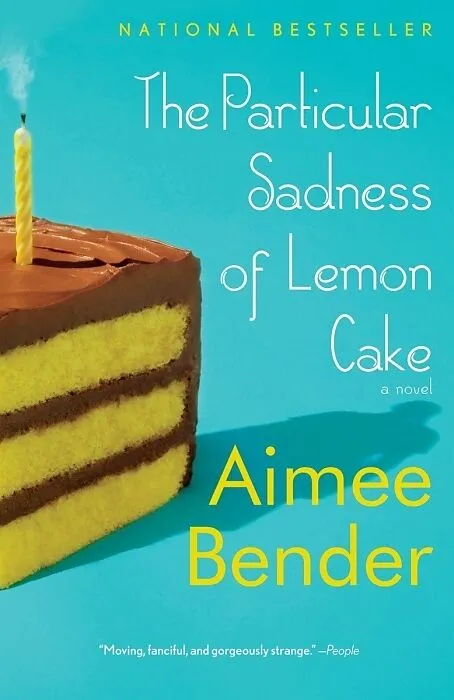
The Particular Sadness of Lemon Cake
Beschreibung
Zusatztext 40580783 Informationen zum Autor Aimee Bender is the author of the novels The Particular Sadness of Lemon Cak ea New York Times bestsellerand An Invisible Sign of My Own , and of the collections The Girl in the Flammable Skirt and Willful Creatures ...Format auswählen
- Poche format BCHF 21.10

Wird oft zusammen gekauft
Andere Kunden kauften auch
Beschreibung
Zusatztext 40580783 Informationen zum Autor Aimee Bender is the author of the novels The Particular Sadness of Lemon Cak ea New York Times bestsellerand An Invisible Sign of My Own , and of the collections The Girl in the Flammable Skirt and Willful Creatures . Her works have been widely anthologized and have been translated into sixteen languages. She lives in Los Angeles. Klappentext On the eve of her ninth birthday! unassuming Rose Edelstein bites into her mother's homemade lemon-chocolate cake and discovers she has a magical gift: she can taste her mother's emotions in the slice. To her horror! she finds that her cheerful mother tastes of despair. Soon! she's privy to the secret knowledge that most families keep hidden: her father's detachment! her mother's transgression! her brother's increasing retreat from the world. But there are some family secrets that even her cursed taste buds can't discern. It happened for the first time on a Tuesday afternoon, a warm spring day in the flatlands near Hollywood, a light breeze moving east from the ocean and stirring the black-eyed pansy petals newly planted in our flower boxes. My mother was home, baking me a cake. When I tripped up the walkway, she opened the front door before I could knock. How about a practice round? she said, leaning past the door frame. She pulled me in for a hello hug, pressing me close to my favorite of her aprons, the worn cotton one trimmed in sketches of twinned red cherries. On the kitchen counter, she'd set out the ingredients: Flour bag, sugar box, two brown eggs nestled in the grooves between tiles. A yellow block of butter blurring at the edges. A shallow glass bowl of lemon peel. I toured the row. This was the week of my ninth birthday, and it had been a long day at school of cursive lessons, which I hated, and playground yelling about point scoring, and the sunlit kitchen and my warm-eyed mother were welcome arms, open. I dipped a finger into the wax baggie of brown-sugar crystals, murmured yes, please, yes. She said there was about an hour to go, so I pulled out my spelling booklet. Can I help? I asked, spreading out pencils and papers on the vinyl place mats. Nah, said Mom, whisking the flour and baking soda together. My birthday is in March, and that year it fell during an especially bright spring week, vivid and clear in the narrow residential streets where we lived just a handful of blocks south of Sunset. The night-blooming jasmine that crawled up our neighbor's front gate released its heady scent at dusk, and to the north, the hills rolled charmingly over the horizon, houses tucked into the brown. Soon, daylight savings time would arrive, and even at nearly nine, I associated my birthday with the first hint of summer, with the feeling in classrooms of open windows and lighter clothing and in a few months no more homework. My hair got lighter in spring, from light brown to nearly blond, almost like my mother's ponytail tassel. In the neighborhood gardens, the agapanthus plants started to push out their long green robot stems to open up to soft purples and blues. Mom was stirring eggs; she was sifting flour. She had one bowl of chocolate icing set aside, another with rainbow sprinkles. A cake challenge like this wasn't a usual afternoon activity; my mother didn't bake all that often, but what she enjoyed most was anything tactile, and this cake was just one in a long line of recent varied hands-on experiments. In the last six months, she'd coaxed a strawberry plant into a vine, stitched doilies from vintage lace, and in a burst of motivation installed an oak side door in my brother's bedroom with the help of a hired contractor. She'd been working as an office administrator, but she didn't like copy machines, or work shoes, or computers, and when my father paid off the last of his l...
“Moving, fanciful, and gorgeously strange.” *—People
*“One of the year’s highlights. Intense and compelling.” *—The Oregonian
*
“Marvelous. . . . Few writers are as adept as Bender at mingling magical elements so seamlessly with the ordinary.” *—San Francisco Chronicle
*“A richly imagined, bittersweet tale.” *—Vanity Fair
*“Convincing and elegant. . . . A novel with a deeply involving plot, one full of provocative ideas.” *—The Boston Globe
*“Extraordinary. . . . Not just a deeply felt novel but one of the most inventive pieces of food writing in recent memory.” *—Time Out New York
*“Profound and eye-opening. . . . You feel—that rare and beautiful gift from a truly great book—woken up and unalone.” *—The Globe and Mail (Toronto)
*“Rose is an irresistible narrator: warm, witty and sharply observant. . . . Exuberant, life-affirming.” *—The Miami Herald
*“Oddly beautiful. . . . Will tempt you to see what talented writers can do when they rip little tears in the fabric of reality.” *—The Washington Post
*“The fairy-tale elements in her writing, far from seeming outlandish, highlight the everyday nature of her characters’ flaws and struggles. In Ms. Bender’s stories and novels, relationships and mundane activities take on mythic qualities.” *—The Wall Street Journal
*“Charming and wistful. . . . [Rose] studies her world with the thoroughness of a scientist but records her observations with the eye and ear of a poet.” *—The Atlantic
*
“The fabulist elements of The Particular Sadness of Lemon Cake are stunning, but what makes this novel a keeper is the sheer beauty of the language Bender uses to describe love.” —NPR, “Books We Like”
*
*“[The Particular Sadness of Lemon Cake] has the narrative momentum and clockwork plotting of any good mystery, but its bleak whimsy and clear-eyed rendering of domestic sorrow are Bender’s own. . . . Splendid.” *—The Plain Dealer
“*Rose comes of age while unraveling family secrets as strangely lucid as they are nightmarish. At its core . . . The Particular Sadness of Lemon Cake encourages us all to make the most of our unique gifts while still finding a way to live in the so-called real world.” *—O, The Oprah Magazine
*“A dreamy novel. . . . This is one of the most pleasant books we’ve read all year.” *—The New York Observer
*
“Deftly written. . . . There is a . . . sweetness to the book that turns it into something out of the ordinary.” *—St. Louis Post-Dispatch
*“Bender is the master of quiet hysteria. . . . She builds pressure sentence by sentence. . . . A little hiss of steam comes off the novel.” *—Los Angeles Times
“A very special book.” —The Anniston Star
*
“Bender doesn’t write of ordinary people. She writes of magical creations, the things of fairy tales gone awry. . . . Part magic, part clean prose.” *—Denver Post
*“If you’ve ever wondered why people have such a hard time looking in strangers’ eyes as they walk down the street, this book, hard as it may be to face, is for you.” *—LA Weekly
*“There’s an evocative power in Bender’s work that lingers with a reader.” *—The Christian Science Monitor
*
“[Bender] produce[s] stories that make one grateful for being ordinary.” *—The Seattle Times
*
“[A] gentle, kindhearted novel. There’s a wistful quality to the almost fable-like tale that’s captured with near perfection in her understated prose. As in all fine novels, the Edelsteins’ story, in Aimee Bender…