Haben Sie noch nichts passendes gefunden? Stöbern Sie durch unser komplettes Sortiment.
Oder melden Sie sich an bzw. registrieren Sie sich.


Beschreibung
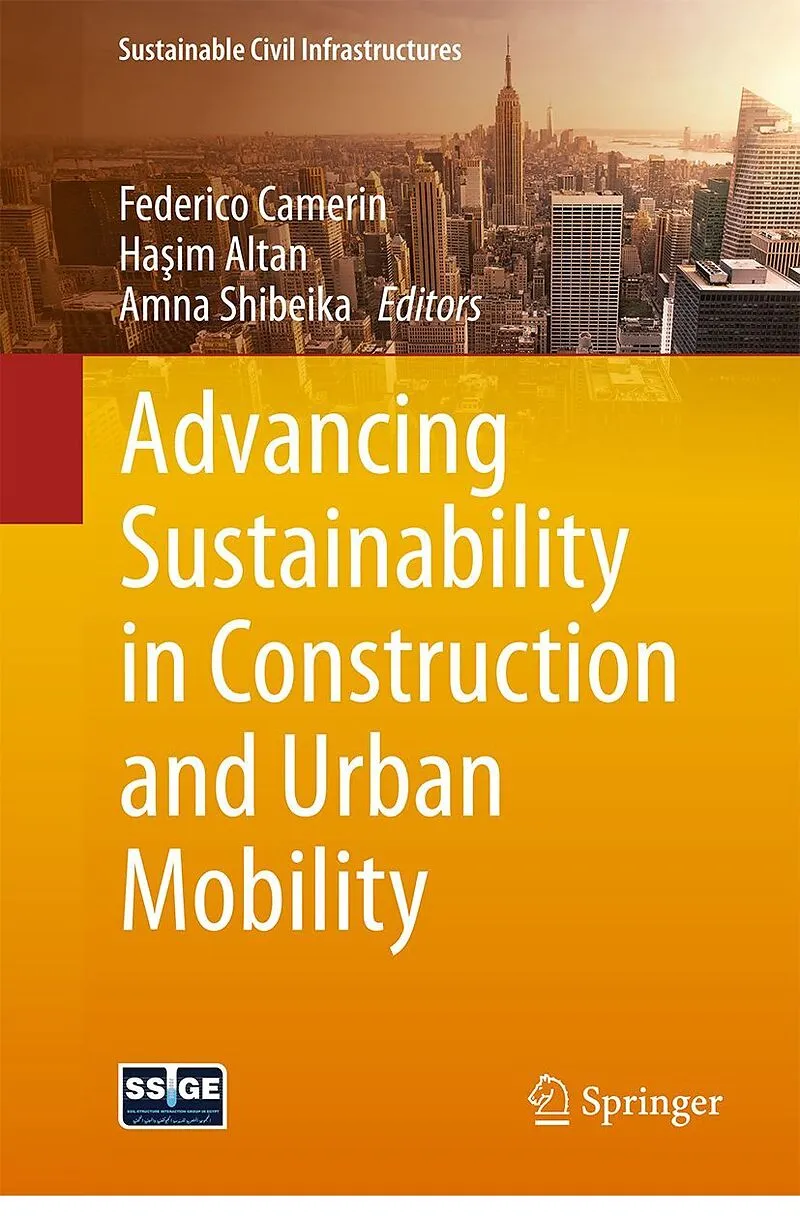
Finding ways to make the future more sustainable is now a global necessity that is hard to talk about since cities are growing, technology is getting better, and environmental problems are getting worse. This book does a great job of explaining how new ideas ...
Finding ways to make the future more sustainable is now a global necessity that is hard to talk about since cities are growing, technology is getting better, and environmental problems are getting worse. This book does a great job of explaining how new ideas and digital developments could help cities, buildings, and infrastructure live longer.
This book brings together work from researchers and practitioners from all across the world to look at new breakthroughs in smart cities, digital governance, circular construction technologies, and sophisticated engineering analysis. The chapters talk about how new technologies like AI, digital twins, data-driven modeling, and advanced simulation are changing how we plan, build, and run systems that are good for the environment. They do this by using case studies, analytical models, and research that is really used in real life.
The book makes it obvious that we need more than simply technology to get results that last. We also need responsible individuals, competent administration, and good schools. The book uses ideas from social, behavioral, and institutional studies along with new technologies and digital tools to create a complete picture of the difficulties we face with sustainability and how to solve them.
This book is for persons who work in research, policy, or academia, or who know a lot about their profession. You may look it up and get wonderful ideas from it. It talks about climate resilience, resource efficiency, and sustainable development all across the world. It is quite similar to the UN's Sustainable Development Goals. This book is very helpful for anyone who wants to link innovation and sustainability in the digital age.
Focuses on MENA Includes an educational dimension for sustainability Combines structural engineering and urban mobility
Autorentext
Federico Camerin , city planner at the Università Iuav di Venezia (2014), was awarded in 201415 and 201617 with two fellow research grants at the same University. He was successively Early Stage Resercher in the Marie Skodowska-Curie Action - Innovative Training Networks UrbanHist (European Joint Doctorate). In 2020, he achieved a double degree of Doctor en Arquitectura and Ph.D. awarded respectively by the Universidad de Valladolid (UVa, Spain) and Bauhaus-Universität Weimar (BUW, Germany). He was a post-doc fellow in Urban Planning at Iuav (2021 'Go-for-IT' programme) and UVa (2022-24 'Margarita Salas' programme, with a research stay at Universidad Politécnica de Madrid) and he is currently 'Ramón y Cajal' fellow at UVa. His research/working interests intertwined city-making process with spatial planning, planning history, and urban governance.
Hasim Altan (BArch, MArch, PhD, PGCE, FHEA) is currently a Professor of Sustainable Design and Architectural Engineering in the College of Engineering (Department of Architectural Engineering) at the United Arab Emirates University (UAEU) in Al Ain (Abu Dhabi 15551), UAE. He began his academic career as a lecturer after successfully completing his PhD degree in 2004, during which he was also appointed as a Postdoctoral Research Fellow in the School of Architecture at the University of Sheffield (UK). While there, he completed his Postgraduate Certificate in Teaching and Learning in Higher Education and subsequently became a Fellow of the Higher Education Academy (HEA). He is a Chartered Architect (RIBA) and a Chartered Engineer (CIBSE) with over 20 years of academic and practical experience in the field of Architecture, Engineering, and Construction (AEC) within the Built Environment across the UK, Europe, the Middle East, and North Africa (MENA) regions. Professor Altan serves on several editorial boards and reviews project proposals for the European Commission, UK Research Councils, and the Qatar National Research Fund (QNRF) established by Qatar Foundation. Since 2004, he has secured and directed, either singly or jointly, 33 research grants worth over £21 million. He is a founding member of the International Network on Zero Energy Mass Custom Homes (ZEMCH), which has organized 10 international conferences (Scopus indexed), several design workshops, and numerous technical visits to date. In addition, he has supervised 18 successful PhD theses (11 as the first supervisor) and over 80 Master's dissertations (MSc, MArch, and MEng). He has published over 300 refereed international journal and conference papers, technical reports, edited books and chapters, and editorials in related fields.
Dr. Amna Shibeika is a Lecturer in Construction and Project Management at the University of Reading, where she also serves as School Director for Postgraduate Taught Studies and Programme Director for the MSc in Construction Cost Management. Her research sits at the intersection of digital innovation in construction, sustainability, and resilient built environments, with particular emphasis on vulnerability linked to ageing, dementia, and displacement under conditions of disruption, including war, climate adaptation, and housing precarity. Prior to joining Reading, she was an Assistant Professor of Architectural Engineering at UAE University, where she led curriculum development and research in construction management, sustainability, and urban resilience. She has extensive experience in interdisciplinary collaboration and is committed to integrating real-world societal challenges into both teaching and research.
Inhalt
Green Last-Mile Logistics: Spatiotemporal CO2 Emission Modeling and Prediction for Sustainable Urban Mobility in Casablanca.- A Proposed Resilient Design and Construction Method for Vertical Public Housing in the UAE.- Enhancing Traffic Flow Prediction through Dimensionality Reduction and Clustering-Based Optimization.- Psychological Factors Influencing Consumer Adoption of Sustainable Mobility.- Nonlinear finite element analysis of GFRP reinforced concrete flat slabs subjected to concentric loads.- Greening Information Management for Sustainable Development: The Case of Sweden.- Pilot Projects as Drivers of Smart City Maturity: Reflections from Smart Liveable Neighbourhoods in Australia.- Compressive Strength Development and Setting Time of GGBS and Waste Foundry Sand Alkali-Activated Concrete.- Evaluating the Carbon Footprint and Compressive Strength of Carbonation-cured Concrete Containing Calcium Carbide Residue.- Blockchain-Driven Digital Identities and Industry 4.0 Integration for Enhancing Sustainability in Global Supply Chains.- Optimising Construction Workflow and Process: A Modularity Methodology Approach.- Implementing Autonomous-Rail Rapid Transit in Al Madina: Opportunities and Challenges for Sustainable Urban Mobility.- AI-Driven E2E Supply Chain Integration in a Circular Economy.- Construction Quality Control and Thermal Imaging: Detecting Thermal Defects to Enhance Energy Efficiency in UAE Residential Buildings.- Turbine Blade Leading Edge Cooling Through Jet Impingement: A Review.- Flow Past a 2D Circular Cylinder in Laminar and Turbulent Conditions: A CFD Validation Study.- Exploring Young Adults' Intention Towards Adoption of Sustainable Transportation.- Sustainable Construction in Oman: Leveraging Digital Twin Technology for Climate Resilience.- Decreasing the Computational Time and Domain Size Using Inlet Velocity Profile.- Analytical Derivation of Stability Functions for Non-Prismatic Members with Circular Cross-Sections.- Integrity Assessment of Sustainable 3D Printed Components.- The Essential Role of Innovative Curriculum Frameworks and Adaptive Accreditation.- Exploring Key Strategies, Barriers, and Recommendation for Circular Construction and Demolition Waste Management in Developing Countries.