Beschreibung
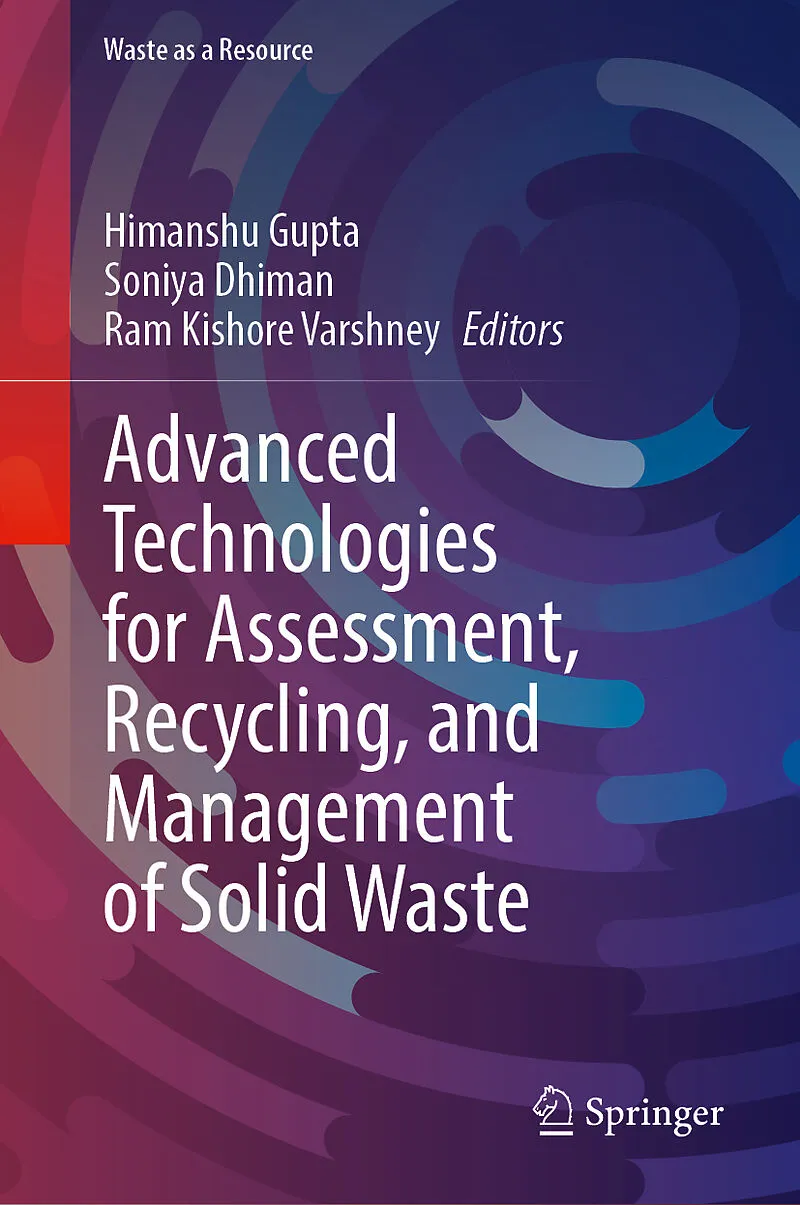
This book examines innovative strategies for managing and treating waste at the end of its life cycle, including landfilling and waste incineration. It addresses various types of solid waste, their causes and impacts, and the technologies designed to minimize...
This book examines innovative strategies for managing and treating waste at the end of its life cycle, including landfilling and waste incineration. It addresses various types of solid waste, their causes and impacts, and the technologies designed to minimize and repurpose them. This approach, commonly known as materials management, aims to comprehensively analyze how materials are handled before resorting to conventional waste-disposal methods. The book highlights the importance of converting waste into energy, biofuels, and compost, while emphasizing source reduction and extended producer responsibility. The ultimate goal is to manage materials across the entire economy at every stage of their life cycle, covering all phases of material and product production, from raw material extraction, design, and manufacturing to transportation and consumer use. Additionally, it discusses reuse, recycling, and final disposal practices.
Provides a comprehensive review of solid waste management Emphasizes the significance of converting waste into energy, biofuels, and compost Includes case studies
Autorentext
Himanshu Gupta, Ph.D., is the former Head of the Department of Chemistry at IFTM University, Moradabad, India. In 2025, Dr. Gupta also served as a Researcher at the Van 't Hoff Institute for Molecular Sciences at the University of Amsterdam in the Netherlands. He received his Ph.D. in Environmental-Analytical Chemistry in 2016 from the Indian Institute of Technology, Roorkee (IIT Roorkee). Dr. Gupta's research focuses on the determination, degradation, and removal of environmental contaminants. He has rich experience handling advanced techniques, including UV, IR, GC-MS, LC-MS/MS, AAS, ICP-MS, and flame photometry. Dr. Gupta has served as a lead and co-editor for several books published by Springer. He has published chapters and articles in professional books and international journals, including the Journal of Cleaner Production, Chemosphere, Environmental Technology & Innovation, RSC Advances, and Applied Water Science. Dr. Gupta has organized various conferences and workshops sponsored by different agencies such as DRDO and DST. He is currently guiding four research scholars; one of them recently received her Ph.D. under his supervision.
Soniya Dhiman, Ph.D., is a Marie Sklodowska-Curie Actions (MSCA) Postdoctoral Researcher with the Helmholtz-Zentrum Dresden-Rossendorf research laboratory at the Helmholtz Institute Freiberg for Resource Technology, Dresden, Germany. Before that, Dr. Dhiman was a Sr. Project Scientist at the Indian Institute of Technology, Delhi. She received her Ph.D. degree under the supervision of Prof. Bina Gupta in the Department of Chemistry at the Indian Institute of Technology Roorkee (IIT Roorkee) in 2021. Currently, she is working on the recovery of critical metals from different industrial wastes. Her research interests include nanomaterials, solvent extraction, separation and recovery, mining/e-waste management, wastewater treatment, dye degradation using NPs, environmental protection, and green chemistry. She has extensive experience with a range of instrumental and analytical techniques used in chemical and environmental laboratories. Dr. Dhiman is a co-editor of the book Emerging Contaminants in Water and Wastewater: Sources and Substance (Springer, 2025), has published several research papers in international journals, has presented papers at national and international conferences, and has received three best paper awards.
R.K. Varshney is a Guest Lecturer, Commerce Stream at Chandausi Inter College, Chandausi, Sambhal, India. He is retired from the position of Subject Specialist, Commerce Stream at Inter College Bahjoi, Sambhal, India. He has 30 years of experience in commerce and economics, is a social activist, and has served as General Secretary of the Association of Varshney Teachers (Varshney Shikshak Sabha), Chandausi, India. Mr. Varshney has worked at the grassroots level to guide students in various commerce and economic concepts. He also served as an expert, chief guest, and judge in multiple programs to motivate students and professionals and promote environmental protection.
Inhalt
Overview of Solid Waste in the Environment.- Disposal Methods for Domestic, Household, and Industrial Solid Wastes.- Assessment of Contamination Levels in Freshwater Resources Due to Solid Waste.- Groundwater Contamination Due to Landfilling of Toxic Wastes.- Nanomaterials in Solid Waste: Preparation and Environmental Applications.- Applications of Solid Wastes in Environmentally Friendly Processes.- Advanced Technologies for the Detection of Contaminants in Solid Wastes.- Recycling of Precious Metals From Waste Printed Circuit Boards.- Separation and Recovery of Valuable Metals From Waste Lithium Ion Batteries.- Application of Green Technologies for the Management of Solid Waste Materials.- Management of Solid Waste in the Construction Materials for the Circular Economy.- Solid Waste Materials for the Removal of Environmental Contaminants.- Occurrence and Minimization of Hazardous Effects of the Solid Wastes in the Environment.- Microorganisms for the Treatment of Toxic Solid Wastes for Environmental Sustainability.- Strategies for the Minimization of Hazardous Solid Wastes for Environmental Protection.- Case Studies for Solid Waste Management.