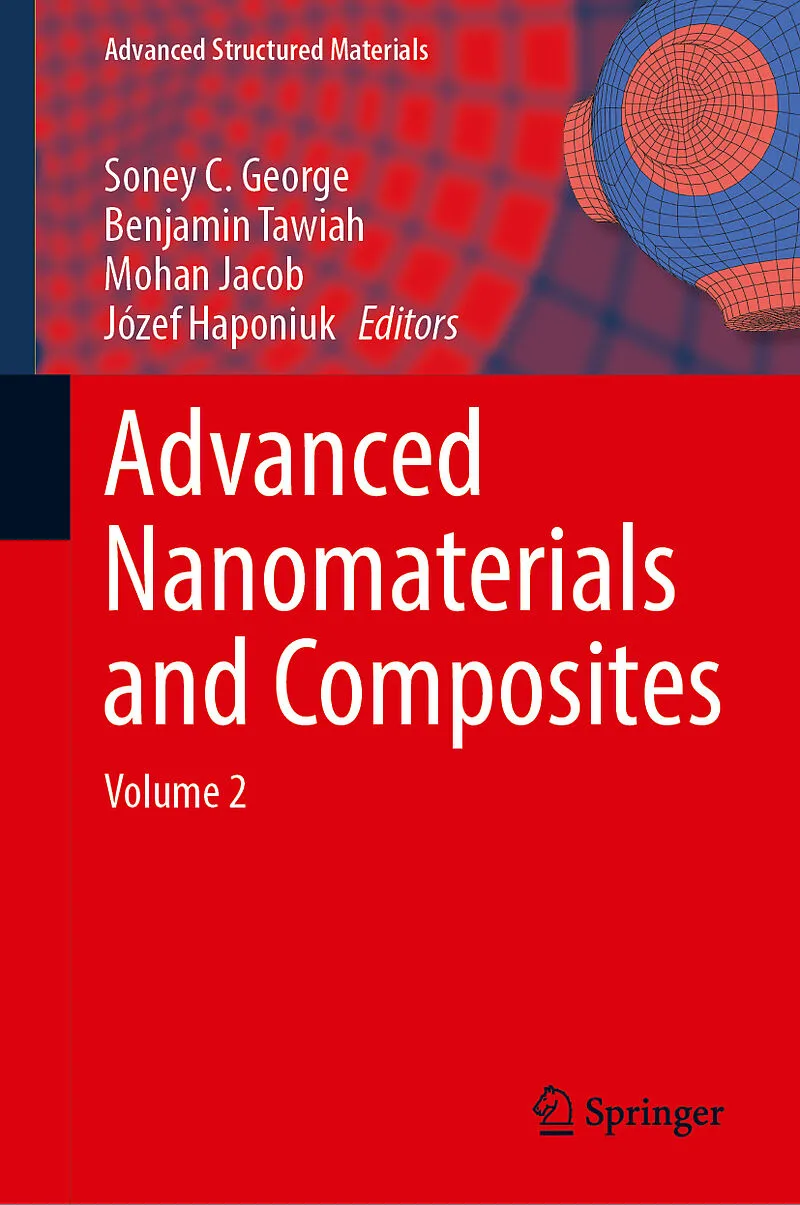
Advanced Nanomaterials and Composites
Beschreibung
This book is a comprehensive exploration of the transformative role that nanotechnology plays in civil, structural, building, and architectural engineering. This book delves into the synthesis, characterization, and application of advanced nanomaterials and c...
Format auswählen
- Fester EinbandCHF 186.00

Wird oft zusammen gekauft
Andere Kunden kauften auch
Beschreibung
This book is a comprehensive exploration of the transformative role that nanotechnology plays in civil, structural, building, and architectural engineering. This book delves into the synthesis, characterization, and application of advanced nanomaterials and composites, highlighting their potential to enhance the performance, durability, and sustainability of construction materials. This book begins with an introduction to nanomaterials, outlining their unique properties and the mechanisms by which they improve structural performance. It covers a range of applications, from concrete reinforcement and asphalt enhancement to innovative smart materials that respond to environmental changes. Key topics include the integration of nanomaterials in concrete for improved strength and durability, the development of self-healing materials, and the use of nanotechnology in geotechnical applications.
Highlights nanocomposites in enhancing the performance, durability, and sustainability of construction materials Covers a range of applications, from concrete reinforcement and asphalt enhancement to innovative smart materials Includes the synthesis, characterization, and application of advanced nanomaterials and composites in building materials
Autorentext
Prof. Soney C. George is currently the dean of Research at Amal Jyothi College of Engineering, Kanjirappaly, and the director of Center for Nanoscience Technology. He obtained his Ph.D. in Polymer Chemistry from the Mahatma Gandhi University, India. He completed his postdoctoral studies at the University of Blasé Pascal, France, and Inha University South Korea. He is a fellow of the Royal Society of Chemistry, London, and a recipient of “National Technical Teachers Award 2022 from All India Council for Technical Education, Government of India and best researcher of the year 2018” award from APJ Abdul Kalam Technological University, Thiruvananthapuram, India. His research interests are in the areas of Polymer Science, Polymer Blends & Composites, Nanocomposites, Polymer Tribology, Supercapacitors, Polymer Membranes & Transport phenomena.
Dr. Benjamin Tawiah is a lecturer at the Kwame Nkrumah University of Science and Technology. He obtained his Ph.D. from the Hong Kong Polytechnic University where he worked as a postdoctoral fellow. He also worked as a research associate in the City University of Hong Kong. He is currently a visiting scholar at the Hong Kong Polytechnic University. His research interests are in the areas of nanofillers, nanocomposites, flame-retardant polymer composites, and second-generation batteries for energy storage.
Prof. Mohan Jacob is the dean of Research Infrastructure at James Cook University and has been serving as the associate dean of Research Education for the College of Science and Engineering since 2014. Currently, he focuses on the development of sustainable and environmentally friendly materials for various applications. He is a pioneer in Microwave Assisted Pyrolysis for waste conversion, particularly in the areas of “Waste to Resources” and “Waste to Energy” and circular economy. He has developed various microwave-assisted waste processing systems and scaled up these systems for industrial applications.
Prof. Józef T. Haponiuk has been employed at Gdansk University of Technology, Chemical Faculty, Polymer Technology Department since 1974. He obtained his Ph.D. title from the Technische Hochschule Leuna—Merseburg (Germany). His research interests are in the area of synthesis, technology, and applications of polyurethanes, biopolymers, polymer blends and composites, nanocomposites, polymers of natural origin, reactive extrusion of polymers, and recycling of polymers and rubber.
Inhalt
Chapter 1. Advanced Nanomaterials and Composites for Civil and Structural Engineering. Chapter 2. Nanomaterials and Nanocomposite Fabrication Techniques for Civil Structures.- Chapter 3. Nanomaterials for Concrete Enhancement.- Chapter 4. Self-Healing in Nanocomposites for Infrastructure Maintenance and Repair.- Chapter 5. Advanced Nanomaterials for Asphalt and Pavement Applications.- Chapter 6. Nanotechnology in Steel and Reinforcements in Construction.- Chapter 7. Smart Materials and Structures: Nanomaterials in Structural Health Monitoring.- Chapter 8. Advanced Nanomaterials and Composites For Energy Efficiency in Buildings.- Chapter 9. Advanced Nanomaterials for Environmental Applications.- Chapter 10. Fire-Resistant Nanocomposites in Structures and Buildings.- Chapter 11. Advanced Nanomaterials and Composites in Geotechnical Engineering.- Chapter 12. Nanomaterials in Construction: Health and Safety, Regulatory Frameworks and Compliance Issues.