
IHR WARENKORB IST AKTUELL LEER.
Haben Sie noch nichts passendes gefunden? Stöbern Sie durch unser komplettes Sortiment.
Oder melden Sie sich an bzw. registrieren Sie sich.
- Kostenlose Lieferung
- Kauf auf Rechnung
- Ex Libris Tiefpreis
- Filiallieferung und 650+ Abholorte
- Rabatt-Bons als Club-Mitglied
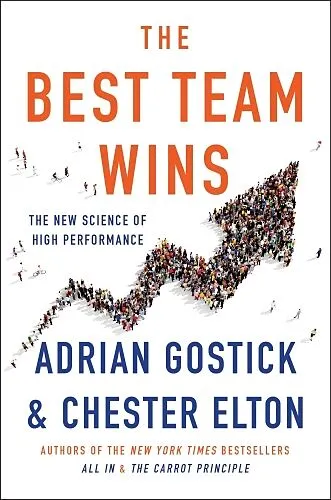
The Best Team Wins
Beschreibung
Zusatztext "The style is accessible! the ideas are easy to implement! and the results could be transformational! both for managers and their employees." Booklist Informationen zum Autor Adrian Gostick is the New York Times bestselling coauthor of The Best Team...Format auswählen
- Fester EinbandCHF 30.80

Wird oft zusammen gekauft
Andere Kunden kauften auch
Beschreibung
Zusatztext "The style is accessible! the ideas are easy to implement! and the results could be transformational! both for managers and their employees." Booklist Informationen zum Autor Adrian Gostick is the New York Times bestselling coauthor of The Best Team Wins , The Carrot Principle , and All In , which are sold in more than fifty countries around the world. He is a founder of the global training firm The Culture Works, with a focus in culture, teamwork, and employee motivation. Learn more at TheCultureWorks.com or CarrotGuys.com. Klappentext The New York Times bestselling authors of The Carrot Principle and All In deliver a breakthrough, groundbreaking guide for building today's most collaborative teamsso any organization can operate at peak performance. A massive shift is taking place in the business world. In today's average company, up to eighty percent of employees' days are now spent working in teams. And yet the teams most people find themselves in are nowhere near as effective as they could be. They're often divided by tensions, if not outright dissension, and dysfunctional teams drain employees' energy, enthusiasm, and creativity. Now Adrian Gostick and Chester Elton share the proven ways managers can build cohesive, productive teams, despite the distractions and challenges every business is facing. In The Best Team Wins, Gostick and Elton studied more than 850,000 employee engagement surveys to develop their "Five Disciplines of Team Leaders," explaining how to recognize and motivate different generations to enhance individual engagement; ways to promote healthy discord and spark innovation; and techniques to unify customer focus and build bridges across functions, cultures, and distance. They've shared these disciplines with their corporate clients and have now distilled their breakthrough findings into a succinct, engaging guide for business leaders everywhere. Gostick and Elton offer practical ways to address the real challenges today's managers are facing, such as the rise of the Millennials, the increasing speed of change, the growing number of global and virtual teams, and the friction created by working cross-functionally. This is a must-read for anyone looking to maximize performance at work, from two of the most successful corporate consultants of their generation, whom The New York Times called "creative and refreshing." Leseprobe The Best Team Wins ONE UNDERSTAND GENERATIONS How to Engage Millennials, Gen Xers, and Boomers Joan Kuhl describes herself as the Millennial Matchmaker. She runs the consultancy Why Millennials Matter and advises employers, including Goldman Sachs, Bristol-Myers Squibb, and Eli Lilly, on hiring and retaining recent college graduates. She believes that while managing Millennials presents a few distinctive challengesfor instance, many see nothing wrong with oversharing information about their lives (and work lives) on social mediathere are also tons of positives. We tend to publicize the outrageous acts of defiance, she says of the newest generation, but adds the majority that I work with are very mission-focused and value-based. Yet even this fan of the younger generation does grin when she thinks about some of the behavior of young people in her own office. She recalls one intern who ate a tuna-fish sandwich during a morning meeting with senior colleagues. When mildly rebuked after, the intern replied, Well, you said to be myself, and I was hungry. So much has been written about this Millennial generation (also known as Gen Y). They are supposedly narcissistic, lazy, entitled; constantly Snapchatting or Tweeting with the...
"The style is accessible, the ideas are easy to implement, and the results could be transformational, both for managers and their employees."—Booklist
Autorentext
Adrian Gostick is the New York Times bestselling coauthor of The Best Team Wins, The Carrot Principle, and All In, which are sold in more than fifty countries around the world. He is a founder of the global training firm The Culture Works, with a focus in culture, teamwork, and employee motivation. Learn more at TheCultureWorks.com or CarrotGuys.com.
Klappentext
The New York Times bestselling authors of The Carrot Principle and All In deliver a breakthrough, groundbreaking guide for building today's most collaborative teams—so any organization can operate at peak performance.
A massive shift is taking place in the business world. In today's average company, up to eighty percent of employees' days are now spent working in teams. And yet the teams most people find themselves in are nowhere near as effective as they could be. They're often divided by tensions, if not outright dissension, and dysfunctional teams drain employees' energy, enthusiasm, and creativity. Now Adrian Gostick and Chester Elton share the proven ways managers can build cohesive, productive teams, despite the distractions and challenges every business is facing.
In The Best Team Wins, Gostick and Elton studied more than 850,000 employee engagement surveys to develop their "Five Disciplines of Team Leaders," explaining how to recognize and motivate different generations to enhance individual engagement; ways to promote healthy discord and spark innovation; and techniques to unify customer focus and build bridges across functions, cultures, and distance. They've shared these disciplines with their corporate clients and have now distilled their breakthrough findings into a succinct, engaging guide for business leaders everywhere. Gostick and Elton offer practical ways to address the real challenges today's managers are facing, such as the rise of the Millennials, the increasing speed of change, the growing number of global and virtual teams, and the friction created by working cross-functionally.
This is a must-read for anyone looking to maximize performance at work, from two of the most successful corporate consultants of their generation, whom The New York Times called "creative and refreshing."
Zusammenfassung
The New York Times bestselling authors of The Carrot Principle and All In deliver a breakthrough, groundbreaking guide for building today’s most collaborative teams—so any organization can operate at peak performance.
A massive shift is taking place in the business world. In today’s average company, up to eighty percent of employees’ days are now spent working in teams. And yet the teams most people find themselves in are nowhere near as effective as they could be. They’re often divided by tensions, if not outright dissension, and dysfunctional teams drain employees’ energy, enthusiasm, and creativity. Now Adrian Gostick and Chester Elton share the proven ways managers can build cohesive, productive teams, despite the distractions and challenges every business is facing.
In The Best Team Wins, Gostick and Elton studied more than 850,000 employee engagement surveys to develop their “Five Disciplines of Team Leaders,” explaining how to recognize and motivate different generations to enhance individual engagement; ways to promote healthy discord and spark innovation; and techniques to unify customer focus and build bridges across functions, cultures, and distance. They’ve shared these disciplines with their corporate clients and have now distilled their breakthrough findings into a succinct, engaging guide for business leaders everywhere. Gostick and Elton offer practical ways to address the real challenges today’s managers are facing, such as the rise of the Millennials, the increasing speed of change, the growing number of global and virtual teams, and the friction created by working cross-functionally.
This is a must-read for anyone looking to maximize performance at work, from two of the most successful corporate consultants of their generation, whom *The New York Times…