Beschreibung
Im Kontext der kulturwissenschaftlichen Gedächtnisforschung widmet sich diese interdisziplinär ausgerichtete Reihe dem Verhältnis von Medien und kultureller Erinnerung. Die hier vorgestellten Studien behandeln die ganze Bandbreite der durch Medien konstruiert...Im Kontext der kulturwissenschaftlichen Gedächtnisforschung widmet sich diese interdisziplinär ausgerichtete Reihe dem Verhältnis von Medien und kultureller Erinnerung. Die hier vorgestellten Studien behandeln die ganze Bandbreite der durch Medien konstruierten, tradierten und verbreiteten Erinnerung. Schrift und Bild, das Kino und die 'neuen' digitalen Medien, Intermedialität, Transmedialität und Remediation sowie die sozialen, zunehmend transnationalen und transkulturellen, Kontexte der mediatisierten Erinnerung gehören zu den Forschungsinteressen der Reihe. Ziel ist es, eine internationale Plattform für die interdisziplinäre Medien- und Gedächtnisforschung zu schaffen. Eingereichte Manuskripte werden im peer review Verfahren durch externe Experten begutachtet.
Den Herausgebern, Astrid Erll (Goethe-Universität Frankfurt am Main) und Ansgar Nünning (Justus-Liebig-Universität Gießen) ist ein internationaler Beirat aus renommierten Wissenschaftlern assoziiert:
Autorentext
Friederike Eigler, Georgetwon University, Washington DC, USA; Jens Kugele, Ludwig-Maximilians-Universität München, Germany.
Klappentext
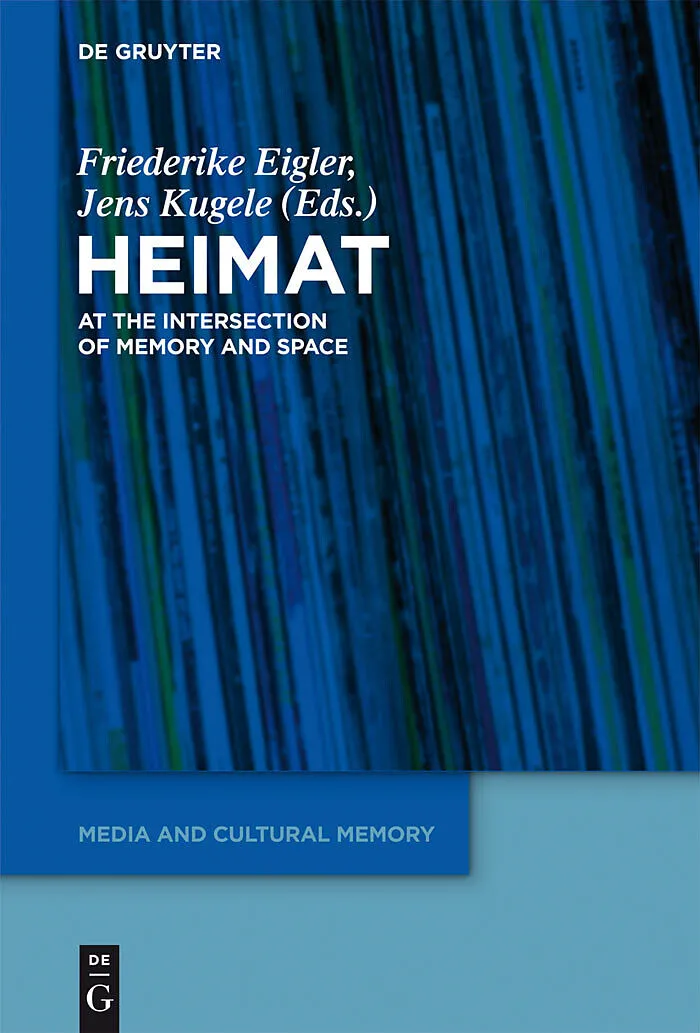
The concept of Heimat with its seemingly pre- or anti-modern connotations of rootedness in a place of origin is central to a critical understanding of German history and culture. Over the course of the past fifteen years, scholars across a range of disciplines have found new ways to examine the changing notions of Heimat - its multifaceted cultural, literary, and visual history, its gendered connotations, and its national and ideological appropriations.
This anthology is the first to examine cultural manifestations of Heimat by giving special consideration to issues of memory and space. The contributions to this volume challenge static notions of place often associated with Heimat. Instead, they explore the social and cultural production of places of belonging as they emerge in literary and visual narratives ranging from 1800 to 2000 and beyond.
Although the anthology includes historical perspectives on Heimat, its overall objective is not to trace its cultural or literary history, but to place this complex term into new conceptual contexts. Drawing attention to manifestations of Heimat within German literary and cultural studies provides a rich ground for exploring the transformation of locality in trans/national contexts.
Zusammenfassung
The concept of Heimat with its seemingly pre- or anti-modern connotations of rootedness in a place of origin is central to a critical understanding of German history and culture. Over the course of the past fifteen years, scholars across a range of disciplines have found new ways to examine the changing notions of Heimat its multifaceted cultural, literary, and visual history, its gendered connotations, and its national and ideological appropriations.
This anthology is the first to examine cultural manifestations of Heimat by giving special consideration to issues of memory and space. The contributions to this volume challenge static notions of place often associated with Heimat. Instead, they explore the social and cultural production of places of belonging as they emerge in literary and visual narratives ranging from 1800 to 2000 and beyond.
Although the anthology includes historical perspectives on Heimat, its overall objective is not to trace its cultural or literary history, but to place this complex term into new conceptual contexts. Drawing attention to manifestations of Heimat within German literary and cultural studies provides a rich ground for exploring the transformation of locality in trans/national contexts.