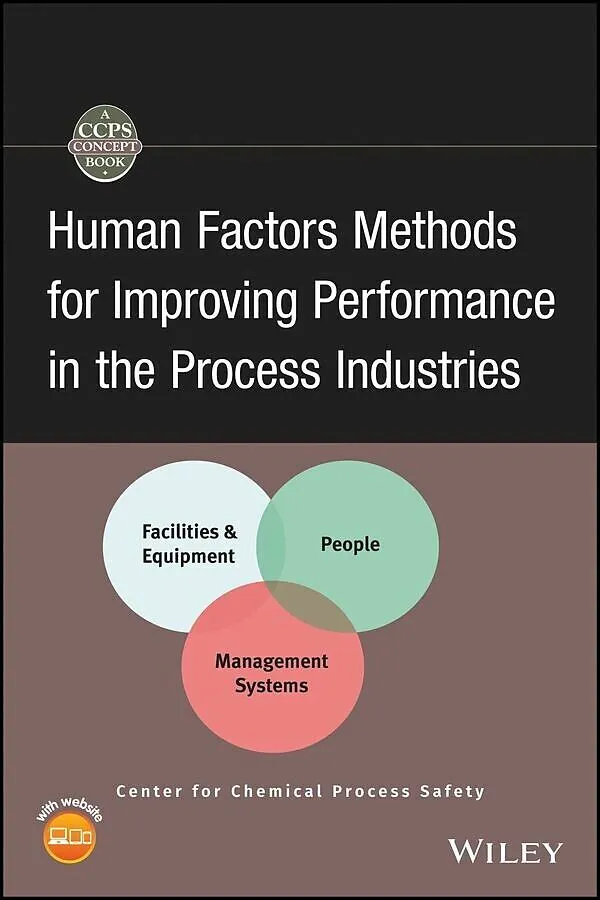
Human Factors Methods for Improving Performance in the Process Industries
Beschreibung
Human Factors Methods for Improving Performance in the Process Industries provides guidance for managers and plant engineering staff on specific, practical techniques and tools for addressing forty different human factors issues impacting process safety. Huma...Format auswählen
- E-Book (pdf)CHF 104.00
Wird oft zusammen gekauft
Andere Kunden kauften auch
Beschreibung
Human Factors Methods for Improving Performance in the Process
Industries provides guidance for managers and plant engineering
staff on specific, practical techniques and tools for addressing
forty different human factors issues impacting process safety.
Human factors incidents can result in injury and death, damage to
the environment, fines, and business losses due to ruined batches,
off-spec products, unplanned shutdowns, and other adverse effects.
Prevention of these incidents increases productivity and profits.
Complete with examples, case histories, techniques, and
implementation methodologies, Human Factors Methods for
Improving Performance in the Process Industries helps managers
and engineering staff design and execute an efficient program.
Organized for topical reference, the book includes:
An overview on implementing a human factors program at the
corporate level or the plant level, covering the business value,
developing a program to meet specific needs, improving existing
systems, roles and responsibilities, measures of performance, and
moreSummaries of forty different human factors relating to process
safety, with a description of the tools, a practical example with
graphics and visual aids, and additional resourcesInformation on addressing the OSHA Process Safety Management
(PSM) requirement for conducting human factors reviews in process
hazard analyses (PHAs)A CD-ROM with a color version of the book
Note: CD-ROM/DVD and other supplementary materials are
not included as part of eBook file.
Autorentext
Since 1985, the Center for Chemical Process Safety (CCPS) has been the world leader in providing information on process safety management and technology. CCPS, an industry technology alliance of the American Institute of Chemical Engineers (AIChE), has published over eighty books in its process safety guidelines and process safety concepts series. In this book, CCPS teams up with the AIChE Safety and Health Division. Members of the CCPS Human Factors Subcommittee contributed chapters or sections in their areas of expertise. For more information, visit www.ccpsonline.org.
Klappentext
The proper application of human factors is a valuable investment in overall process safety This book provides guidance for managers and plant engineering staff on specific, practical techniques and tools for addressing forty different human factors issues impacting process safety. Human factors incidents can result in injury and death, damage to the environment, fines, and business losses due to ruined batches, off-spec products, unplanned shutdowns, and other adverse effects. Prevention of these incidents increases productivity and profits. Complete with examples, case histories, techniques, and implementation methodologies, Human Factors Methods for Improving Performance in the Process Industries helps managers and engineering staff design and execute an efficient program. Organized for topical reference, the book includes: ???
- An overview on implementing a human factors program at the corporate level or the plant level, covering the business value, developing a program to meet specific needs, improving existing systems, roles and responsibilities, measures of performance, and more
- Summaries of forty different human factors relating to process safety, with a description of the tools, a practical example with graphics and visual aids, and additional resources
- Information on addressing the OSHA Process Safety Management (PSM) requirement for conducting human factors reviews in process hazard analyses (PHAs)
- A color version of the book is available online. Since 1985, the Center for Chemical Process Safety (CCPS) has been the world leader in providing information on process safety management and technology. CCPS, an industry technology alliance of the American Institute of Chemical Engineers (AIChE), has published over eighty books in its process safety guidelines and process safety concepts series. In this book, CCPS teams up with the AIChE Safety and Health Division. Members of the CCPS Human Factors Subcommittee contributed chapters or sections in their areas of expertise. For more information, visit www.ccpsonline.org.
Zusammenfassung
Human Factors Methods for Improving Performance in the Process Industries provides guidance for managers and plant engineering staff on specific, practical techniques and tools for addressing forty different human factors issues impacting process safety. Human factors incidents can result in injury and death, damage to the environment, fines, and business losses due to ruined batches, off-spec products, unplanned shutdowns, and other adverse effects. Prevention of these incidents increases productivity and profits. Complete with examples, case histories, techniques, and implementation methodologies, Human Factors Methods for Improving Performance in the Process Industries helps managers and engineering staff design and execute an efficient program. Organized for topical reference, the book includes:
- An overview on implementing a human factors program at the corporate level or the plant level, covering the business value, developing a program to meet specific needs, improving existing systems, roles and responsibilities, measures of performance, and more
- Summaries of forty different human factors relating to process safety, with a description of the tools, a practical example with graphics and visual aids, and additional resources
- Information on addressing the OSHA Process Safety Management (PSM) requirement for conducting human factors reviews in process hazard analyses (PHAs)
- A CD-ROM with a color version of the book
Note: CD-ROM/DVD and other supplementary materials are not included as part of eBook file.
Inhalt
Preface xi
Acknowledgments xiii
Abbreviations and Acronyms xv
1 Introduction 1
1.1 Purpose of This Book 1
1.2 Human Factors 1
1.3 Human Error 3
1.4 Structure of This Book 5
1.5 Linkage to Other CCPS Publications 6
1.6 References 7
2 The Case for Human Factors 9
2.1 Why is Human Factors Needed? 9
2.2 Past Incidents 11
2.3 Business Value/Justification 11
2.4 Human Factors in the Life Cycle of a Chemical Plant 16
2.5 Needs Driven Program 17
2.6 References 19
3 Performance Measurement and Improvements 21
3.1 Building Improvements into Existing Systems 21
3.2 Measures of Performance 22
3.3 Roles and Responsibilities 24
3.4 Continuous Improvement 25
3.5 References 28
HUMAN FACTORS TOOL KIT
Facilities and Equipment
4 Process Equipment Design 31
4.1 Introduction 31
4.2 Tools 33
4.3 References 33
4.4 Additional References 34
5 Process Control Systems 37
5.1 Introduction 37
5.2 Issues/Example 37
5.3 Tools 39
5.4 Additional References 39
6 Control Center Design 41
6.1 Introduction 41
6.2 Tools 42
6.3 References 43
6.4 Additional References 43
7 Remote Operations 45
7.1 Introduction 45
7.2 Tools 47
7.3 Reference 48
8 Facilities and Workstation Design 49
8.1 Introduction 49
8.2 Tools 53
8.3 References 55
8.4 Additional References 55
9 Human/Computer Interface 57
9.1 Introduction 57
9.2 Human Interactions with Control System Software 58
9.3 Tools 59
9.4 References 63
9.5 Additional References 64
10 Safe Havens 67
10.1 Introduction 67
10.2 Human Factors Issues 68
10.3 Tools 70
10.4 References 70
11 Labeling 71
11.1 Introduction 71
11.2 Tools 72
11.3 References 74
People
12 Training 77
12.1 Introduction 77
12.2 Guidelines for Training Programs 77
12.3 Guidelines for Designing and Delivering Training 78
12 4 Tools 81
12.5 References 81
13 Communications 83
13.1 Introduction 83
13.2 Issues/Examples 83
13.3 Tools 85
13.4 Referen…