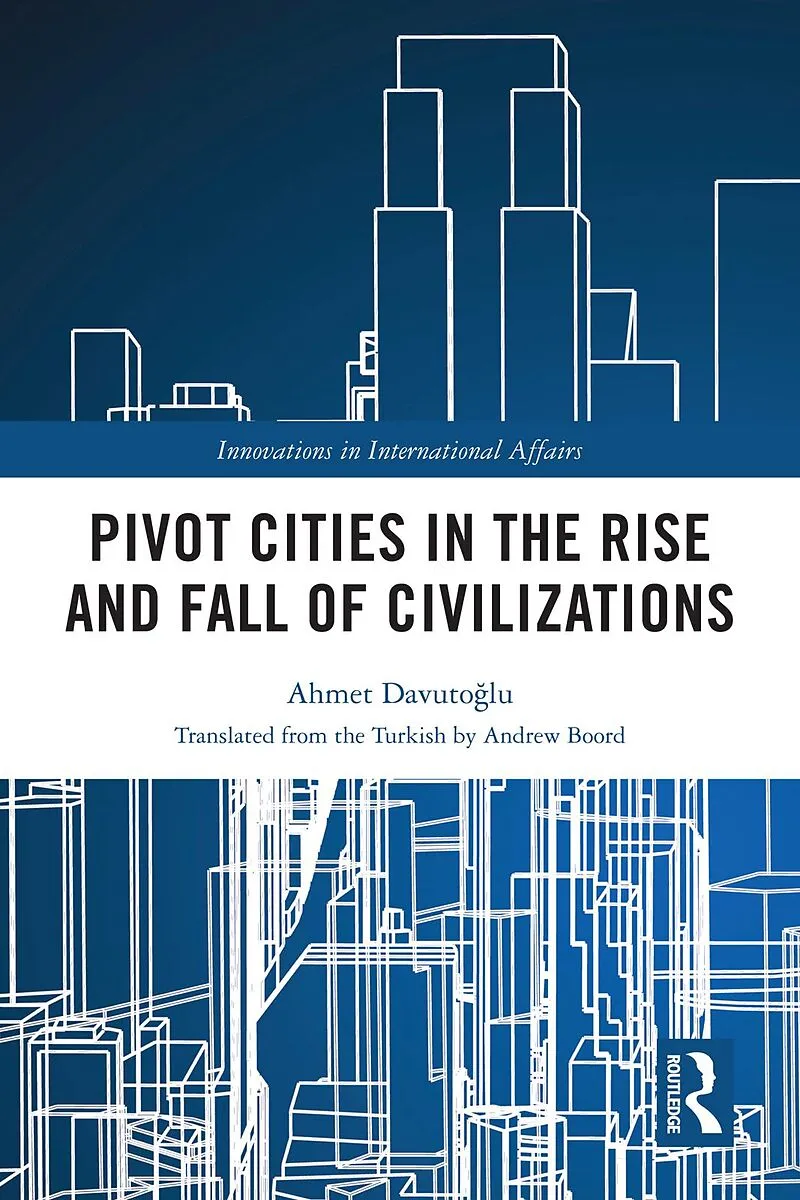
Pivot Cities in the Rise and Fall of Civilizations
Beschreibung
Based on the author's long experience in academic life and the public realm, especially in foreign policy, this book argues that a single categoric classification of cities is inadequate, and that cities have had different and varied impacts and positions thr...Format auswählen
- E-Book (pdf)CHF 53.90
- E-Book (epub)CHF 53.90

Wird oft zusammen gekauft
Andere Kunden kauften auch
Beschreibung
Based on the author's long experience in academic life and the public realm, especially in foreign policy, this book argues that a single categoric classification of cities is inadequate, and that cities have had different and varied impacts and positions throughout the history of civilization.
The author examines how the formation, transformation, destruction or reestablishment of many civilizational cities reveals a clearer picture of the cornerstones of the course of human history. These cities, which play a decisive and pivotal role in the direction of the flow of history as well as providing us with a compass to guide our efforts to understand and interpret this flow, are conceptualized by the author as civilizations' "pivot cities". This innovative book explores the role of great cities in political historical change, presenting an alternative view of these pivot cities from a culturalist perspective. Within this framework, the role played by pivot cities in the history of civilization may be considered under seven distinct headings: pioneering cities which founded civilizations; cities which were founded by civilizations; cities which were transplanted during the formation of civilizations; "ghost cities" which lost their importance through shifts in political power and civilizational transformation; "lost cities" which were destroyed by civilizations; cities on lines of geocultural/geoeconomic interaction; and cities which combine, transform or are transformed by different civilizations. The author's concept of pivot cities explores the interplay between vital cities and civilizations, which bears on the future of globalization at a time of instability, as projected continuing de-Westernization becomes a theme in studies of global history.
This book provides highly productive discussions relevant to the literature on city-civilization relationships and the historicity of pivot cities. Its clear language, rich content, deep and original perspective, interdisciplinary approach and rich bibliography will ensure that it appeals to students and scholars in a variety of disciplines, including cultural studies, political science, comparative urban studies, anthropology, history and civilizational studies.
Autorentext
Ahmet Davutoglu served as the Prime Minister of the 62nd, 63rd, and 64th governments of the Republic of Turkey. Prior to this, he was Chief Foreign Policy Advisor to the Prime Minister, and Minister of Foreign Affairs. He is the first leader of the newly formed Future Party. In his academic career, he has held the position of professor at Marmara and Beykent Universities, Turkey, and the International Islamic University of Malaysia. He is the author of many books including Alternative Paradigms (1994), Civilizational Transformation and the Muslim World (1994), Stratejik Derinlik [Strategic Depths] (2015) and Systemic Earthquake and the Struggle for World Order (2020). He has received several awards, including the Woodrow Wilson Award for Public Service in 2010. He was named as one of the Top 100 Global Thinkers by Foreign Policy magazine in 2010, 2011, and 2012, and as one of the 100 Most In uential People in the World by Time magazine in 2012.
Inhalt
Preface
Part I. Intellectual Experiences and Methodological Framework
- Introduction: Intellectual Background
I. My First Encounters with Cities: Traces of Place
II. From Empirical Consciousness to Theory: Civilizational Self-Perception and Cities
- Critical Analysis of City Historiography: A Methodological Framework
I. Methodological Criticism
II. An Exemplary Analysis of Methodological Dilemma: Ottoman Cities in City Historiography
III. The City as the Subject of the History of Civilizations: Classification of Pivot Cities ** Part II. The Role of Pivot Cities in the History of Civilizations ** 3. Civilization-Founding Pivot Cities: Pioneering Cities
I. Pataliputra: A Model of Spatial and Social Order
II. Athens: Cultural Center of Civilizational Continuity
III. From Rome to Pax Romana: From a City to an Imperial Political Order
IV. Medina: A Prototype for Cities of Islamic Civilization
- Pivot Cities Founded by a Civilization: The Rise of Cities as Political Centers after the Formation of a Civilizational Paradigm
I. The Islamic City: The Building of "New Medinas" in Different Cultural Basins
II. The Power Centers of Western Civilization: Modernity and Ascendant Cities
- Pivot Cities Transplanted During the Formation of Civilizations: Alexandrian, Ottoman and Modern Networks of Cities
I. The Alexandrian Cities and Civilizational Interaction
II. The Ottoman-Seljuk City Tradition on the Khorasan-Anatolia-Rumelia Line
III. Modern Economo-Politics Transfer Cities
- "Ghost Cities": The Decline of Pivot Cities Through Power Shifts and Civilizational Transformation
I. The Era of Ascendancy: Binding Different Cultural Geographies
II. The Era of Decline: End of the Multicultural Social Environment
III. Ultimate Destiny: From Pivotal Role to a "Ghost City"
- "Lost Cities": Pivot Cities Liquidated with a Civilization
I. Invasion
II. End of Political Dominance
III. Historical Non-existence
- Pivot Cities on Lines of Geoeconomic/Geocultural Interaction: Centers of Civilizational Encounters
I. The Mesopotamia-Anatolia-Levant Line
II. The Central Asia-Iran-India Line
III. The Central Asia-Steppes Line
IV. The Andalusia-North Africa-Sahara Line ** Part III. Transforming/Transformed Pivot Cities Where Civilizations Meet ** 9. Jerusalem: The Soul of Civilizations' History and Spiritual Transformation
I. Formation and Legacy of Jerusalem: Inter-civilizational Background
II. Efforts to Destroy Jerusalem and the Defiant City Spirit: Babylonians and Romans
III. The Recovery of City Spirit and Continuity: Omar, the Ayyubids and the Ottomans
IV. Attempts to Establish a One-Dimensional City: Crusaders and Israel
- Cairo and Civilizational Interaction: The Transformative Power of Place
I. Civilizational Interaction of Internal and External Elements
II. Civilizational Encounters of Intellectual/Spiritual Legacy of Humankind
III. Civilizational Pluralism: Cultural Fabric and Architectural Heritage
- Istanbul: A Civilization-Blending Subject City
I. Istanbul as an Ancient Synthesis Between Two Diverse Constituent/Pioneer City Prototypes: Rome and Medina
II. Conquest and Reconquista: The Two Faces of Military Expansion in Europe
III. Istanbul as the Pivot City of Civilizational Transformation
IV. City Culture and Architectural Change