
IHR WARENKORB IST AKTUELL LEER.
Haben Sie noch nichts passendes gefunden? Stöbern Sie durch unser komplettes Sortiment.
Oder melden Sie sich an bzw. registrieren Sie sich.
- Kostenlose Lieferung
- Kauf auf Rechnung
- Ex Libris Tiefpreis
- Filiallieferung und 650+ Abholorte
- Rabatt-Bons als Club-Mitglied
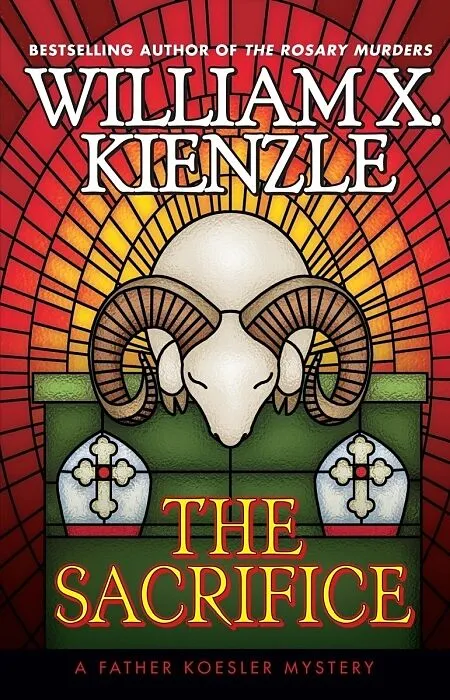
The Sacrifice
Beschreibung
Zusatztext William Kienzle is the Harry Kemelman of Catholicism. . . . Robert Koesler is the Detroit response to Rabbi Small. Los Angeles Times As Kienzle addresses serious modern issues! he stops to digress and tell his wonderful stories . . . providing a nea...Format auswählen
- Kartonierter EinbandCHF 27.40
Wird oft zusammen gekauft
Andere Kunden kauften auch
Beschreibung
Zusatztext William Kienzle is the Harry Kemelman of Catholicism. . . . Robert Koesler is the Detroit response to Rabbi Small. Los Angeles Times As Kienzle addresses serious modern issues! he stops to digress and tell his wonderful stories . . . providing a neat solution with a twist. The Philadelphia Inquirer Informationen zum Autor William X. Kienzle , author of twenty-two previous Father Koesler mysteries, spent twenty years as a parish priest. After leaving the priesthood, he became editor of MPLS magazine in Minneapolis and later moved to Texas, where he was director of the Center for Contemplative Studies at the University of Dallas. Kienzle and his wife, Javan, live in Detroit, where he enjoys playing piano as a diversion from writing. Klappentext EXPLOSIVE OFFERINGS Precisely when the solemn ceremony receiving renegade Episcopal priest Father George Wheatley into the Roman Catholic priesthood is set to begin! a bomb explodes under the altar. Fortunately Father Wheatley arrives late! but poor old Father Farmer dies in the tragedy. Father Wheatley's switch to the Roman church has certainly stirred up murderous passions in the parish. His son and daughter-one already an Episcopal priest! the other studying to become one-are seething. Conservative Catholics are enraged by the very idea of a married priest. As blind prejudice! jealousy! and thwarted ambition swirl around St. Joseph's! that shrewd sleuth Father Koesler meditates on one question: Who placed the phone call that made Father Wheatley late for his own murder? "The Catholic Church is dead. It just doesn't know enough to lie down and roll over." Father Daniel Reichert recoiled as if he'd been struck. "How can you say such a thing! You, of all people!" "Just look around you," Father Harry Morgan responded, with an all-encompassing gesture. "Everyone running about like chickens who've been relieved of their heads." He turned back to Reichert. "And what for?" What for indeed, thought Reichert. The ceremony that was about to begin was meaningless at best and heretical at worst. But that it threatened the very existence of the Church--the One, Holy, Catholic, and Apostolic Church? Certainly his boon companion, Morgan, had to be hyperbolizing. Harry knew as well as he that the Catholic Church was indefectible. Jesus had said so. "Behold I am with you all days. Even to the end of time." No, the one, true Church could not be dying, let alone dead. "You ought to have a more open mind," Reichert rebuked. Morgan's lip curled. "You should talk!" In effect, each priest had just accused the other of being narrow-minded. If truth be known, it was simply a matter of degree. Reichert and Morgan shared an epoch. Born in the twenties; parents staunch Catholics; the priesthood looked upon as an exalted calling. The two had entered the seminary a couple of years apart; Morgan was the elder by two years. They advanced through the seminary--high school, college, and theologate--in what would later be known as the pre-Vatican II era. The transformation that rumbled through the Church when the beloved Pope John XXIII opened some windows and let the present in affected Catholics variously. Where once Liturgy, law, and theology had been marked by a universal rigid sameness, after the Second Vatican Council indisputability was replaced by uncertainty. Gradually, two camps formed. One was the conservative wing: fundamentalist, dedicated to a counterreformation, committed to a return to the pre-Vatican II Church. The other held to a liberalism that would not be static no matter how uncompromising the Vatican remained. Fathers Morgan and Reichert were devoted to a fairly firm conservatism. Even so, they could and sometimes did differ between themselves. This was such an occasion. The Archdiocese ...
Autorentext
William X. Kienzle, author of twenty-two previous Father Koesler mysteries, spent twenty years as a parish priest. After leaving the priesthood, he became editor of MPLS magazine in Minneapolis and later moved to Texas, where he was director of the Center for Contemplative Studies at the University of Dallas. Kienzle and his wife, Javan, live in Detroit, where he enjoys playing piano as a diversion from writing.
Klappentext
**EXPLOSIVE OFFERINGS
**
Precisely when the solemn ceremony receiving renegade Episcopal priest Father George Wheatley into the Roman Catholic priesthood is set to begin, a bomb explodes under the altar. Fortunately Father Wheatley arrives late, but poor old Father Farmer dies in the tragedy.
Father Wheatley's switch to the Roman church has certainly stirred up murderous passions in the parish. His son and daughter-one already an Episcopal priest, the other studying to become one-are seething. Conservative Catholics are enraged by the very idea of a married priest. As blind prejudice, jealousy, and thwarted ambition swirl around St. Joseph's, that shrewd sleuth Father Koesler meditates on one question: Who placed the phone call that made Father Wheatley late for his own murder?
Leseprobe
"The Catholic Church is dead. It just doesn't know enough to lie down and roll over."
Father Daniel Reichert recoiled as if he'd been struck. "How can you say such a thing! You, of all people!" "Just look around you," Father Harry Morgan responded, with an all-encompassing gesture. "Everyone running about like chickens who've been relieved of their heads." He turned back to Reichert. "And what for?"
What for indeed, thought Reichert. The ceremony that was about to begin was meaningless at best and heretical at worst. But that it threatened the very existence of the Church--the One, Holy, Catholic, and Apostolic Church? Certainly his boon companion, Morgan, had to be hyperbolizing. Harry knew as well as he that the Catholic Church was indefectible. Jesus had said so. "Behold I am with you all days. Even to the end of time."
No, the one, true Church could not be dying, let alone dead. "You ought to have a more open mind," Reichert rebuked.
Morgan's lip curled. "You should talk!"
In effect, each priest had just accused the other of being narrow-minded. If truth be known, it was simply a matter of degree.
Reichert and Morgan shared an epoch. Born in the twenties; parents staunch Catholics; the priesthood looked upon as an exalted calling. The two had entered the seminary a couple of years apart; Morgan was the elder by two years.
They advanced through the seminary--high school, college, and theologate--in what would later be known as the pre-Vatican II era. The transformation that rumbled through the Church when the beloved Pope John XXIII opened some windows and let the present in affected Catholics variously. Where once Liturgy, law, and theology had been marked by a universal rigid sameness, after the Second Vatican Council indisputability was replaced by uncertainty. Gradually, two camps formed.
One was the conservative wing: fundamentalist, dedicated to a counterreformation, committed to a return to the pre-Vatican II Church. The other held to a liberalism that would not be static no matter how uncompromising the Vatican remained.
Fathers Morgan and Reichert were devoted to a fairly firm conservatism. Even so, they could and sometimes did differ between themselves.
This was such an occasion.
The Archdiocese of Detroit was about to receive into its presbyterate a former Episcopal priest. His wife and a younger son would follow the priest into the Roman Church. The other son and a daughter (middle child) were quite another matter.
The decision as to whether to accept such ministers or priests into the Roman Catholic priesthood was left up to each individual diocese. If such a judgment was affirmative, there were still many bases to touch, steps to be taken. But in any case, the matter clearly was controversial.
On the one hand was the incontrovertible fact that Catholic priests were in crit…