
IHR WARENKORB IST AKTUELL LEER.
Haben Sie noch nichts passendes gefunden? Stöbern Sie durch unser komplettes Sortiment.
Oder melden Sie sich an bzw. registrieren Sie sich.
- Kostenlose Lieferung
- Kauf auf Rechnung
- Ex Libris Tiefpreis
- Filiallieferung und 650+ Abholorte
- Rabatt-Bons als Club-Mitglied
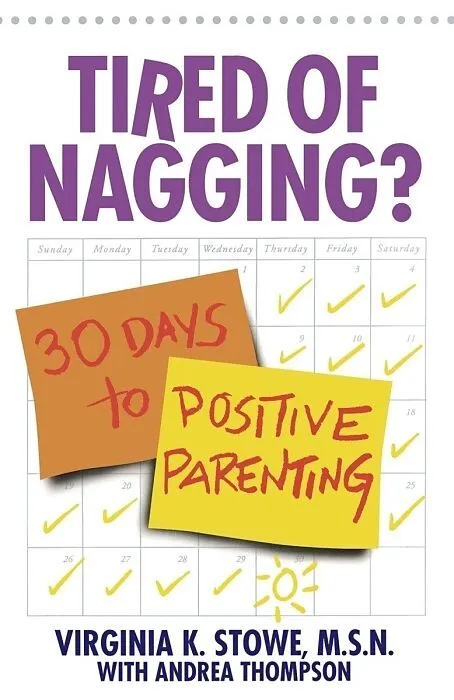
Tired of Nagging?
Beschreibung
Informationen zum Autor Virgina Stowe with Andrea Thompson Klappentext Geared for today's overstressed parents of children under five years old! "Tired of Nagging?" offers a simple program that turns resistance into cooperation--and produces profound results. ...Format auswählen
- Kartonierter EinbandCHF 23.00
Wird oft zusammen gekauft
Andere Kunden kauften auch
Beschreibung
Informationen zum Autor Virgina Stowe with Andrea Thompson Klappentext Geared for today's overstressed parents of children under five years old! "Tired of Nagging?" offers a simple program that turns resistance into cooperation--and produces profound results. Chapter 1 TIRED OF NAGGING?: An Introduction. A 1½-YEAR-OLD, who normally loves going out for a leisurely walk, suddenly wants nothing to do with getting in her stroller. Mom wrestles her child in, amidst screams, kicks, and arching back. A 2-year-old refuses to take Dad's hand as they're walking to the park. Dad clamps on even tighter. As soon as he loosens his grip, off goes his toddler, gleefully running away while the frantic father charges after. A 3-year-old has demanded SpaghettiOs and fish sticks for dinnerthen won't eat. A 5-year-old thinks her parents are so stupid, and tells them so. Does any of that sound familiar? Have you been there? Preschool-aged children are wonderful and trying little human beings! As we watch them grow from squirming newborns to young children heading off for the first day of kindergarten, they enchant and delight us. And just as often, they drive us nuts. Why is it so hard to get them to do the simple things they need to do? Why do we get caught up in so many struggles all day long? What more do they want from us anyway? I know what you want, because it is what every parent wants: You want your child to behave in the ways that lead him steadily forward, toward his own life. You want him to learn to talk, dress himself, share his toys, play nicely with other children, use the toilet, not run into the street, accept what he has to do, challenge what seems wrong to him and, in time, do his homework, be responsible to himself and others, leave home, get a job, get married. You want him to become independent. Here's what your child wants: All those same things! He wants to get on with his own life. He wants to be independent. Since you and your youngster have the same goal, being a parent should be easy. As you know, however, it's often not easy at all. WHAT HE DOES THAT YOU CAN'T STAND; WHAT YOU DO THAT YOU CAN'T STAND Growing up to the age of 5 is heady business. Your youngster in those years is learning (besides the walking, talking, eating, toileting basics) that some things are safe and some are dangerous, that Mom and Dad are perfect and then that Mom and Dad aren't so perfect, that other kids exist in the world and sometimes they're fun and sometimes they're hateful, that he doesn't know how to do a lot of things he wants to do, and on and on. All this, at times, makes him angry, frustrated, scared, exhausted, impetuous, or in some other way bothered by his current lot in life. Those feelings often lead to whining, dawdling, hitting, the NO's, plain orneriness, and other (to you) unpleasant activities. But your child has to act in those ways. They are natural behaviors and they are not bad. They are what he uses to try to get what he wants or needs. They are also, of course, the kinds of behaviors that drive you up the wall and that make a lot of the time you spend with your child not as agreeable as you wish it would be. They are the kinds of behaviors that so easily lead you to act in ways that you don't like and would prefer not tonagging your child, being the policeman and issuing orders, sometimes losing it and shouting. DEMOCRACY AT WORK It is absolutely in your power to eliminate much of the whining, dawdling, demandingness, nagging, and yelling that interfere with the joy and pleasure you have in being a parentand that make your child's march toward independence more unruly, and perhaps less successful, than it need be. How to get more agreeably from here to there is what this book will show you. It represents, really, ...
Autorentext
Virgina Stowe with Andrea Thompson
Klappentext
Geared for today's overstressed parents of children under five years old, "Tired of Nagging?" offers a simple program that turns resistance into cooperation--and produces profound results.
Zusammenfassung
What do parents do when the child they adore won't listen? They end up nagging, issuing orders, shouting, and sometimes even spanking. But there is a better way, and Virginia K. Stowe, a parent-child educator for more than twenty-five years, shows how to minimize friction and fighting within the household in order to maximize the pleasures of family life.
Tired of Nagging? provides thirty easy-to-use tools for solving everyday conflicts, scenarios of commonplace power struggles and illustrations of the tools in action, plus an "ages and stages" guide to a child's capabilities and needs. The readable, practical advice promotes a loving, yet firm approach, one that emphasizes working with the child to eliminate undesirable behavior without inhibiting self-esteem and independence.
With Tired of Nagging?, parents can stop losing their patience and begin enjoying to the fullest all the laughter and fun of their child's precious early years.
Leseprobe
Chapter 1
TIRED OF
NAGGING?:
An Introduction.
A 1½-YEAR-OLD, who normally loves going out for a leisurely walk, suddenly wants nothing to do with getting in her stroller. Mom wrestles her child in, amidst screams, kicks, and arching back.
A 2-year-old refuses to take Dad’s hand as they’re walking to the park. Dad clamps on even tighter. As soon as he loosens his grip, off goes his toddler, gleefully running away while the frantic father charges after.
A 3-year-old has demanded SpaghettiOs and fish sticks for dinner—then won’t eat.
A 5-year-old thinks her parents are “so stupid,” and tells them so.
Does any of that sound familiar? Have you been there? Preschool-aged children are wonderful and trying little human beings! As we watch them grow from squirming newborns to young children heading off for the first day of kindergarten, they enchant and delight us. And just as often, they drive us nuts. Why is it so hard to get them to do the simple things they need to do? Why do we get caught up in so many struggles all day long? What more do they want from us anyway?
I know what you want, because it is what every parent wants: You want your child to behave in the ways that lead him steadily forward, toward his own life. You want him to learn to talk, dress himself, share his toys, play nicely with other children, use the toilet, not run into the street, accept what he has to do, challenge what seems wrong to him … and, in time, do his homework, be responsible to himself and others, leave home, get a job, get married. You want him to become independent.
Here’s what your child wants: All those same things! He wants to get on with his own life. He wants to be independent.
Since you and your youngster have the same goal, being a parent should be easy. As you know, however, it’s often not easy at all.
WHAT HE DOES THAT YOU CAN’T STAND;
WHAT YOU DO THAT YOU CAN’T STAND
Growing up to the age of 5 is heady business. Your youngster in those years is learning (besides the walking, talking, eating, toileting basics) that some things are safe and some are dangerous, that Mom and Dad are perfect and then that Mom and Dad aren’t so perfect, that other kids exist in the world and sometimes they’re fun and sometimes they’re hateful, that he doesn’t know how to do a lot of things he wants to do, and on and on.
All this, at times, makes him angry, frustrated, scared, exhausted, impetuous, or in some other way bothered by his current lot in life. Those feelings often lead to whining, dawdling, hitting, the “NO’s,” plain orneriness, and other (to you) unpleasant activities. But your child has to act in tho…