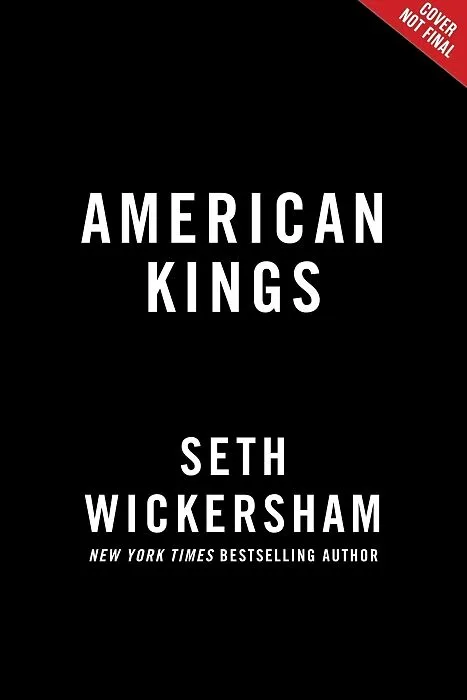
American Kings
Beschreibung
Seth Wickersham, ESPN Senior Writer and Quarterbacks are the American equivalent of royalty, long glamorized, mythologized and worshiped. But before the Super Bowl trophies, massive contracts, brand deals, and millions of social media followers comes the dream...Format auswählen
- Fester EinbandCHF 31.60

Wird oft zusammen gekauft
Andere Kunden kauften auch
Beschreibung
Seth Wickersham, ESPN Senior Writer and Quarterbacks are the American equivalent of royalty, long glamorized, mythologized and worshiped. But before the Super Bowl trophies, massive contracts, brand deals, and millions of social media followers comes the dream. From the backyard to Pop Warner to high school to college, becoming the ultimate American idol requires single-minded focus while navigating a maze of bad breaks, insecurities, jealousy, pressure, and fame. Wickersham’s fresh reporting goes deep into that journey -- and beyond, measuring the distance between what the men who have done it expected and what they found. Through unprecedented access into the lives of generational greats such as Johnny Unitas, John Elway, Peyton Manning, Warren Moon, Steve Young, Patrick Mahomes, and others, as well as those striving to be remembered, like Caleb Williams and Arch Manning, Wickersham reveals how this one position has become emblematic of success in American life. An inside look at the drama, demands, sacrifice and glory that comes with playing quarterback, <American Kings< is a must-read not just for sports fans but for anyone who wants to understand what the quest for achievement and status tells us about the price of ambition.
Autorentext
Seth Wickersham is a senior writer at ESPN and the author of two New York Times bestsellers, American Kings: A Biography of the Quarterback and It’s Better to Be Feared: The New England Patriots Dynasty and the Pursuit of Greatness. Focusing primarily on long-form enterprise and investigative work on the National Football League, Wickersham has been a finalist for the National Magazine Award for Reporting, and his stories have been anthologized in The Best American Magazine Writing, The Best American Sports Writing, and Next Wave: America’s New Generation of Great Literary Journalists, among others. Released in 2021, It’s Better to Be Feared was named Nonfiction Book of the Year by Sports Illustrated and Best Sports Book by the National Sports Media Association. He lives in Connecticut with his family.
Klappentext
**Pull back the curtain on the most powerful position in all of sports. The New York Times bestselling author of It’s Better to be Feared examines football’s QB lifecycle: high school, college, the NFL, retirement—and all that comes with it.
"A MUST BUY" — New York Times / *The Athletic
*A Boston Globe and NPR pick for Best Books of 2025
New York Book Festival • General Nonfiction Winner
*** The Instant New York Times bestseller ***
“An instant classic—not just a great sports book but a great cultural history.”
—Jonathan Eig, Pulitzer Prize–winning author of King: A Life
**
The quarterback: the American equivalent of royalty, long glamorized, mythologized, and worshipped. Still, long before the Super Bowl trophies, massive contracts, brand deals, and millions of social media followers comes the dream. From the backyard to Pop Warner, from high school to college, from the NFL to the Hall of Fame, becoming the country’s ultimate idol requires single-minded focus while navigating a maze of bad breaks, insecurities, jealousy, pressure, and fame.
Long known as the outsider’s guide into this elite world, Seth Wickersham’s fresh reporting goes deep into the quarterback journey, measuring the distance between what the men who have traveled it expected and what they found at the end of the road. Through unprecedented access into the lives of dozens of quarterbacks and generational greats such as Johnny Unitas, John Elway, Peyton Manning, Warren Moon, Steve Young, and others, as well as those figures striving to be remembered, like Caleb Williams and Arch Manning, Wickersham reveals how this one position has become emblematic of success in American life.
As an inside look into a uniquely American job and a uniquely American obsession with football, American Kings is a must-read for sports fans and anyone who wants to understand what the price of ambition tells us about the quest for achievement and status.
Leseprobe
Part I. Origins.
John Elway sometimes watches his younger self—the Elway that I loved—on YouTube. More than reliving old memories, he likes to see how that guy stacks up to the current guys, the newest models. He’s pleased with the answer. We’re in a bar south of Denver on a May afternoon—as it happens, forty years to the day after Elway demanded and was granted a trade from the Baltimore Colts to the Denver Broncos in 1983. Quick to smile and slim at sixty-two, down thirty-five pounds from a few years ago when he was leading a manic life as the Broncos general manager, he’s just flown in from “a good run” at the craps tables in Las Vegas. He sits with his back to the bar. The lunch crowd points and whispers. It’s hard to imagine a professional athlete meaning as much to a city as Elway has meant to Denver over the years. We talk about beginnings. He tells me about earning his first letterman jacket: Granada Hills Highlanders, 1977. A year earlier his father, Jack, had gotten a job as head coach at Cal State Northridge in the valley north of Los Angeles. Elway can still see the black leather sleeves and the Kelly green wool. His name stitched in white. “Like a trophy,” he says. He remembers the pins he put on the letter, remembers proudly walking the school halls. “Making all-league, trying to make all-city . . .” The jacket now hangs behind glass in a restaurant bearing his name, and the football field at Granada Hills bears his name, too. But there was a moment when one of the greatest quarterbacks of all time didn’t think of himself as a quarterback at all.
Football was once the expression of a certain sort of omnivorous land grab, a bruising ground-level grind to take what we see as ours. But the spiral, a pass—the first known example of which probably came in 1885—and its particular and exhilarating and efficient carve through space, a pursuit and trajectory, metaphysical and mystical and metaphorical all at once, a demonstration of ambition and grace, untethered, bold, full of possibility, brought the game into the realm of discovery. Only in 2020 did scientists pin down the physics of a football in flight, why it turns over in the air rather than sinking to the ground. A spiral can be the offspring of a variety of arm angles, from over-the-top to three-quarters, sidearm, and even sometimes underhand, but no two are quite alike. Joe Namath’s is different from Johnny Unitas’s is different from Terry Bradshaw’s is different from Joe Montana’s is different from John Elway’s is different from Tom Brady’s is different from Patrick Mahomes’s. That wrist snap and twist-swirl, that whip of the finger, it’s a signature, like a strand of DNA, a statement of style and intent. If it didn’t fly in that tight, silent spin, there would be no such thing as a quarterback. Not a magical one. Not of the kind Elway was. Not of the kind I wanted to be.
But it does, and because it does, the quarterback’s power, pressures, and responsibility sometimes seem near limitless. The first time I saw Elway throw a football in person was November 24, 1991, Broncos at Seahawks. I was fifteen years old. The word I’d use to describe his ball’s aesthetic now, but didn’t think of then, is determined. He threw spirals that had muscular ideas and intentions, that knew what they wanted. The ball he threw, and the self-assured—if not outright arrogant—barely contained violence with which he threw it, conspired to make him execute things others wouldn’t try, setting up deep in the pocket and calmly hitting impossible margins on …