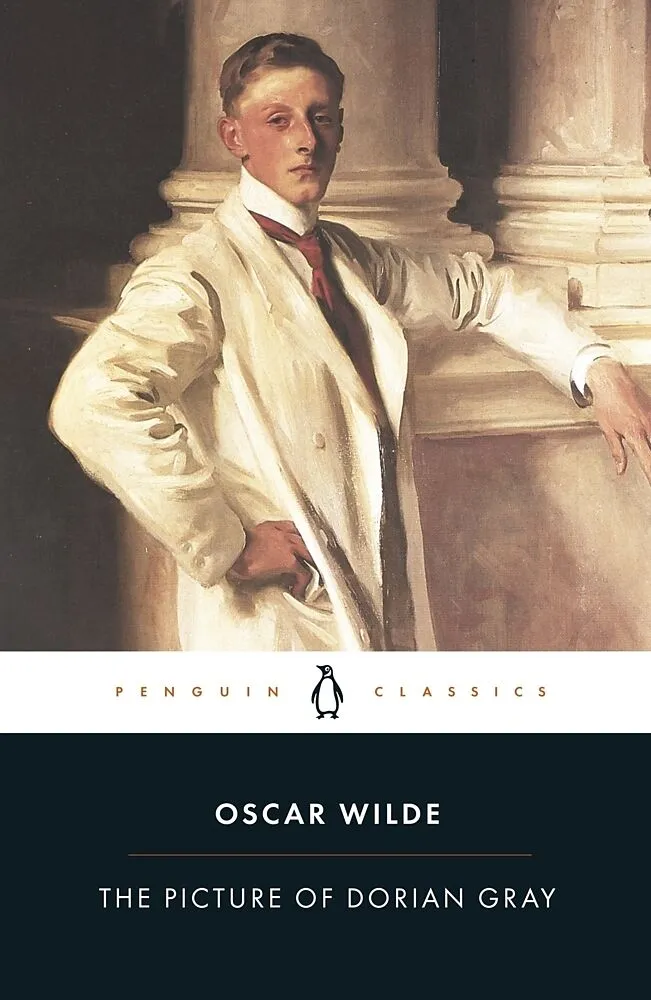
The Picture of Dorian Gray
Beschreibung
Enthralled by his own exquisite portrait, Dorian Gray exchanges his soul for eternal youth and beauty. Influenced by his friend Lord Henry Wotton, he is drawn into a corrupt double life; indulging his desires in secret while remaining a gentleman in the eyes o...Format auswählen
- Kartonierter EinbandCHF 14.60
- Poche format BCHF 13.00
- Fester EinbandCHF 25.90
- E-Book (epub)CHF 5.50
- Livre Audio CDCHF 31.60

Wird oft zusammen gekauft
Andere Kunden kauften auch
Beschreibung
Enthralled by his own exquisite portrait, Dorian Gray exchanges his soul for eternal youth and beauty. Influenced by his friend Lord Henry Wotton, he is drawn into a corrupt double life; indulging his desires in secret while remaining a gentleman in the eyes of polite society. Only his portrait bears the traces of his decadence.
Zusatztext Amazon.co.uk A lush! cautionary tale of a life of vileness and deception or a loving portrait of the aesthetic impulse run rampant? Why not both? After Basil Hallward paints a beautiful! young man's portrait! his subject's frivolous wish that the picture change and he remain the same comes true. Dorian Gray's picture grows aged and corrupt while he continues to appear fresh and innocent. After he kills a young woman! "as surely as if I had cut her little throat with a knife"! Dorian Gray is surprised to find no difference in his vision or surroundings. "The roses are not less lovely for all that. The birds sing just as happily in my garden." As Hallward tries to make sense of his creation! his epigram-happy friend Lord Henry Wotton encourages Dorian in his sensual quest with any number of Wildean paradoxes! including the delightful "When we are happy we are always good! but when we are good we are not always happy." But despite its many languorous pleasures! The Picture of Dorian Gray is an imperfect work. Compared to the two (voyeuristic) older men! Dorian is a bore! and his search for ever new sensations far less fun than the novel's drawing-room discussions. Even more oddly! the moral message of the novel contradicts many of Wilde's supposed aims! not least "no artist has ethical sympathies. An ethical sympathy in an artist is an unpardonable mannerism of style." Nonetheless! the glamour boy gets his just deserts. And Wilde! defending Dorian Gray! had it both ways: "All excess! as well as all renunciation! brings its own punishment." Informationen zum Autor Oscar Fingal O'Flahertie Wills Wilde was born in Dublin in 1854. He went to Trinity College, Dublin and then to Magdalen College, Oxford, where he began to propagandize the new Aesthetic (or 'Art for Art's Sake') Movement. Despite winning a first and the Newdigate Prize for Poetry, Wilde failed to obtain an Oxford scholarship, and was forced to earn a living by lecturing and writing for periodicals. After his marriage to Constance Lloyd in 1884, he tried to establish himself as a writer, but with little initial success. However, his three volumes of short fiction, The Happy Prince (1888), Lord Arthur Savile's Crime (1891) and A House of Pomegranates (1891), together with his only novel, The Picture of Dorian Gray (1891), gradually won him a reputation as a modern writer with an original talent, a reputation confirmed and enhanced by the phenomenal success of his Society Comedies - Lady Windermere's Fan , A Woman of No Importance , An Ideal Husband and The Importance of Being Earnest , all performed on the West End stage between 1892 and 1895. Success, however, was short-lived. In 1891 Wilde had met and fallen extravagantly in love with Lord Alfred Douglas. In 1895, when his success as a dramatist was at its height, Wilde brought an unsuccessful libel action against Douglas's father, the Marquess of Queensberry. Wilde lost the case and two trials later was sentenced to two years' imprisonment for acts of gross indecency. As a result of this experience he wrote The Ballad of Reading Gaol . He was released from prison in 1897 and went into an immediate self-imposed exile on the Continent. He died in Paris in ignominy in 1900. Klappentext 'A triumph of execution ... one of the best narratives of the "double life" of a Victorian gentleman' Peter Ackroyd Oscar Wilde's alluring novel of decadence and sin was a succès de scandale on publication. It follows Dorian Gray who, enthralled by his own exquisite portrait, exchanges his soul for eternal youth and beauty. Influenced by his friend Lord Henry Wotton, he is drawn into a corrupt double life, indulging his desires in secret while remaining a gentleman in the eyes of polite society. Only his portrait bears the traces of his depravity. This definitive edition i...
Autorentext
Oscar Fingal O'Flahertie Wills Wilde was born in Dublin in 1854. He went to Trinity College, Dublin and then to Magdalen College, Oxford, where he began to propagandize the new Aesthetic (or 'Art for Art's Sake') Movement.
Despite winning a first and the Newdigate Prize for Poetry, Wilde failed to obtain an Oxford scholarship, and was forced to earn a living by lecturing and writing for periodicals. After his marriage to Constance Lloyd in 1884, he tried to establish himself as a writer, but with little initial success. However, his three volumes of short fiction, The Happy Prince (1888), Lord Arthur Savile's Crime (1891) and A House of Pomegranates (1891), together with his only novel, The Picture of Dorian Gray (1891), gradually won him a reputation as a modern writer with an original talent, a reputation confirmed and enhanced by the phenomenal success of his Society Comedies - Lady Windermere's Fan, A Woman of No Importance, An Ideal Husband and The Importance of Being Earnest, all performed on the West End stage between 1892 and 1895.
Success, however, was short-lived. In 1891 Wilde had met and fallen extravagantly in love with Lord Alfred Douglas. In 1895, when his success as a dramatist was at its height, Wilde brought an unsuccessful libel action against Douglas's father, the Marquess of Queensberry. Wilde lost the case and two trials later was sentenced to two years' imprisonment for acts of gross indecency. As a result of this experience he wrote The Ballad of Reading Gaol. He was released from prison in 1897 and went into an immediate self-imposed exile on the Continent. He died in Paris in ignominy in 1900.
Klappentext
'A triumph of execution ... one of the best narratives of the "double life" of a Victorian gentleman' Peter Ackroyd
Oscar Wilde's alluring novel of decadence and sin was a succès de scandale on publication. It follows Dorian Gray who, enthralled by his own exquisite portrait, exchanges his soul for eternal youth and beauty. Influenced by his friend Lord Henry Wotton, he is drawn into a corrupt double life, indulging his desires in secret while remaining a gentleman in the eyes of polite society. Only his portrait bears the traces of his depravity. This definitive edition includes a selection of contemporary reviews condemning the novel's immorality.
Edited with an Introduction and notes by ROBERT MIGHALL
Zusammenfassung
Enthralled by Dorian Gray' own exquisite portrait, he exchanges his soul for eternal youth and beauty. Influenced by his friend Lord Henry Wotton, he is drawn into a corrupt double life; indulging his desires in secret while remaining a gentleman in the eyes of polite society. Only his portrait bears the traces of his decadence.
Leseprobe
Dorian made no answer, but passed listlessly in front of his picture and turned towards it. When he saw it he drew back, and his cheeks flushed for a moment with pleasure. A look of joy came into his eyes, as if he had recognized himself for the first time. He stood there motionless and in wonder, dimly conscious that Hallward was speaking to him, but not catching the meaning of his words. The sense of his own beauty came on him like a revelation. He had never felt it before. Basil Hallwards's compliments has seemed to him to be merely the charming exaggerations of friendship. He had listened to them, laughed at them, forgotten them. They had not influenced his nature. Then had come Lord Henry Wotton with his strange panegyric on youth, his terrible warning of its brevity. That had stirred him at the time, and now, as he stood gazing at the shadow of his own loveliness, the full reality of the description flashed across him. Yes, there would be a day when his face would be…