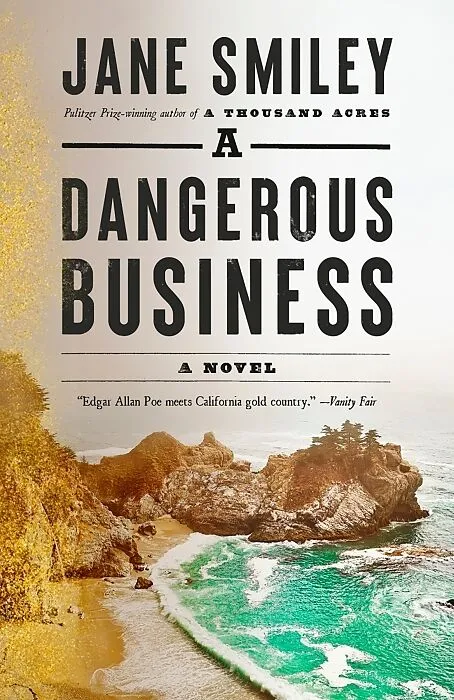
A Dangerous Business
Beschreibung
Informationen zum Autor JANE SMILEY is the author of numerous novels, including A Thousand Acres , which was awarded the Pulitzer Prize, and the Last Hundred Years Trilogy: Some Luck , Early Warning , and Golden Age . She is the author as well of several works...Format auswählen
- Kartonierter EinbandCHF 20.00

Wird oft zusammen gekauft
Andere Kunden kauften auch
Beschreibung
Informationen zum Autor JANE SMILEY is the author of numerous novels, including A Thousand Acres , which was awarded the Pulitzer Prize, and the Last Hundred Years Trilogy: Some Luck , Early Warning , and Golden Age . She is the author as well of several works of nonfiction and books for young adults. A member of the American Academy of Arts and Letters, she has also received the PEN Center USA Lifetime Achievement Award for Literature. She lives in Northern California. Klappentext "From the beloved Pulitzer Prize-winning and best-selling author: a rollicking murder mystery set in Gold Rush California, as two young prostitutes follow a trail of missing girls. Monterey, 1851. Ever since her husband was killed in a bar fight, Eliza Ripple has been working in a brothel. It seems like a better life, at least at first. The madam, Mrs. Parks, is kind, the men are (relatively) well behaved, and Eliza has attained what few women have: financial security. But when the dead bodies of young women start appearing outside of town, a darkness descends that she can't resist confronting. Side by side with her friend Jean, and inspired by her reading, especially by Edgar Allan Poe's detective, Dupin, Eliza pieces together an array of clues to try to catch the killer, all the while juggling clients who begin to seem more and more suspicious. Eliza and Jean are determined not just to survive but to find their way in a lawless town on the fringes of the Wild West-a bewitching combination of beauty and danger-as what will become the Civil War looms on the horizon. As Mrs. Parks says, 'Everyone knows that this is a dangerous business, but between you and me, being a woman is a dangerous business, and don't let anyone tell you otherwise . . . '"-- Leseprobe • 1 • Two months after her husband died on November 12, 1851, Eliza Ripple stopped writing letters to her mother back in Kalamazoo. The reason was both simple and complex. Her mother had written her three letters, all of them lamenting and lamenting and lamenting Peter's demise, but, apart from the shock (which was perfectly understandable, given that he was shot in a bar fight in Monterey), Eliza was more relieved than upset. They had been married for a little over two yearsshe was eighteen when her father handed her over to Peter, who was thirty-eight. Eliza had hardly known Peter at the time, as he was new to Kalamazoo, visiting a cousin he had there. He had presented himself as prosperous and well mannered, an experienced traveler with connections and funds. Eliza had offended both of her parents by becoming fond of a boy her age, from Ireland (County Cork), who worked in a lumber mill, though not the one her father owned, was tall and handsome, spoke with a lilt, hadn't a penny, and was, of all things, Catholic. All of the members of her family, staunch Covenanters, were convinced that the Irish, especially those from Cork and Dublin, were soulless sinners. Her father had pointed to a freed slave who'd run across the Ohio River to Cincinnati, and then made his way north, and said, Better Josiah Grant than that bog trotter. Peter never told her parents he was a Covenanter, or even a Presbyterian, but he had the right nameCargilland was happy to be married in their little church in Kalamazoo. And the only thing Eliza could think of while the ceremony was taking place was the sight of Liam Callaghan standing on the corner of Lovell Street and Park Street, the red autumn leaves fluttering above him, staring at their carriage as they drove to the church. Perhaps her parents assumed that Peter would settle down in Kalamazoo, buy himself a sturdy house, and produce the grandchildren her mother was ready for, but once the snow melted off in the spring, Peter was already preparing himself for California, the gold rush, his future wealth. And whatever wealth he had was all in the futureby the Christmas after they we...
Autorentext
JANE SMILEY is the author of numerous novels, including A Thousand Acres, which was awarded the Pulitzer Prize, and the Last Hundred Years Trilogy: Some Luck, Early Warning, and Golden Age. She is the author as well of several works of nonfiction and books for young adults. A member of the American Academy of Arts and Letters, she has also received the PEN Center USA Lifetime Achievement Award for Literature. She lives in Northern California.
Zusammenfassung
From the Pulitzer Prize-winning, best-selling author of A Thousand Acres: An amazing “mash-up of a Western, a serial-killer mystery and a feminist-inflected tale of life in a bordello” (The Washington Post).
In 1850s Gold Rush California two young prostitutes, best friends Eliza and Jean, attempt to find their way in a lawless town on the fringes of the Wild West—a bewitching combination of beauty and danger—as what will become the Civil War looms on the horizon.
“Everyone knows that this is a dangerous business, but between you and me, being a woman is a dangerous business, and don’t let anyone tell you otherwise..."
Monterey, 1851. Ever since her husband was killed in a bar fight, Eliza Ripple has been working in a brothel. It seems like a better life, at least at first. The madam, Mrs. Parks, is kind, the men are (relatively) well behaved, and Eliza has attained what few women have: financial security. But when the dead bodies of young women start appearing outside of town, a darkness descends that she can't resist confronting. Side by side with her friend Jean, and inspired by her reading, especially by Edgar Allan Poe’s detective Dupin, Eliza pieces together an array of clues to try to catch the killer, all the while juggling clients who begin to seem more and more suspicious.
Eliza and Jean are determined not just to survive, but to find their way in a lawless town on the fringes of the Wild West—a bewitching combination of beauty and danger—as what will become the Civil War looms on the horizon. As Mrs. Parks says, "Everyone knows that this is a dangerous business, but between you and me, being a woman is a dangerous business, and don’t let anyone tell you otherwise ..."
Leseprobe
• 1 •
Two months after her husband died on November 12, 1851, Eliza Ripple stopped writing letters to her mother back in Kalamazoo. The reason was both simple and complex. Her mother had written her three letters, all of them lamenting and lamenting and lamenting Peter’s demise, but, apart from the shock (which was perfectly understandable, given that he was shot in a bar fight in Monterey), Eliza was more relieved than upset. They had been married for a little over two years—she was eighteen when her father handed her over to Peter, who was thirty-eight. Eliza had hardly known Peter at the time, as he was new to Kalamazoo, visiting a cousin he had there. He had presented himself as prosperous and well mannered, an experienced traveler with connections and funds. Eliza had offended both of her parents by becoming fond of a boy her age, from Ireland (County Cork), who worked in a lumber mill, though not the one her father owned, was tall and handsome, spoke with a lilt, hadn’t a penny, and was, of all things, Catholic. All of the members of her family, staunch Covenanters, were convinced that the Irish, especially those from Cork and Dublin, were soulless sinners. Her father had pointed to a freed slave who’d run across the Ohio River to Cincinnati, and then made his way north, and said, “Better Josiah Grant than that bog trotter.”
Peter never told her parents he was a Covenanter, or even a Presbyterian, but he had the right name—Cargill—and was happy to be married in their little church in Kalamazoo. And the only thing Eliza could think of w…