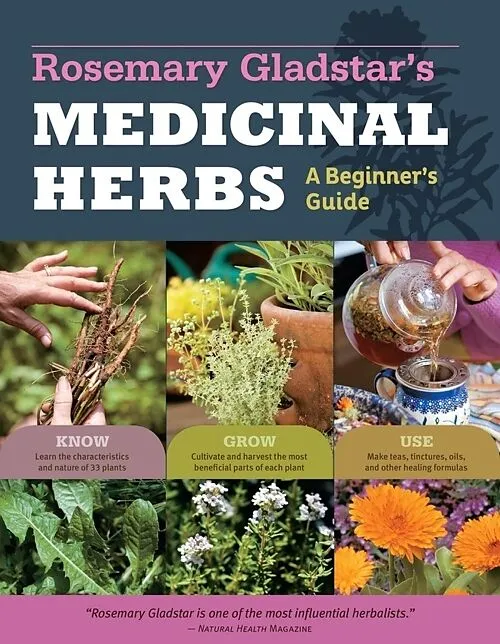
Rosemary Gladstar's Medicinal Herbs: A Beginner's Guide
Beschreibung
Zusatztext "The goal of this beginner's guide is to teach readers how to identify and cultivate medicinal herbs and then use them to create healing oils! salves! tonics and more. ... Whether your passions lie in gardening! crafting or natural health! you'll fi...Format auswählen
- Kartonierter EinbandCHF 18.40

Wird oft zusammen gekauft
Andere Kunden kauften auch
Beschreibung
Zusatztext "The goal of this beginner's guide is to teach readers how to identify and cultivate medicinal herbs and then use them to create healing oils! salves! tonics and more. ... Whether your passions lie in gardening! crafting or natural health! you'll find this a wonderful addition to your home library." Informationen zum Autor Rosemary Gladstar has been practicing, living, learning, teaching, and writing about herbs for over 50 years. Considered a star figure in the modern herbal movement and often referred to as the "godmother of American herbalism", Gladstar is the author of twelve books, including Rosemary Gladstar's Medicinal Herbs: A Beginners Guide, Herbs for Children's Health, Rosemary Gladstar's Herbal Recipes for Vibrant Health, Herbal Healing for Women, and Herbal Healing for Men. She is the cofounder and former director of both The International Herb Symposium and The New England Women's Herbal Conference, the founding president of United Plant Savers, and the cofounder of and original tea-blend formulator for Traditional Medicinals. She is also the author and teacher of the popular home study course, The Science and Art of Herbalism, which continues to inspire and teach many thousands of students around the world. In 2018, Gladstar was awarded an honorary doctorate for her life's work from the National University of Naturopathic Medicine. Klappentext Home-Grown Medicine Effective, safe, and inexpensive, medicinal herbs are simple to grow, and they can be used to naturally fortify your body against common upsets and ailments. Rosemary Gladstar, the godmother of modern herbalism, offers a fresh introduction to growing and using 33 of her favorite herbs, complete with tips on introducing an herb patch to your backyard garden and easy-to-follow recipes for brewing restorative teas, blending soothing salves, and making tinctures, oils, syrups, and pills. 124 of Rosemary Gladstar's favorite medicinal recipes include: Creaky Bones Cayenne Rub, page 63 Warming Cinnamon Bath Salts, page 68 Ginger Lemonaide, page 80 Brain Tonic Tincture, page 85 Good Gargle for a Bad Throat, page 88 Rosemary's Famous Face Cream, page 116 Nutritive Heart Tonic Tincture, page 136 Lemon Balm Bath, page 160 Peppermint Tooth Powder, page 187 Vorwort With this bestselling book by Rosemary Gladstar, the godmother of modern herbalism, learn how to grow, harvest, prepare, and use the 33 most common and versatile healing plants. Everyone will love this guide to inexpensive and natural home-healing! Infusions and Decoctions When making tea, leaves and flowers are prepared differently from roots and bark, in much the same way that spinach is cooked differently from potatoes. Leaves and flowers are generally steeped in hot water so as not to overcook and destroy the enzymes, vitamins, and precious essential oils. Roots and bark are generally simmered to draw forth the more tenacious plant constituents. There are a few exceptions to these rules, which you'll generally find noted in herb books, including this one. But honestly, if you make a mistake and simmer a root that should have been steamed, don't panic. Your remedy will still work. The process of steeping a plant in boiling water is called infusion, while the process of simmering a plant in lightly boiling water is called decoction. When in doubt, steep. Steeping is much less destructive to many of the important medicinal components of plants. The longer you steep the herbs, the stronger the tea. That's not always preferable, as long steeping times can bring out some of the less desirable parts of the plant. Steep black tea too long and what happens? It goes from being a fragrant, aromatic beverage to an astringent-tasting, tannin-rich medicinal tea. A medicinal tea blend,...
Vorwort
With this bestselling book by Rosemary Gladstar, the godmother of modern herbalism, learn how to grow, harvest, prepare, and use the 33 most common and versatile healing plants. Everyone will love this guide to inexpensive and natural home-healing!
Autorentext
Rosemary Gladstar has been practicing, living, learning, teaching, and writing about herbs for over 50 years. Considered a star figure in the modern herbal movement and often referred to as the "godmother of American herbalism", Gladstar is the author of twelve books, including Rosemary Gladstar's Medicinal Herbs: A Beginners Guide, Herbs for Children’s Health, Rosemary Gladstar’s Herbal Recipes for Vibrant Health, Herbal Healing for Women, and Herbal Healing for Men. She is the cofounder and former director of both The International Herb Symposium and The New England Women’s Herbal Conference, the founding president of United Plant Savers, and the cofounder of and original tea-blend formulator for Traditional Medicinals. She is also the author and teacher of the popular home study course, The Science and Art of Herbalism, which continues to inspire and teach many thousands of students around the world. In 2018, Gladstar was awarded an honorary doctorate for her life’s work from the National University of Naturopathic Medicine.
Klappentext
Home-Grown Medicine
Effective, safe, and inexpensive, medicinal herbs are simple to grow, and they can be used to naturally fortify your body against common upsets and ailments. Rosemary Gladstar, the godmother of modern herbalism, offers a fresh introduction to growing and using 33 of her favorite herbs, complete with tips on introducing an herb patch to your backyard garden and easy-to-follow recipes for brewing restorative teas, blending soothing salves, and making tinctures, oils, syrups, and pills.
124 of Rosemary Gladstar's favorite medicinal recipes include:
Creaky Bones Cayenne Rub, page 63
Warming Cinnamon Bath Salts, page 68
Ginger Lemonaide, page 80
Brain Tonic Tincture, page 85
Good Gargle for a Bad Throat, page 88
Rosemary's Famous Face Cream, page 116
Nutritive Heart Tonic Tincture, page 136
Lemon Balm Bath, page 160
Peppermint Tooth Powder, page 187
Leseprobe
Infusions and Decoctions
When making tea, leaves and flowers are prepared differently from roots and bark, in much the same way that spinach is cooked differently from potatoes. Leaves and flowers are generally steeped in hot water so as not to overcook and destroy the enzymes, vitamins, and precious essential oils. Roots and bark are generally simmered to draw forth the more tenacious plant constituents. There are a few exceptions to these rules, which you’ll generally find noted in herb books, including this one. But honestly, if you make a mistake and simmer a root that should have been steamed, don’t panic. Your remedy will still work.
The process of steeping a plant in boiling water is called infusion, while the process of simmering a plant in lightly boiling water is called decoction. When in doubt, steep. Steeping is much less destructive to many of the important medicinal components of plants. The longer you steep the herbs, the stronger the tea. That’s not always preferable, as long steeping times can bring out some of the less desirable parts of the plant. Steep black tea too long and what happens? It goes from being a fragrant, aromatic beverage to an astringent-tasting, tannin-rich medicinal tea.
A medicinal tea blend, whether an infusion or a decoction, is defined by its strength and potency. For medicinal purposes, teas need to be fairly strong, and so you’ll use a relatively large amount of herbs in making them.
How to Make a Medicinal INFUSION
Infusions are made from the more delicate parts of the plant, such as the leaves, flowers, buds, some berries and seeds, and other aromatic plant parts. Highly aromatic roots such as valerian, ginger, and goldenseal are often steeped rather than decocted, though I find they a…