
IHR WARENKORB IST AKTUELL LEER.
Haben Sie noch nichts passendes gefunden? Stöbern Sie durch unser komplettes Sortiment.
Oder melden Sie sich an bzw. registrieren Sie sich.
- Kostenlose Lieferung
- Kauf auf Rechnung
- Ex Libris Tiefpreis
- Filiallieferung und 650+ Abholorte
- Rabatt-Bons als Club-Mitglied
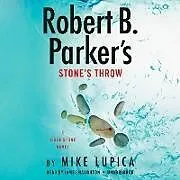
Robert B. Parker's Stone's Throw
Beschreibung
"Lupica successfully captures the cadences and banter of Parker’s crime fiction....Parker fans won’t be disappointed."--Publishers Weekly "Lupica seems thoroughly comfortable carrying on the fictional lives of Robert B. Parker'scharacters. He has t...Format auswählen
- Audio CD (CD/SACD)CHF 44.50

Wird oft zusammen gekauft
Andere Kunden kauften auch
Beschreibung
"Lupica successfully captures the cadences and banter of Parker’s crime fiction....Parker fans won’t be disappointed."--*Publishers Weekly
"Lupica seems thoroughly comfortable carrying on the fictional lives of Robert B. Parker'scharacters. He has the jaunty tone down pat, and everything flows from that with Parker's people."--Booklist*
Autorentext
Mike Lupica
Klappentext
The town of Paradise receives a tragic shock when the mayor is discovered dead, his body lying in a shallow grave on a property on the lake. It's ostensibly suicide, but Jesse has his doubts, especially because the piece of land where the man was found is the subject of a contentious and dodgy land deal. Two powerful moguls are fighting over the right to buy and develop the prime piece of real estate, and one of them has brought in a hired gun, an old adversary of Jesse's: Wilson Cromartie, aka Crow. Meanwhile, the town council is debating if they want to sacrifice Paradise's stately character for the economic boost of a glitzy new development. Tempers are running hot, and as the deaths begin to mount, it's increasingly clear that the mayor may have been standing in the wrong person's way.
Leseprobe
ONE
Sunny Randall, with whom Jesse Stone was currently in a relationship timeout, asked him once what he missed the most about baseball.
“Everything,” he said.
“Even though it broke your heart?”
“Even though,” he said.
They’d been walking on the beach in Paradise, a couple of miles from where he lived.
“Do you ever miss drinking the way you miss baseball?” Sunny said.
“Let me answer you this way,” Jesse said. “The worst days I ever had because of drinking were the worst days I ever had. The worst day I ever had in baseball, at least until the one when I got hurt, was great.”
That day had been in Albuquerque, Triple-A ball, last stop before the majors, when he’d landed on his shoulder and had his dreams of making the show blow up along with his shoulder.
“What about sex?” Sunny asked.
Jesse had grinned.
“Right here?” Jesse said. “Damnit, I knew I should have brought a blanket.”
“You know what I mean,” she said. “Baseball or sex?”
“Sex with you, or sex in general?”
“In general.”
“Baseball,” he said.
“Seriously?”
“Both pleasurable activities, more with you than anyone I’ve ever known,” he said. “But baseball wasn’t just what I did. Was who I was.”
“I thought being a cop was who you are.”
“Now it is,” he said.
It was one of the last times they’d been together before she went to Los Angeles on a case a few weeks later, unsure of when she would return. She’d been hired by an old boyfriend of hers named Tony Gault, a bigtime talent agent Out There whom she still refused to classify as having been her boyfriend, describing him more accurately, she said, as an itch she’d occasionally felt the urge to scratch. Jesse had met Gault, who wasn’t much different from a lot of Hollywood phonies he’d met when he was still working Robbery Homicide for the LAPD. He’d told Sunny, and more than once, that the next time she had a similar itch she should consider ointment.
But they both knew they hadn’t taken this timeout because of the case, or because she was there right now and he was here. They’d decided to take a break because they both knew they needed one. They loved each other, Jesse was certain of that. But she still loved her ex-husband, who had recently helped save her life from some very bad Russians on a case she’d been working. In the aftermath of that, she told Jesse that despite her best intentions, she was still feeling an old, almost gravitational pull, in her ex’s direction, no matter how hard she fought it.
“I don’t pull,” he told her.
“Or push.”
“Nor that.”
“Why I love you,” Sunny said.
“Just not enough?”
“I didn’t say that,” she said.
“Didn’t have to,” Jesse said.
“Let me ask another question about baseball,” Sunny had said that night.'
“As a way of changing the subject?”
“As a way of circling back to the original.”
“Do I need a lawyer before answering?”
“You hate lawyers,” Sunny had said.
“Well,” Jesse said, “there’s that.”
“Are you as happy with me as you were playing baseball?”
“Right now,” he said, “or in general?”
“In general,” she said. “And I don’t need to remind the witness that he’s still under oath.”
When Jesse took too long to answer she’d said, “A full stop like that could hurt a girl’s feelings.”
“You didn’t even let me answer.”
“Didn’t have to,” Sunny had said.
He had been thinking a lot about baseball the past few days, even more than usual, because he had to decide whether or not to play in the Paradise Men’s Softball League, about to start up on Memorial Day Weekend the way it always did. The men’s league, the kind of bar league he used to play in when he was in LA, wasn’t like real baseball, Jesse knew that. Or even close. But close enough. And all the ball he had now. He couldn’t make the kind of throw from shortstop that he used to be able to make when he still had the arm. Sometimes in the morning, when he was sitting on the side of the bed, he would rotate his right shoulder and hear what sounded like loose coins rattling around in a clothes dryer.
But he could still make that throw better than even young studs in the league just out of college. Jesse smiled now, to himself, as he walked the same beach he’d walked with Sunny, just walked it in the night, with her Out There and him here. Knowing that’s the way all old guys thought, all the old ballplayers who were sure they would have made the show if things had broken differently for them.
But I would have made it.
He was on another one of his late-night long walks. He had been taking a lot of them lately, more since Sunny had left. He was still running a few miles a day, a few days a week. But it was getting harder for him to do that, because his knees had begun to bark at him the way his shoulder did. More old man shit that he knew wasn’t going to get any better, or easier, the older he got. Whoever had said it in Hollywood had been right. Getting old wasn’t for sissies.
Especially when they were old ballplayers.
These were the things you thought about out here, the things you couldn’t stop yourself from remembering, sometimes coming at you like the waves.
But it was better for him to be in motion than sitting at home, the time of night in his drinking days when he’d fall asleep in front of the television, in his chair or on the floor, passed out after trying to watch a Red Sox game. Ballgames on television still made him think about drinking. But, then, what the hell didn’t? Even thinking about softball made him thinking about drinking, that first cold one when the game was over that Suitcase Simpson always described as “the best beer of the week.”
So he walked, sometimes through the streets of Paradise, sometimes along the water. Tonight he had decided on the water, Jesse making his way all the way down to the piece of land, high up above him to his right, that h…