
IHR WARENKORB IST AKTUELL LEER.
Haben Sie noch nichts passendes gefunden? Stöbern Sie durch unser komplettes Sortiment.
Oder melden Sie sich an bzw. registrieren Sie sich.
- Kostenlose Lieferung
- Kauf auf Rechnung
- Ex Libris Tiefpreis
- Filiallieferung und 650+ Abholorte
- Rabatt-Bons als Club-Mitglied
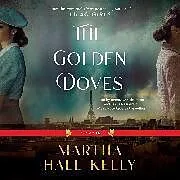
The Golden Doves
Beschreibung
Autorentext Martha Hall Kelly is the New York Times bestselling author of Lilac Girls, Lost Roses, and Sunflower Sisters. With more than two million copies of her books sold and her books translated in fifty countries, Martha lives in Connecticu...Format auswählen
- Audio CD (CD/SACD)CHF 53.50

Wird oft zusammen gekauft
Andere Kunden kauften auch
Beschreibung
Autorentext
Martha Hall Kelly is the New York Times bestselling author of Lilac Girls, Lost Roses, and Sunflower Sisters. With more than two million copies of her books sold and her books translated in fifty countries, Martha lives in Connecticut and New York City.
Zusammenfassung
Two female spies risk everything to hunt down an infamous Nazi in this sweeping, profound tale of bravery from the bestselling author of Lilac Girls.
“A riveting story of two brave and amazing women who work in the French resistance during World War II . . . a triumph!”—Lisa Scottoline, New York Times bestselling author of Eternal
American Josie Anderson and Parisian Arlette LaRue are thrilled to be working in the French resistance, stealing so many Nazi secrets that they become known as the Golden Doves, renowned across France and hunted by the Gestapo. Their courage will cost them everything. When they are finally arrested and taken to the Ravensbrück concentration camp, along with their loved ones, a reclusive Nazi doctor does unspeakable things to Josie’s mother, a celebrated Jewish singer who joined her daughter in Paris when the world seemed bright. And Arlette’s son is stolen from her, never to be seen again.
A decade later the Doves fall headlong into a dangerous dual mission: Josie is working for U.S. Army Intelligence and accepts an assignment to hunt down the infamous doctor, while a mysterious man tells Arlette he may have found her son. The Golden Doves embark on a quest across Europe and ultimately to French Guiana, discovering a web of terrible secrets, and must put themselves in grave danger to finally secure justice and protect the ones they love.
Martha Hall Kelly has garnered acclaim for her stunning combination of empathy and research into the stories of women throughout history and for exploring the terrors of Ravensbrück. With The Golden Doves, she has crafted an unforgettable story about the fates of Nazi fugitives in the wake of World War II—and the unsung female spies who risked it all to bring them to justice.
Leseprobe
**Chapter 1
Josie**
Fort Bliss, Texas
1952
I wake at dawn, facedown on the sofa, thinking I’m back in Block Ten. The living room window’s open a crack, and another Texas dust storm blows like hell outside, pummeling the room with more sand than dust. I swing my feet to the floor, head pounding. Sixty-five dossier photos taped above the sofa flutter in the wind, and the men look down on me.
Mengele. Von Braun. Speer.
I stand, head for the window, and kick over a half-full beer can. “Shit.”
A gust hits my little shrine on the coffee table, the votive still flickering under my mother’s picture and the photo of Arlette and me, arms linked at liberation. The wind catches my mother’s photo and sails it into the air. I lunge to catch it before it falls, and then set it back in its spot.
I shuffle to the window, sand swirling in the air outside, so thick that the Franklin Mountains in the distance are just blurry mounds. A pigeon sits outside on the sill waiting out the storm. I wave her away and thump the window closed.
The kitchen wall clock reads 6:30 a.m. I’m already late.
Can’t wait to get this over with. Hopefully a routine job. By my rules this time.
I pull on my regulation pinkish skirt, green blouse, and drab field jacket, then slide my silver PPK into my shoulder holster. That simple act calms me, the brown grip the perfect size for my hand. It’s the Nazi police gun I confiscated from the suitcase of an incoming scientist, who swore he didn’t know how it got there.
I stuff a pair of hospital gloves into one pocket, grab the welcome basket, and drive a government-issued jeep past the massive rocket at the entrance that reads welcome to fort bliss: your army anti-aircraft and guided missile center.
I read the latest dossier as I drive. They all had quirks from their intake forms. One bathes obsessively. One masturbates too much. Krupp’s quirk is that he’s fastidious about his clothes and insisted he and his wife, Irma, buy all new luggage for the trip, specifying the exact models of the suitcases. Each new scientist was bound by their contract to declare the contents of each bag, but he’d written a missive on the packed items, down to his ten pairs of undershorts and his wife’s cosmetic collection.
I find 210 Canyon Road, on the outskirts of a Fort Bliss residential neighborhood, a basic El Paso two-bedroom ranch house trying its best to be nondescript. It’s the kind of place where military families come to forget the war and forge blindly into the 1950s with the help of bourbon and barbecue.
Only this is no average family.
I press the doorbell and stand in the stinging wind listening to the Westminster chimes, my palms wet on the cellophane of the basket. I survey the olive branch of a gift the Intake Group has assembled; a cheap woven bowl filled with someone’s idea of foods representing American and German cultures. A can of Spam. Some stollen one of the secretaries baked. Oreo cookies, a bottle of Riesling wine, and a six-pack of Pearl beer.
I go to press the bell again and he opens the door a crack. “Jah?”
Just hearing that accent, my skin tries to crawl off my body. “Open up, Mr. Krupp. It’s Lieutenant Anderson.”
He swings the door wider to reveal Mrs. Krupp and two male children bathed in the yellow light of the foyer.
I consider getting back in the jeep and telling Tony P. to do his own intake from now on. Not that he can ever tell if these criminals are hiding anything. He usually ends up knocking back beers with them after a cursory look in their bags.
“I’m here to do your intake briefing, Mr. Krupp.”
The mother holds her children closer.
He beckons me in. “Guten morgen.”
What would Krupp do if I took my gun and waved it in his face like the Ravensbrück guards used to do to us for fun?
“English only, Mr. Krupp.”
“Please enter,” he says and reaches to guide me in.
I step back. “Don’t touch me, sir.”
It’s the same interior all these houses have, low popcorn ceiling, black iron handrails leading to a sunken living room, the carpet still wearing its vacuum marks. It smells like Pine-Sol and pancakes, and the only object in the room is a low oak cabinet, inset with a television, the green screen like one unblinking eye.
Herr Krupp steps back, wringing his hands. “We haven’t much furniture yet, though we were promised it.”
He looks nothing like his photo from the dossier. He’s at least ten years older, a bit stooped, and has lost the cocky grin of the old Reich days. A flat worm of a saber scar shines along his left cheek. The aristocratic badge of honor, proof he can take the pain. It’s the fashionable accessory that every German fencer longed to collect in great numbers, but Herr Krupp was happy with only one.
Without the SS uniform he’s smaller somehow, but my hands sweat just the same.
Mrs. Krupp is more attractive in person, brunette, and gets points for wearing faux pearls and a petticoated dress at this hour of the morning, after traveling all night. For my benefit? She wears no makeup and looks worried, but she’ll shortly bond with the wives of the other Nazis brought here for the rocket program and will soon be bringing tuna casserole to the potlucks at the pool as they reminisce about how handsome Hitler was.
“What is the purpose of this meeting?” she asks.
“To officially welcome you.” And make sure you haven’t smuggled in half the Re…