
IHR WARENKORB IST AKTUELL LEER.
Haben Sie noch nichts passendes gefunden? Stöbern Sie durch unser komplettes Sortiment.
Oder melden Sie sich an bzw. registrieren Sie sich.
- Kostenlose Lieferung
- Kauf auf Rechnung
- Ex Libris Tiefpreis
- Filiallieferung und 650+ Abholorte
- Rabatt-Bons als Club-Mitglied
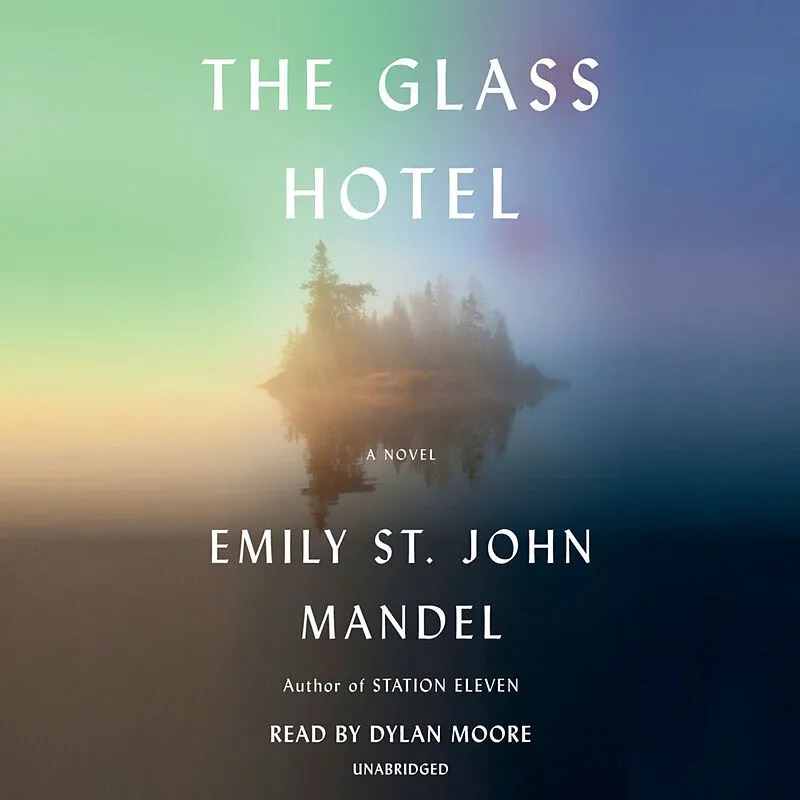

The Glass Hotel
Beschreibung
Nominiert: Scotiabank Giller Prize, 2020.Ungekürzte Ausgabe "The question of what is real—be it love, money, place or memory—has always been at the heart of Ms. Mandel’s fiction... her narratives snake their way across treacherous, shift...Format auswählen
- Audio CD (CD/SACD)CHF 49.50

Wird oft zusammen gekauft
Andere Kunden kauften auch
Beschreibung
Nominiert: Scotiabank Giller Prize, 2020.Ungekürzte Ausgabe
"The question of what is real—be it love, money, place or memory—has always been at the heart of Ms. Mandel’s fiction... her narratives snake their way across treacherous, shifting terrain. Certainties are blurred, truth becomes malleable and in *The Glass Hotel *the con man thrives... Lyrical, hypnotic images... suspend us in a kind of hallucinatory present where every detail is sharply defined yet queasily unreliable. A sense of unease thickens... Ms. Mandel invites us to observe her characters from a distance even as we enter their lives, a feat she achieves with remarkable skill. And if the result is a sense not only of detachment but also of desolation, then maybe that’s the point." **—Anna Mundow, *Wall Street Journal
“A striking book that's every bit as powerful — and timely — as its predecessor… In Vincent and Paul, Mandel has created two of the most memorable characters in recent American fiction… Mandel's writing shines throughout the book, just as it did in Station Eleven. She's not a showy writer, but an unerringly graceful one, and she treats her characters with compassion but not pity. The Glass Hotel is a masterpiece, just as good — if not better — than its predecessor. It's a stunning look at how people react to disasters, both small and large, and the temptation that some have to give up when faced with tragedy.” —Michael Shaub, NPR***
"Mandel’s gift is to weave realism out of extremity. She plants her flag where the ordinary and the astonishing meet, where everyday people pause to wonder how, exactly, it came to this. She is our bard of waking up in the wrong time line... One effect of Mandel’s book is to underscore the seemingly infinite paths a person might travel... There is a suggestion, toward the end of The Glass Hotel, that frequent commerce with the dead (or the imaginary) might reconnect us to the living... Perhaps it is with this in mind that Mandel has constructed a fantasy for our temporary habitation. Her story offers escape, but the kind that depends on and is inseparable from the world beyond it."**—Katy Waldman, *The New Yorker
"[This] novel [is] so absorbing, so fully realized that it draws you out of your own constricted situation and expands your sense of possibilities. For me, over the past 10 days or so, the novel that's performed that act of deliverance... it's "straight" literary fiction, gorgeous and haunting, about the porous boundaries between past and present, the rich and the poor, and the realms of the living and the dead... This all-encompassing awareness of the mutability of life grows more pronounced as The Glass Hotel reaches its eerie sea change of an ending. In dramatizing so ingeniously how precarious and changeable everything is, Mandel's novel is topical in a way she couldn't have foreseen when she was writing it."—Maureen Corrigan, Fresh Air***
“A wondrously entertaining novel… The Glass Hotel is never dull. Tracing the permutations of its characters’ lives, from depressing apartments in bad neighborhoods to posh Dubai resorts to Manhattan bars, Colorado campgrounds, and the Edinburgh Fringe Festival is like following the intricate patterns on Moroccan tiles. The pleasure, which in the case of The Glass Hotel is abundant, lies in the patterns themselves… This is a type of art that closely approximates life, and a remarkable accomplishment for Mandel… This novel invites you to inhabit it without striving or urging; it’s a place to be, always fiction’s most welcome effect.”—Laura Miller, Slate
"The Glass Hotel may be the perfect novel for your survival bunker... Freshly mysterious... Mandel is a consummate, almost profligate world builder. One superbly developed setting gives way to the next, as her attention winds from character to character, resting long enough to explore the peculiar mechanics of each life before slipping over to the next... That Mandel manages to cover so much, so deeply is the abiding mystery of this book. The 300 pages of The Glass Hotel work harder than most 600-page novels... The disappointment of leaving one story is immediately quelled by our fascination in the next... The complex, troubled people who inhabit Mandel’s novel are vexed and haunted by their failings, driven to create ever more pleasant reflections of themselves in the glass."**—Ron Charles, *The Washington Post
*"An eerie, compelling follow-up... not your grandmother’s Agatha Christie murder mystery or haunted hotel ghost story... The novel’s ongoing sense of haunting extends well beyond its ghosts... The ghosts in The Glass Hotel are directly connected to its secrets and scandals, which mirror those of our time... Like all Mandel’s novels, The Glass Hotel is flawlessly constructed... The Glass Hotel declares the world to be as bleak as it is beautiful, just like this novel."—Rebecca Steinitz, *The Boston Globe
*
"Emily St. John Mandel’s storytelling stretches to see into as many windows as possible. Peer closely: characters move between windows, themes reflect and refract... These are not novels weighted by philosophical debates, however, but stories buoyed by serious concerns; Mandel is as dedicated to plotting as she is to characterization... Characters are linked in unexpected directions, within and between books. It’s a joy to pull at the threads and follow their knots and loops.,, And despite all the glass, there is more conflict than clarity. This makes for compulsively readable novels, carefully crafted page-turners. Don’t just say you’ll visit someday. Call ahead. Make a reservation. Check out the view from The Glass Hotel. Enjoy your stay.”****—Marcie McCauley, Chicago Review of Books
*
“An ephemeral quality permeates the novel… It’s a thrill when the puzzle pieces start to fit together… The final chapter is haunting, taking readers full circle… It’s a sense readers will enjoy as well when they lose themselves in Mandel’s novel.”
**—Rob Merrill, *Associated Press
*“Emily St. John Mandel has a knack for explosive openings… Mandel is constructing a sort of multiverse that demonstrates the power of fiction to imagine simultaneous realities.”
**—Josephine Livingstone, *The New Republic
"Mandel’s crystal ball and uncanny sense of timing remain intact, with a novel of economic collapse, predatory financial figures and widespread corruption... Simply stunning, a boldly experimental work which hooks the reader from its first pages, wending to a powerfully emotional conclusion... The Glass Hotel is a compulsive read, a commercial crowd-pleaser which will, undoubtedly, find a wide audience. It is also a consummate literary novel, courageous and exciting at a structural level. Books that hit the sweet spot like that are rare to find; we should savour them when we can.—Robert J. Wiersema, The Toronto Star*
"The novel proceeds via a series of vignettes set at various points between 1958 and 2029 and ranging around the globe. They gradually knit themselves into a single story in a way that will remind readers of Jennifer Egan’s A Visit From the Goon Squad... This is a strange, ethereal, and very well-written book, so interesting it might actually take your mind off things for a while."—Marion W…