
IHR WARENKORB IST AKTUELL LEER.
Haben Sie noch nichts passendes gefunden? Stöbern Sie durch unser komplettes Sortiment.
Oder melden Sie sich an bzw. registrieren Sie sich.
- Kostenlose Lieferung
- Kauf auf Rechnung
- Ex Libris Tiefpreis
- Filiallieferung und 650+ Abholorte
- Rabatt-Bons als Club-Mitglied
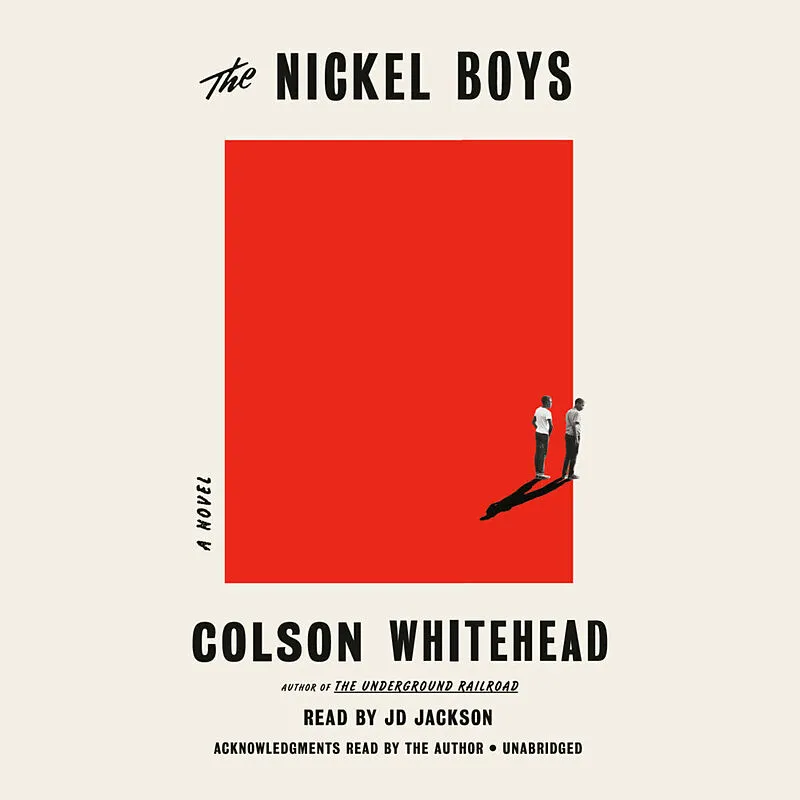
The Nickel Boys (Winner 2020 Pulitzer Prize for Fiction)
Beschreibung
Ausgezeichnet: ALA Alex Award, 2020.Nominiert: Dayton Literary Peace Prize for Fiction, 2020.Nominiert: International IMPAC Dublin Literary Award, 2021.Ausgezeichnet: Kirkus Prize for Fiction, 2019.Nominiert: Los Angeles Times Book Prize, 2019.Nominiert: Natio...Format auswählen
- Audio CD (CD/SACD)CHF 44.50

Wird oft zusammen gekauft
Andere Kunden kauften auch
Beschreibung
Ausgezeichnet: ALA Alex Award, 2020.Nominiert: Dayton Literary Peace Prize for Fiction, 2020.Nominiert: International IMPAC Dublin Literary Award, 2021.Ausgezeichnet: Kirkus Prize for Fiction, 2019.Nominiert: Los Angeles Times Book Prize, 2019.Nominiert: National Book Critics Circle Awards, 2019.Ausgezeichnet: Orwell Prize, 2020.Ausgezeichnet: Pulitzer Prize (Fiction), 2020.Ungekürzte Ausgabe
WINNER OF THE PULITZER PRIZE FOR FICTION • New York Times Bestseller • Longlisted for The National Book Award • Winner of The Kirkus Prize • Winner of the Orwell Prize for Political Fiction • One of Publishers Weekly's 10 Best Books of the Year
"A necessary read." —President Barack Obama
"This is a powerful book by one of America's great writers. . . . Without sentimentality, in as intense and finely crafted a book as you'll ever read, Whitehead tells a story of American history that won’t allow you to see the country in the same way again." —Toronto Star
"Colson Whitehead continues to make a classic American genre his own*.* . . . The narration is disciplined and the sentences plain and sturdy, oars cutting into water. Every chapter hits its marks. . . . Whitehead comports himself with gravity and care, the steward of painful, suppressed histories; his choices on the page can feel as much ethical as aesthetic. The ordinary language, the clear pane of his prose, lets the stories speak for themselves. . . . Whitehead has written novels of horror and apocalypse; nothing touches the grimness of the real stories he conveys here" —*The New York Times
*
"Inspired by a real school in Florida, The Nickel Boys is a haunting narrative that reinforces Whitehead's prowess as a leading voice in American literature." —*TIME
*
"[The Nickel Boys] should further cement Whitehead as one of his generation's best." —Entertainment Weekly
"Were Whitehead’s only aim to shine an unforgiving light on a redacted chapter of racial terrorism in the American chronicle, that would be achievement enough. What he is doing in his new novel, as in its immediate predecessor, is more challenging than that. . . . He applies a master storyteller’s muscle. . . . The elasticity of time in The Nickel Boys feels so organic that only when you put the book down do you fully appreciate that its sweep encompasses much of the last century as well as this one. . . . A writer like Whitehead, who challenges the complacent assumption that we even fathom what happened in our past, has rarely seemed more essential.” —*The New York Times Book Review
*"A masterpiece squared, rooted in history and American mythology and, yet, painfully topical in its visions of justice and mercy erratically denied . . . a great American novel." —Maureen Corrigan, NPR.org
"Whitehead's brilliant examination of America's history of violence is a stunning novel of impeccable language and startling insight." —Publishers Weekly, starred review
"Whitehead's magnetic characters exemplify stoicism and courage, and each supremely craftedscene smolders and flares with injustice and resistance, building to a staggering revelation. Inspired by an actual school, Whitehead's potently concentrated drama pinpoints the brutality and insidiousness of Jim Crow racism with compassion and protest. . . . A scorching work." —Booklist, starred review
"[A] stunning new novel. . . . The understated beauty of his writing, combined with the disquieting subject matter, creates a kind of dissonance that chills the reader. Whitehead has long had a gift for crafting unforgettable characters, and Elwood proves to be one of his best. . . . The final pages of the book are a heartbreaking distillation of the story that preceded them; it's a perfect ending to a perfect novel. The Nickel Boys is a beautiful, wrenching act of witness, a painful remembrance of an 'infinite brotherhood of broken boys,' and it proves beyond a shadow of a doubt that Whitehead is one of the most gifted novelists in America today." —NPR
"Magnificent. . . . Whitehead's prose is meticulous; he nimbly shifts between the 1960s and present day, creating a fully fleshed-out picture of violence and (in)justice." —Buzzfeed
"Colson Whitehead's follow-up to The Underground Railroad is devastating and powerful, a harrowing novelization on another dark aspect of American history. . . . Never didactic, but always illuminating—even in those darkest of places in our collective story—The Nickel Boys is a brilliant, horrifying look into the legacy of Jim Crow, and the ways in which racism and oppression don't exist in defiance to the American Dream, but rather as its fuel." —NYLON
"[*The Nickel Boys'*s] dialogue, the efficient character sketches and the unobtrusive but always-advancing plot are evidence of mature ability . . . spry and animated and seamed with dark humor . . . [with] a dazzling final twist that Mr. Whitehead stages with such casual skill that one only begins to unpack its meanings well after the book has ended. . . . The excellence of The Nickel Boys carries an added feeling of hope because it's evidence of a gradual, old-fashioned artistic progression that fewer and fewer writers are allowed the time to pursue. . . . The Nickel Boys demonstrate the versatile gifts of a writer who is rounding into mastery. The impression left is that Mr. Whitehead can succeed at any kind of book he takes on. He has made himself one of the finest novelists in America." —The Wall Street Journal
"Whitehead's new novel . . . is in many ways a continuation of his reassessment of African American history. But The Nickel Boys is no mere sequel . . . it's a surprisingly different kind of novel. . . . Whitehead reveals the clandestine atrocities of Nickel Academy with just enough restraint to keep us in a state of wincing dread. . . . It shreds our easy confidence in the triumph of goodness and leaves in its place a hard and bitter truth about the ongoing American experiment." —*The Washington Post
*
"Again [Whitehead is] wrestling with American history's reverberations. . . . Since its moral concern is multigenerational anguish, the sense of mourning in The Nickel Boys is subvisceral—not detached, but restrained. . . . We are called to remember, 'The past is never dead. It's not even past.'" —O: The Oprah Magazine
"Possibly the single most anticipated novel of the year." —Los Angeles Times
"A powerful meditation on suffering and injustice. . . . His subject could not be more demanding, but Whitehead's writing is spare and stately. He handles Elwood's and Turner's suffering—and questions—gently. And he holds the reader carefully. . . . For the darkest of tales, that is the most a writer can do." —Winnipeg Free Press
"Whitehead's signature knack for creating unforgettable characters and spinning compelling stories out of even the darkest places is on display once again—and while it's not always an easy story to read, we'd venture to say it's essential." —Town and Country
"If you thought Colson Whitehead's Pulitzer Prize-winning novel The Underground Railroad was a tour de force, wait until you get your hands on The Nickel Boys." —Harper’s Bazaar
"The Nickel Boys is straight-ahead realism, distinguished by its clarity and its open conversation with other black writers: It quotes from or evokes the work of Langston Hughes, James Baldwin, Ralph Ellison and more. Whitehead has made an overt bid to stand in their company—to write a novel that’s memorable, and teachable, for years to come. The Nickel Boys is…