
IHR WARENKORB IST AKTUELL LEER.
Haben Sie noch nichts passendes gefunden? Stöbern Sie durch unser komplettes Sortiment.
Oder melden Sie sich an bzw. registrieren Sie sich.
- Kostenlose Lieferung
- Kauf auf Rechnung
- Ex Libris Tiefpreis
- Filiallieferung und 650+ Abholorte
- Rabatt-Bons als Club-Mitglied

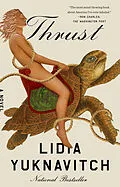
Thrust
Beschreibung
Informationen zum Autor Lidia Yuknavitch Klappentext INSTANT NATIONAL BESTSELLER THRUST IS: Epic. The New York Times A triumph. Elle Stunningly beautiful. The Daily Beast Both of the moment and utterly timeless. Chicago Review of Books A book to take in wide-e...Format auswählen
- Kartonierter EinbandCHF 20.00
- Kartonierter EinbandCHF 21.90
Wird oft zusammen gekauft
Andere Kunden kauften auch
Beschreibung
Informationen zum Autor Lidia Yuknavitch Klappentext INSTANT NATIONAL BESTSELLER THRUST IS: Epic. The New York Times A triumph. Elle Stunningly beautiful. The Daily Beast Both of the moment and utterly timeless. Chicago Review of Books A book to take in wide-eyed. Rebecca Makkai NAMED A BEST BOOK OF THE YEAR BY THE WASHINGTON POST As rising watersand an encroaching police stateendanger her life and family, a girl with the gifts of a "carrier" travels through water and time to rescue vulnerable figures from the margins of history Lidia Yuknavitch has an unmatched gift for capturing stories of people on the marginsvulnerable humans leading lives of challenge and transcendence. Now, Yuknavitch offers an imaginative masterpiece: the story of Laisve, a motherless girl from the late 21st century who is learning her power as a carrier , a person who can harness the power of meaningful objects to carry her through time. Sifting through the detritus of a fallen city known as the Brook, she discovers a talisman that will mysteriously connect her with a series of characters from the past two centuries: a French sculptor; a woman of the American underworld; a dictator's daughter; an accused murderer; and a squad of laborers at work on a national monument. Through intricately braided storylines, Laisve must dodge enforcement raids and find her way to the present day, and then, finally, to the early days of her imperfect country, to forge a connection that might save their livesand their shared dream of freedom. A dazzling novel of body, spirit, and survival, Thrust will leave no reader unchanged. Leseprobe Cruces 1 We dreamed we were hers. The body of us thought that, because we built her, we belonged to her. We built her in pieces from our bodies, from the stories we held and the stories before that and the stories that might come. She arrived by boat in pieces. When the ship Isre finally reached port, we wept. The sailors too. They had been convinced that the tempests they'd endured on board would drown them in the ocean, and the cargo with them. The deck of the ship was nearly a farmer's field in size. The hold had been covered with huge black tarps for the journey. When the sailors pulled the tarps back, the hold looked dark and foreboding. I was asked to jump into that dark. Like plunging into the ocean's deep. Down in the hold, my eyes began to adjust. Gigantic crates the size of houses filled with pieces of the colossus: a woman in slices, crated and shipped. One by one, we found her body parts. Hair. Nose. Crown. Eyes. Mouth. Fingers, hand. Foot. Torch. She had arrived, in pieces of herself. Later, while discussing her reassemblage, an engineer remarked that the "embryo lighthouse," as they called the interior skeleton of the statue, held clues to reconstructing her form. Yet many elements of her construction went unexplained, left us puzzled. We were left with our imaginations to create adaptations. During those months, we lived in the city and we labored on the island. We were woodworkers, ironworkers, roofers and plasterers and brick masons. We were pipe fitters and welders and carpenters. We mixed concrete, we pounded earth, we armed the saws and drills. We were sheet metal and copper specialists. She arrived in our hands as thirty-one tons of copper and one hundred and twenty-five tons of steel. Three hundred copper sheets had been pressed to create the outer skin of her. We were cooks and cleaners and nuns and night watchpeople. We were nurses and artists and janitors, runners and messengers and thieves. Mothers and fathers and grandparents, sisters and brothers and children. During the day you could always hear the i...
Autorentext
Lidia Yuknavitch
Leseprobe
Cruces 1
We dreamed we were hers.
The body of us thought that, because we built her, we belonged to her. We built her in pieces from our bodies, from the stories we held and the stories before that and the stories that might come. She arrived by boat in pieces.
When the ship Isre finally reached port, we wept. The sailors too. They had been convinced that the tempests they'd endured on board would drown them in the ocean, and the cargo with them. The deck of the ship was nearly a farmer's field in size. The hold had been covered with huge black tarps for the journey. When the sailors pulled the tarps back, the hold looked dark and foreboding.
I was asked to jump into that dark.
Like plunging into the ocean's deep.
Down in the hold, my eyes began to adjust. Gigantic crates the size of houses filled with pieces of the colossus: a woman in slices, crated and shipped. One by one, we found her body parts.
Hair.
Nose.
Crown.
Eyes.
Mouth.
Fingers, hand.
Foot.
Torch.
She had arrived, in pieces of herself.
Later, while discussing her reassemblage, an engineer remarked that the "embryo lighthouse," as they called the interior skeleton of the statue, held clues to reconstructing her form. Yet many elements of her construction went unexplained, left us puzzled. We were left with our imaginations to create adaptations.
During those months, we lived in the city and we labored on the island. We were woodworkers, ironworkers, roofers and plasterers and brick masons. We were pipe fitters and welders and carpenters. We mixed concrete, we pounded earth, we armed the saws and drills. We were sheet metal and copper specialists. She arrived in our hands as thirty-one tons of copper and one hundred and twenty-five tons of steel. Three hundred copper sheets had been pressed to create the outer skin of her.
We were cooks and cleaners and nuns and night watchpeople. We were nurses and artists and janitors, runners and messengers and thieves. Mothers and fathers and grandparents, sisters and brothers and children.
During the day you could always hear the insistent hammering, the files grating, the chains clanking, the copper singing as it was being shaped over wooden scaffolds, the cacophonous orchestra of our labor. You could always see arms swinging, hands at work, shoulders and biceps and the jaws of the workers flexing and grinding. Those sounds were our bodies. Her body coming to life from all of our hands. We the body took pride in our labor-as if we expected that someone would know our names, carry our stories.
When the winds in the harbor grew too strong, we had to abandon scaffolding. We used pulleys and ropes. We took care to be gentle against the softer metal. We dangled ourselves around her body, swung around the pieces of her, like the swoop and lift of acrobats, or birds, or window washers-though all of us were tethered to her body.
Sometimes, for just a moment, a body can feel real inside a story that way. As if each of us existed.
At night, when it was no body's shift, some of us would stand around her head and stare at her giant rounded eyes. We thought she looked sad. Or angry and sad. Her eyes each much larger than a human head. Her face neither male nor female, or perhaps just both. We felt she had the stare of our labor but also our loss, our love, our lives. Sometimes, holding near to her, we thought or felt mother, but we meant it in some new way no one has imagined before.
We were the impossible possible voice of bodies.
Some of us were born here and some of us were the sons and daughters of mothers and fathers not from here. They came from famine they came from poverty they came from occupations and brutalities and war. They came from something to leave, which is why they crossed land and water. They spoke of persecutions or poverty, but they also spoke of r