
IHR WARENKORB IST AKTUELL LEER.
Haben Sie noch nichts passendes gefunden? Stöbern Sie durch unser komplettes Sortiment.
Oder melden Sie sich an bzw. registrieren Sie sich.
- Kostenlose Lieferung
- Kauf auf Rechnung
- Ex Libris Tiefpreis
- Filiallieferung und 650+ Abholorte
- Rabatt-Bons als Club-Mitglied
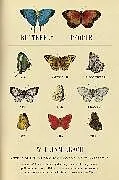
Butterfly People
Beschreibung
“A wonderful tale . . . Following the story of natural history, science, philosophy and even religion in America through the enthusiasms and feuds of a few insect collectors.” —The Dallas Morning News “Compelling. . . . A splendid twin...
Format auswählen
- Kartonierter EinbandCHF 22.70
- E-Book (epub)CHF 6.90

Wird oft zusammen gekauft
Andere Kunden kauften auch
Beschreibung
“A wonderful tale . . . Following the story of natural history, science, philosophy and even religion in America through the enthusiasms and feuds of a few insect collectors.” —*The Dallas Morning News *****
“Compelling. . . . A splendid twinning of natural science and America.” —The Economist
“Illuminating . . . fascinating. . . . Leach is at his best when he describes moments of butterfly discovery, sharing both the insights Americans discovered over the course of a century and the price they paid for that knowledge.” —The Washington Post
“In this sprawling examination, Leach succeeds in weaving his disparate social and historical strands into a thought-provoking tapestry that will appeal to natural history aficionados and students of American culture.” —The Wall Street Journal
“A spirited history.” —The New Yorker
“This is truly a remarkable piece of work, and I was totally drawn in. Leach has captured a very important aspect of history as I am sure no one else could have. Along the way it reveals the origins of our obsessions and their trajectory. The breadth and depth of this will stay with me a long time, and I hope the book will be read widely.” —Bernd Heinrich, author of Winter World
“Leach is in pursuit of big ideas about art, science, evolution, collecting, economics, and technology.” —*The Boston Globe
*
“[Leach] uses the rapid expansion of American interest in butterflies after the Civil War as a way into man’s arduous process of understanding his place in the order of things. . . . Leach describes the science of this period as a ‘fascinating mix of scientific confidence and human longing,’ and this book treats both aspects with equal care and well-researched precision.” —*The Daily Beast
*
“Today’s butterfly people will be enthralled. . . . The wonder Leach evokes will captivate all who appreciate the natural world.” —*New Scientist
*
“A brilliant work of history.” —*Bookforum **
“Masterful and beguiling. . . . A literary cabinet of wonders packed with scientific discoveries, historic artifacts, and artistic revelations to delight scholarly and casual readers alike. No mere flight of fancy, the book is an original consideration of American science, economics and aesthetics set in a time of profound cultural change.” *—Washington Independent Review of Books
*
“A mesmerizing and comprehensive history of butterfly collection in America. . . . This is a deep dive into what, at first glance, seems an esoteric subject, but after further perusal reveals itself as an essential component of this nation’s intellectual history.” —Publishers Weekly (starred review) ****
“Fascinating. . . . An unusual, pinpointed slice of American life.” —Kirkus Reviews
“Astute and exciting. . . . A unique celebration of nineteenth-century American butterfly fanatics. . . . [Leach] delivers new understanding of our past and present.”—Booklist (starred review)
“Shimmering . . . Entrancing. . . . Mingles the resurrection of mostly forgotten figures with social, economic, and intellectual history. . . . Rivalries and even bitter animosities emerge; reputations are flayed, personal feelings pinned. But behind all this is a genuine longing to see, to know, and to understand.” —New Criterion
Autorentext
William Leach is a professor of history at Columbia University. His previous books include Land of Desire: Merchants, Power, and the Rise of a New American Culture, which was a National Book Award finalist, and Country of Exiles: The Destruction of Place in American Life.
Klappentext
With 32 pages of full-color inserts and black-and-white illustrations throughout.
From one of our most highly regarded historians, here is an original and engrossing chronicle of nineteenth-century America's infatuation with butterflies-"flying flowers"-and the story of the naturalists who unveiled the mysteries of their existence. A product of William Leach's lifelong love of butterflies, this engaging and elegantly illustrated history shows how Americans from all walks of life passionately pursued butterflies, and how through their discoveries and observations they transformed the character of natural history.
In a book as full of life as the subjects themselves and foregrounding a collecting culture now on the brink of vanishing, Leach reveals how the beauty of butterflies led Americans into a deeper understanding of the natural world.
Leseprobe
Introduction
"The beauty of the world,” wrote America’s greatest theologian, Jonathan Edwards, in 1725, “consists wholly of sweet mutual consents, either within itself or with the Supreme Being. . . . This beauty is peculiar to natural things, it surpassing the art of man.” In the nineteenth century, many Americans, including Edwards’s great-grandson William Henry Edwards, encountered the butterflies, among the most evolved in terms of beauty, by some accounts, of all creatures. By beauty here is meant not merely the wings, however beautiful they may be, but the metamorphosis (from the Greek for “changing form”) and life history of the insect, from the egg and caterpillar to the pupa and adult, as well as the butterfly in relation to a world full of other life. The encounter took place first with native American species, then with foreign or exotic ones, moths as well as butterflies, the “night” and “day butterflies,” as they were called—or, collectively, the Lepidoptera, the order’s name referring, in Greek, to the scales covering the wings. By the 1880s, it seemed as if everyone in America was chasing “flying flowers,” to quote Augustus Radcliffe Grote, an American expert on moths. People from all walks of life—sheep farmers, shopkeepers, barbers, lawyers, actors, drugstore clerks, housekeepers, wallpaper hangers, priests, Wall Street brokers, glassblowers, miners, and mine managers—had taken up the butterfly net. At the end of the century a new kind of beauty would assume prominence, human-made and artificial; seen especially at the spectacular world’s fairs of the age, from Philadelphia to San Francisco, it would expand the world’s aesthetic palette, while at the same time challenging the “beauty peculiar to natural things.” For a fleeting moment, however, the reign of the butterflies, and of all similar natural life, held sway in the imaginations of many American men and women.
Two phenomena were responsible, in particular, for this history, each ushering people into the natural world with unsurpassed effect. The first was economic and technological and was connected to the rise of capitalism; the second was cultural and institutional and was exemplified by the tradition of Enlightenment natural history, having at its heart a passion for the diversity and beauty of natural forms. One was extractive, the other adoring, and both derived from the thousands of years of experience the Europeans and English imported with them to America. Both existed in the same country and the same people, from Thomas Jefferson to Theodore Roosevelt and beyond. America was founded as a kind of European achievement, the beneficiary, as it were, of centuries of struggle, at once armed with the brilliance to build a new economic empire and endowed with the heritage to understand and protect the natural world.
The American economy had many aspects dependent on nature as landed wealth or property, and that brought A…