
IHR WARENKORB IST AKTUELL LEER.
Haben Sie noch nichts passendes gefunden? Stöbern Sie durch unser komplettes Sortiment.
Oder melden Sie sich an bzw. registrieren Sie sich.
- Kostenlose Lieferung
- Kauf auf Rechnung
- Ex Libris Tiefpreis
- Filiallieferung und 650+ Abholorte
- Rabatt-Bons als Club-Mitglied
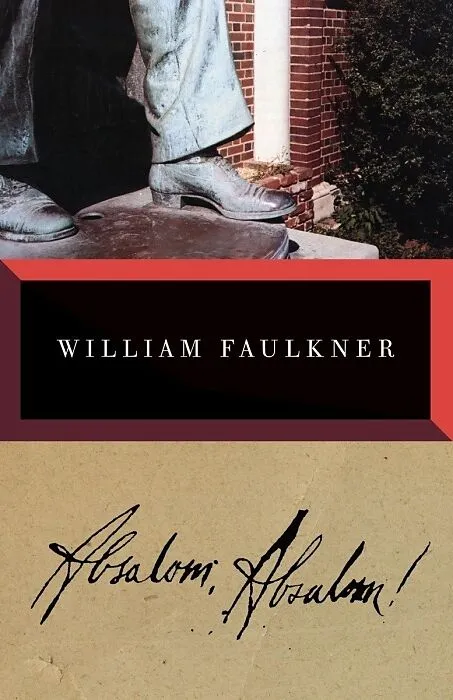
Absalom, Absalom!
Beschreibung
Zusatztext For range of effect! philosophical weight! originality of style! variety of characterization! humor! and tragic intensity! [Faulkner's works] are without equal in our time and country. Robert Penn Warren He is the greatest artist the South has produ...Format auswählen
- Kartonierter EinbandCHF 23.10
- Fester EinbandCHF 27.60
- Fester EinbandCHF 31.60

Wird oft zusammen gekauft
Andere Kunden kauften auch
Beschreibung
Zusatztext For range of effect! philosophical weight! originality of style! variety of characterization! humor! and tragic intensity! [Faulkner's works] are without equal in our time and country. Robert Penn Warren He is the greatest artist the South has produced. . . . Indeed! through his many novels and short stories! Faulkner fights out the moral problem which was repressed after the nineteenth century [yet] for all his concern with the South! Faulkner was actually seeking out the nature of man. Thus we must turn to him for that continuity of moral purpose which made for greatness of our classics. Ralph Ellison Informationen zum Autor William Faulkner , one of the greatest writers of the twentieth century, was born in New Albany, Mississippi, on September 25, 1897. He published his first book, The Marble Faun , in 1924, but it is as a literary chronicler of life in the Deep Southparticularly in the fictional Yoknapatawpha County, the setting for several of his novelsthat he is most highly regarded. In such novels as The Sound and the Fury , As I Lay Dying , Light in August , and Absalom, Absalom! he explored the full range of postCivil War Southern life, focusing both on the personal histories of his characters and on the moral uncertainties of an increasingly dissolute society. In combining the use of symbolism with a stream-of-consciousness technique, he created a new approach to fiction writing. In 1949 he was awarded the Nobel Prize for Literature. William Faulkner died in Byhalia, Mississippi, on July 6, 1962. Klappentext "Read! read! read. Read everything-trash! classics! good and bad! and see how they do it. Just like a carpenter who works as an apprentice and studies the master. Read! You'll absorb it. Then write. If it is good! you'll find out. If it's not! throw it out the window." -William Faulkner Absalom! Absalom! is Faulkner's epic tale of Thomas Sutpen! an enigmatic stranger who comes to Jefferson! Mississippi! in the early 1830s to wrest his mansion out of the muddy bottoms of the north Mississippi wilderness. He was a man! Faulkner said! "who wanted sons and the sons destroyed him." Leseprobe From a little after two oclock until almost sundown of the long still hot weary dead September afternoon they sat in what Miss Coldfield still called the office because her father had called it that-a dim hot airless room with the blinds all closed and fastened for forty-three summers because when she was a girl someone had believed that light and moving air carried heat and that dark was always cooler, and which (as the sun shone fuller and fuller on that side of the house) became latticed with yellow slashes full of dust motes which Quentin thought of as being flecks of the dead old dried paint itself blown inward from the scaling blinds as wind might have blown them. There was a wistaria vine blooming for the second time that summer on a wooden trellis before one window, into which sparrows came now and then in random gusts, making a dry vivid dusty sound before going away: and opposite Quentin, Miss Coldfield in the eternal black which she had worn for forty-three years now, whether for sister, father, or nothusband none knew, sitting so bolt upright in the straight hard chair that was so tall for her that her legs hung straight and rigid as if she had iron shinbones and ankles, clear of the floor with that air of impotent and static rage like children's feet, and talking in that grim haggard amazed voice until at last listening would renege and hearing-sense self-confound and the long-dead object of her impotent yet indomitable frustration would appear, as though by outraged recapitulation evoked, quiet inattentive and harmless, out of the biding and dreamy and victorious dust. Her voice would not cease, it would just vanish. There would be the dim coffin-smelling gloom sweet and ove...
ldquo;For range of effect, philosophical weight, originality of style, variety of characterization, humor, and tragic intensity, [Faulkner’s works] are without equal in our time and country.” —Robert Penn Warren
“He is the greatest artist the South has produced. . . . Indeed, through his many novels and short stories, Faulkner fights out the moral problem which was repressed after the nineteenth century [yet] for all his concern with the South, Faulkner was actually seeking out the nature of man. Thus we must turn to him for that continuity of moral purpose which made for greatness of our classics.” —Ralph Ellison
Autorentext
William Faulkner, one of the greatest writers of the twentieth century, was born in New Albany, Mississippi, on September 25, 1897. He published his first book, The Marble Faun, in 1924, but it is as a literary chronicler of life in the Deep South—particularly in the fictional Yoknapatawpha County, the setting for several of his novels—that he is most highly regarded. In such novels as The Sound and the Fury, As I Lay Dying, Light in August, and Absalom, Absalom! he explored the full range of post–Civil War Southern life, focusing both on the personal histories of his characters and on the moral uncertainties of an increasingly dissolute society. In combining the use of symbolism with a stream-of-consciousness technique, he created a new approach to fiction writing. In 1949 he was awarded the Nobel Prize for Literature. William Faulkner died in Byhalia, Mississippi, on July 6, 1962.
Klappentext
"Read, read, read. Read everything-trash, classics, good and bad, and see how they do it. Just like a carpenter who works as an apprentice and studies the master. Read! You'll absorb it. Then write. If it is good, you'll find out. If it's not, throw it out the window." -William Faulkner Absalom, Absalom! is Faulkner's epic tale of Thomas Sutpen, an enigmatic stranger who comes to Jefferson, Mississippi, in the early 1830s to wrest his mansion out of the muddy bottoms of the north Mississippi wilderness. He was a man, Faulkner said, "who wanted sons and the sons destroyed him."
Zusammenfassung
**NOBEL PRIZE WINNER • Family drama and the legacy of slavery haunt this epic tale of an enigmatic stranger in Jefferson, Mississippi—from one of the most acclaimed writers of the twentieth century.
**
One of The Atlantic’s Great American Novels of the Past 100 Years
“Read, read, read. Read everything—trash, classics, good and bad, and see how they do it. Just like a carpenter who works as an apprentice and studies the master. Read! You’ll absorb it. Then write. If it is good, you’ll find out. If it’s not, throw it out the window.” —William Faulkner
Absalom, Absalom! is Faulkner’s epic tale of Thomas Sutpen, a man who comes to the South in the early 1830s to wrest his mansion out of the muddy bottoms of the north Mississippi wilderness. He was a man, Faulkner said, “who wanted sons and the sons destroyed him.”
Leseprobe
From a little after two oclock until almost sundown of the long still hot weary dead September afternoon they sat in what Miss Coldfield still called the office because her father had called it that-a dim hot airless room with the blinds all closed and fastened for forty-three summers because when she was a girl someone had believed that light and moving air carried heat and that dark was always cooler, and which (as the sun shone fuller and fuller on that side of the house) became latticed with yellow slashes full of dust motes which Quentin thought of as being flecks of the dead old dried paint itself blown inward from the scaling blinds as wind might have blown them. There was a wistaria vine blooming for the second time that summer on a wooden trellis before one window, into which sparrows came now and then in random gusts, making a dry vivid dusty sound before going away: and opposite Quent…