Beschreibung
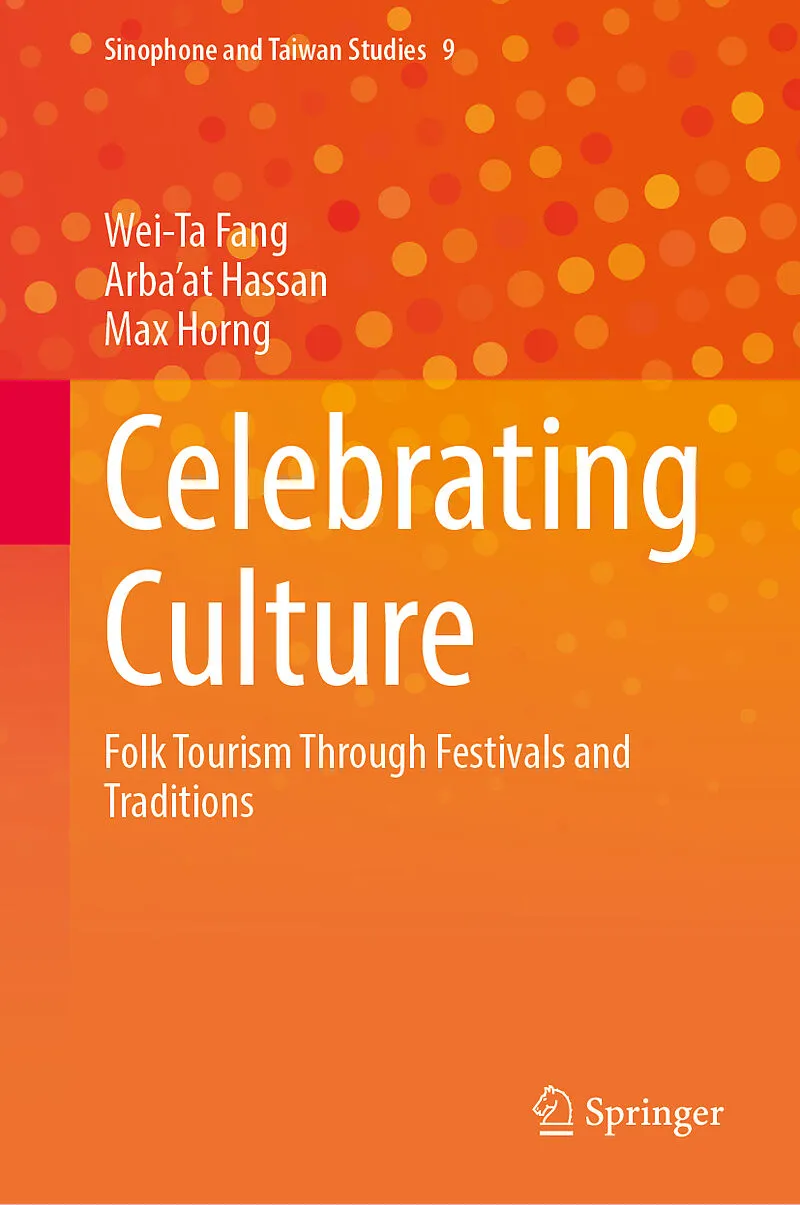
This book provides a comprehensive exploration of festival-making activities, their cultural significance, and their impact on tourism and community identity. It delves into the evolution of festivals, from traditional folk celebrations to modern, tourism-dri...
This book provides a comprehensive exploration of festival-making activities, their cultural significance, and their impact on tourism and community identity. It delves into the evolution of festivals, from traditional folk celebrations to modern, tourism-driven events, offering insights into how these festivities shape cultural heritage, economic development, and social cohesion in an increasingly globalized world.
A distinguishing feature of this book is its use of integrated references, illustrations, diagrams, and case studies, making complex theories more accessible and engaging. Richly illustrated with vibrant images of festivals from around the world, it not only serves as an academic resource but also as a visual celebration of diverse cultural traditions.
This book bridges theoretical concepts with practical implementation, making it a valuable resource for researchers, postgraduate students, and professionals in various fields, including tourism management, anthropology, cultural and creative industries, event planning, and folklore studies. The book is also essential for policymakers, cultural heritage advocates, and business professionals who seek to leverage festivals as a means of economic and cultural development.
Bridges cultural heritage with tourism and festival planning, offering a multidisciplinary approach. Features real-world case studies with global perspectives on festivals and community identity. Explores how festivities shape cultural heritage, economic development, and social cohesion in the globalized world
Autorentext
Wei-Ta Fang was born in Kaohsiung, Taiwan, on February 14, 1966. He received a B.A. degree in Land Economics and Administration from National Taipei University (Taipei, Taiwan) in 1989. He received his first master's degree in Environmental Planning (MEP) from Arizona State University, the USA, in 1994, and a second master's degree in Landscape Architecture in Design Studies (M.Des.S.) from the Graduate School of Design, Harvard University, the USA, in 2001. He obtained a Ph.D. from the Department of Ecosystem Science and Management, Texas A&M University, the USA, in 2005. His interest is quite broad, determined to participate in the United Nations' environmental affairs by strengthening environmental security, and laying the ground based on the foundation of human peace forever to achieve enduring social, economic, and environmental sustainability. He lives in Taipei City with his wife, Chia-Ying Ho, and two sons, Cheng-Jun (June) and Cheng-Shun (Sam). Arba'at Hassan, Ph.D., was born at Sungai Leman, the "rice-bowl area" in Selangor, on May 16, 1952. He started his teaching science career in high school (1970-1979) and was later appointed as a science education lecturer at a teachers' training college in Tuaran (1980-1982). He was mentored and guided by Prof. Harold Hungerford and Prof. Tudi Volk, the most well-known professors in environmental education. Upon graduation, he taught environmental education at various universities in Malaysia (1994-2012), and the longest was at Universiti Kebangsaan Malaysia (UKM), Bangi, (2006-2012). At UKM, he participated in international conferences and collaborated with universities, examiners, and evaluator graduates at international levels, besides the university that he served. He trained and coached them in leadership and citizenship for the world. He was awarded the Scout Woodbadge (1979) and then the Excellent Merit Award from the Malaysian Scout's Chief Commissioner a few months later (1979). Max Horng was born on offshore Penghu or Pescadores Islands, one of the archipelago, Taiwan, on September 26, 1962. He began studying in Taiwan in 1977. Since 1986, he has been working in banking and finance. After joining the company's photography club, he became acquainted with Mr. Shang-Hsi Cheng (1937-2011), a master photographer who was an instructor at the time. Under his guidance, he learned the essence of photography "recording," which was held at the Jazz Gallery in 2003. His first photography exhibition "Clouds" commemorate the late master teacher Cheng in 2016, and the second solo exhibition "Meet Chaoyan" was held at the gallery. Adhering to the concept of "truth, goodness, and beauty," he continued to care for the relationship between man and nature, man and land. He lives in Taipei with his wife, Chia-Chu.
Inhalt
Part 1: Fundamentals.- Chapter 1: Introduction to Festivals.- Chapter 2: Festival Psychology.- Chapter 3: Festival Society, Culture, and Economy.- Chapter 4: From Ritual to Celebration: Folk Festivals and Festival-Making.- Part 2: Practical Applications. Chapter 5: Festivals, Folklore, and Tourism: Methods, Contexts, and Trends.- Chapter 6: Festival Tourism Planning: Integrating Cultural Authenticity and Strategic Innovation.- Chapter 7: Operation and Management of Festival and Tourism Activities.- Chapter 8: Evaluation and Impact of Festival Tourism.