
IHR WARENKORB IST AKTUELL LEER.
Haben Sie noch nichts passendes gefunden? Stöbern Sie durch unser komplettes Sortiment.
Oder melden Sie sich an bzw. registrieren Sie sich.
- Kostenlose Lieferung
- Kauf auf Rechnung
- Ex Libris Tiefpreis
- Filiallieferung und 650+ Abholorte
- Rabatt-Bons als Club-Mitglied
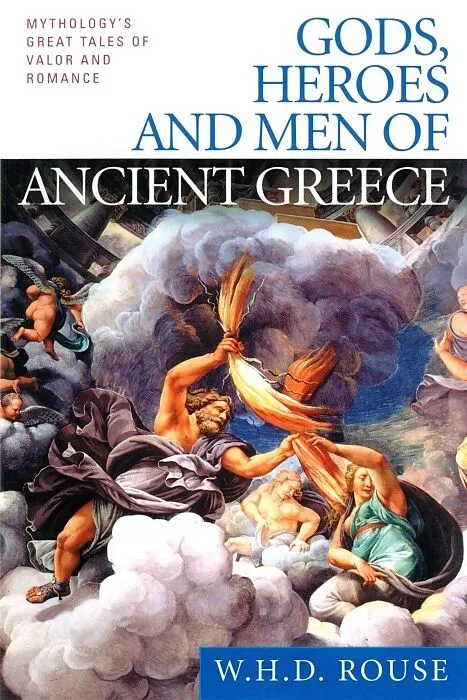
Gods, Heroes and Men of Ancient Greece
Beschreibung
Informationen zum Autor W.H.D. Rouse was one of the great 20th century experts on Ancient Greece, and headmaster of the Perse School, Cambridge, England, for 26 years. Under his leadership the school became widely known for the successful teaching of Greek and...Format auswählen
- Kartonierter EinbandCHF 30.00

Wird oft zusammen gekauft
Andere Kunden kauften auch
Beschreibung
Informationen zum Autor W.H.D. Rouse was one of the great 20th century experts on Ancient Greece, and headmaster of the Perse School, Cambridge, England, for 26 years. Under his leadership the school became widely known for the successful teaching of Greek and Latin as spoken languages. He derived his knowledge of the Greeks not only from his wide studies of classical literature, but also by travelling extensively in Greece. He died in 1950. Klappentext The Adventures that Shaped the Western World First published in 1934, Gods, Heroes and Men of Ancient Greece has become one of the most popular, enduring--and captivating--retellings of the ancient myths for modern readers. Recognizing the sheer entertainment value of these timeless adventures, world renowned classical scholar W.H.D. Rouse delighted his students at the Perse School in Cambridge, England, with a conversational style and childlike wonder that made the legends come alive--a rare storytelling gift that continues to engage young and old alike. Many of the characters in this book are familiar to us--Helen of Troy, Icarus, Zeus, Athena, to name just a few--but rarely have their stories of war and adventure, bravery and romance, been so simply and thrillingly told. From the strong-arm heroics of Heracles, to the trickery of the Trojan Horse, from the seductions of Circe the sorceress, to the terrors of the Cyclops and Minotaur, these legends have outlived the culture that bore them. But while the ancient Greeks may be long gone, their fables and morals, their heroes and heroines, live on today Leseprobe PART 1 I. The Beginning of Things In the beginning there was Chaos, a great hollow Void, in which the seeds or beginnings of all things were mixed up together in a shapeless mass, all moving about in all directions. By degrees these beginnings slowly sorted themselves out; the heavier parts gathered together, and became Earth; the lighter parts flew up, and became the sky, with air between; and under the earth was a dark place called Tartaros. In the heavens, the sun, moon, and stars appeared one by one; on earth, the land separated from the sea; rain fell, and the rivers ran down from the hills; trees grew up, and the world became something like what we know, and it had the shape of a great round ball, or a disk, like a large plate. From Chaos, the great Void, came forth many and strange children; but first and most wonderful of all was Eros, or Love, who came no one knows how, and was quite different from all the others; he outlived them all, and still lives, the most mighty of all divine powers. From Chaos came forth also Erebos, and black Night; and their child was the Day. From Chaos, lastly, came into being Father Uranos, or Heaven; and Pontos, the Sea; and Mother Earth. Heaven and Earth were parents of a great brood of children. These were called, in general, the Titans. The brood began with monsters, but they improved as they went on. Among the monsters were three, with fifty heads apiece, and a hundred hands; their names were Cottos, Gyas, and Briareos. Three others were named the Cyclôpês; Cyclops means Goggleeye, and each Cyclops had one huge eye in the middle of his forehead, with one huge and bushy eyebrow above it. There were others, some of whom we shall meet later; and then came a superior brood of children. I will not tell you the names of all these now, but one was Oceanos, the ocean-stream, which runs like a great river all round the earth; and one was Hyperion, who took charge of the light by night and day. He was the father of Eos, the Dawn, and Helios, the Sun, and Selênê, the Moon. And the youngest of the children of Heaven and Earth was named Cronos: the youngest, but the most terrible of them all. Now Uranos hated his children, and feared them; and as each was born, he hid them in secret places of the earth, and kept them prisoners in darkness. But M...
Klappentext
The Adventures that Shaped the Western WorldFirst published in 1934, Gods, Heroes and Men of Ancient Greece has become one of the most popular, enduring--and captivating--retellings of the ancient myths for modern readers. Recognizing the sheer entertainment value of these timeless adventures, world renowned classical scholar W.H.D. Rouse delighted his students at the Perse School in Cambridge, England, with a conversational style and childlike wonder that made the legends come alive--a rare storytelling gift that continues to engage young and old alike. Many of the characters in this book are familiar to us--Helen of Troy, Icarus, Zeus, Athena, to name just a few--but rarely have their stories of war and adventure, bravery and romance, been so simply and thrillingly told. From the strong-arm heroics of Heracles, to the trickery of the Trojan Horse, from the seductions of Circe the sorceress, to the terrors of the Cyclops and Minotaur, these legends have outlived the culture that bore them. But while the ancient Greeks may be long gone, their fables and morals, their heroes and heroines, live on today…
Zusammenfassung
The Adventures that Shaped the Western World
First published in 1934, Gods, Heroes and Men of Ancient Greece has become one of the most popular, enduring--and captivating--retellings of the ancient myths for modern readers. Recognizing the sheer entertainment value of these timeless adventures, world renowned classical scholar W.H.D. Rouse delighted his students at the Perse School in Cambridge, England, with a conversational style and childlike wonder that made the legends come alive--a rare storytelling gift that continues to engage young and old alike. Many of the characters in this book are familiar to us--Helen of Troy, Icarus, Zeus, Athena, to name just a few--but rarely have their stories of war and adventure, bravery and romance, been so simply and thrillingly told. From the strong-arm heroics of Heracles, to the trickery of the Trojan Horse, from the seductions of Circe the sorceress, to the terrors of the Cyclops and Minotaur, these legends have outlived the culture that bore them. But while the ancient Greeks may be long gone, their fables and morals, their heroes and heroines, live on today…
Leseprobe
PART 1
I. The Beginning of Things
In the beginning there was Chaos, a great hollow Void, in which the seeds or beginnings of all things were mixed up together in a shapeless mass, all moving about in all directions. By degrees these beginnings slowly sorted themselves out; the heavier parts gathered together, and became Earth; the lighter parts flew up, and became the sky, with air between; and under the earth was a dark place called Tartaros. In the heavens, the sun, moon, and stars appeared one by one; on earth, the land separated from the sea; rain fell, and the rivers ran down from the hills; trees grew up, and the world became something like what we know, and it had the shape of a great round ball, or a disk, like a large plate.
From Chaos, the great Void, came forth many and strange children; but first and most wonderful of all was Eros, or Love, who came no one knows how, and was quite different from all the others; he outlived them all, and still lives, the most mighty of all divine powers. From Chaos came forth also Erebos, and black Night; and their child was the Day.
From Chaos, lastly, came into being Father Uranos, or Heaven; and Pontos, the Sea; and Mother Earth. Heaven and Earth were parents of a great brood of children. These were called, in general, the Titans. The brood began with monsters, but they improved as they went on. Among the monsters were three, with fifty heads apiece, and a hundred hands; their names were Cottos, Gyas, and Briareos. Three others were named the Cyclôpês; Cyclops means Goggleeye, and each Cyclops had one huge eye in the middle of his forehead, with one huge and bushy eyebrow above it. There were others, some of whom we shall meet later; and then came a superior…