
IHR WARENKORB IST AKTUELL LEER.
Haben Sie noch nichts passendes gefunden? Stöbern Sie durch unser komplettes Sortiment.
Oder melden Sie sich an bzw. registrieren Sie sich.
- Kostenlose Lieferung
- Kauf auf Rechnung
- Ex Libris Tiefpreis
- Filiallieferung und 650+ Abholorte
- Rabatt-Bons als Club-Mitglied
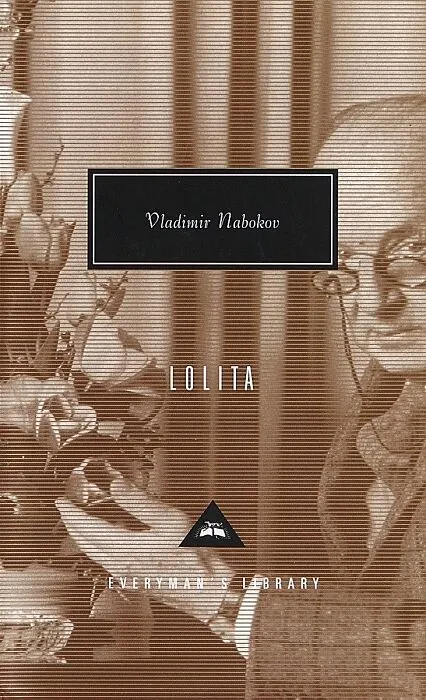
Lolita
Beschreibung
Zusatztext "The only convincing love story of our century." Vanity Fair " Lolita blazes with a perversity of a most original kind. For Mr. Nabokov has distilled from his shocking material hundred-proof intellectual farce Lolita seems an assertion of the power ...Format auswählen
- Fester EinbandCHF 31.90

Wird oft zusammen gekauft
Andere Kunden kauften auch
Beschreibung
Zusatztext "The only convincing love story of our century." Vanity Fair " Lolita blazes with a perversity of a most original kind. For Mr. Nabokov has distilled from his shocking material hundred-proof intellectual farce Lolita seems an assertion of the power of the comic spirit to wrest delight and truth from the most outlandish materials. It is one of the funniest serious novels I have ever read; and the vision of its abominable hero! who never deludes or excuses himself! brings into grotesque relief the cant! the vulgarity! and the hypocritical conventions that pervade the human comedy." Atlantic Monthly "Intensely lyrical and wildly funny." Time "The conjunction of a sense of humor with a sense of horror [results in] satire of a very special kind! in which vice or folly is regarded not so much with scorn as with profound dismay and a measure of tragic sympathyThe reciprocal flow of irony gives to both the characters and their surroundings the peculiar intensity of significance that attends the highest art." The New Yorker " Lolita is an authentic work of art which compels our immediate response and serious reflectiona revealing and indispensable comedy of horrors." San Francisco Chronicle Informationen zum Autor Vladimir Nabokov; Introduction by Martin Amis Klappentext When it was published in 1955, Lolita immediately became a cause célèbre because of the freedom and sophistication with which it handled the unusual erotic predilections of its protagonist. But Vladimir Nabokov's wise, ironic, elegant masterpiece owes its stature as one of the twentieth century's novels of record not to the controversy its material aroused but to its author's use of that material to tell a love story almost shocking in its beauty and tenderness. Awe and exhilaration-along with heartbreak and mordant wit-abound in this account of the aging Humbert Humbert's obsessive, devouring, and doomed passion for the nymphet Dolores Haze. Lolita is also the story of a hypercivilized European colliding with the cheerful barbarism of postwar America, but most of all, it is a meditation on love-love as outrage and hallucination, madness and transformation. With an introduction by Martin Amis. I N T R O D U C T I O N Like the sweat of lust and guilt, the sweat of death trickles through Lolita . I wonder how many readers survive the novel without realizing that its heroine is, so to speak, dead on arrival, like her child. Their brief obituaries are tucked away in the 'editor's' Foreword, in nonchalant, school-newsletter form: 'Mona Dahl' is a student in Paris. 'Rita' has recently married the proprietor of a hotel in Florida. Mrs 'Richard F. Schiller' died in childbed, giving birth to a stillborn girl, on Christmas Day 1952, in Gray Star, a settlement in the remotest Northwest. 'Vivian Darkbloom' has written a biography Then, once the book begins, Humbert's childhood love Annabel dies, at thirteen (typhus), and his first wife Valeria dies (also in childbirth), and his second wife Charlotte dies ('a bad accident'though of course this death is structural), and Charlotte's friend Jean Farlow dies at thirty-three (cancer), and Lolita's young seducer Charlie Holmes dies (Korea), and her old seducer Quilty dies (murder: another structural exit). And then Humbert dies (coronary thrombosis). And then Lolita dies. And her daughter dies. In a sense Lolita is too great for its own good. It rushes up on the reader like a recreational drug more powerful than any yet discovered or devised. In common with its narrator, it is both irresistible and unforgivable. And yet it all works out. I shall point the way to what I take to be its livid and juddering heart which is itself in pre-thrombotic turmoil, all heaves and lifts and thrills. Without apeing the exp...
"The only convincing love story of our century." —Vanity Fair
"Lolita blazes with a perversity of a most original kind. For Mr. Nabokov has distilled from his shocking material hundred-proof intellectual farce…Lolita seems an assertion of the power of the comic spirit to wrest delight and truth from the most outlandish materials. It is one of the funniest serious novels I have ever read; and the vision of its abominable hero, who never deludes or excuses himself, brings into grotesque relief the cant, the vulgarity, and the hypocritical conventions that pervade the human comedy." —Atlantic Monthly
"Intensely lyrical and wildly funny." —Time
"The conjunction of a sense of humor with a sense of horror [results in] satire of a very special kind, in which vice or folly is regarded not so much with scorn as with profound dismay and a measure of tragic sympathy…The reciprocal flow of irony gives to both the characters and their surroundings the peculiar intensity of significance that attends the highest art." —The New Yorker
"Lolita is an authentic work of art which compels our immediate response and serious reflection–a revealing and indispensable comedy of horrors." —San Francisco Chronicle
Autorentext
Vladimir Nabokov; Introduction by Martin Amis
Klappentext
When it was published in 1955, Lolita immediately became a cause célèbre because of the freedom and sophistication with which it handled the unusual erotic predilections of its protagonist. But Vladimir Nabokov's wise, ironic, elegant masterpiece owes its stature as one of the twentieth century's novels of record not to the controversy its material aroused but to its author's use of that material to tell a love story almost shocking in its beauty and tenderness.
Awe and exhilaration-along with heartbreak and mordant wit-abound in this account of the aging Humbert Humbert's obsessive, devouring, and doomed passion for the nymphet Dolores Haze. Lolita is also the story of a hypercivilized European colliding with the cheerful barbarism of postwar America, but most of all, it is a meditation on love-love as outrage and hallucination, madness and transformation. With an introduction by Martin Amis.
Zusammenfassung
**Nabokov's wise, ironic, elegant masterpiece owes its stature as a classic not to the controversy its subject matter aroused but to its author's use of that material to tell a love story almost shocking in its beauty and tenderness. With an introduction by Martin Amis.
**
When it was published in 1955, Lolita immediately became a cause célèbre because of the freedom and sophistication with which it handled the unusual erotic predilections of its protagonist. Awe and exhilaration–along with heartbreak and mordant wit–abound in this account of the aging Humbert Humbert's obsessive, devouring, and doomed passion for the nymphet Dolores Haze.
Lolita is also the story of a hypercivilized European colliding with the cheerful barbarism of postwar America, but most of all, it is a meditation on love–love as outrage and hallucination, madness and transformation.
Everyman's Library pursues the highest production standards, printing on acid-free cream-colored paper, with full-cloth cases with two-color foil stamping, decorative endpapers, silk ribbon markers, European-style half-round spines, and a full-color illustrated jacket. Contemporary Classics include an introduction, a select bibliography, and a chronology of the author's life and times.
Leseprobe
I N T R O D U C T I O N
——
Like the sweat of lust and guilt, the sweat of death trickles through Lolita. I wonder how many readers survive the novel without realizing that its heroine is, so to speak, dead on arrival, like her child. Their brief obituaries are tucked away in the ‘editor’s’ Foreword, in nonchalant, school-newsletter form:
“‘Mona Dahl’ is a student in Paris. ‘Rita’ has recently married the proprietor of a hotel in Florida. Mrs ‘Richard F. Schiller&rsqu…