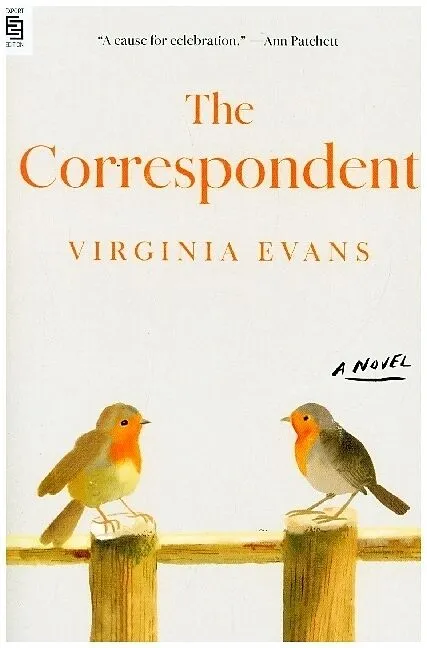
The Correspondent
Beschreibung
“Subtly told and finely made, A woman tries to heal old wounds and make sense of the world the only way she knows how--through letters--in this charming, laugh out loud debut novel about a life fully lived. Sybil Van Antwerp is a mother and grandmother, ...Format auswählen
- Kartonierter EinbandCHF 20.30
- Fester EinbandCHF 29.50

Wird oft zusammen gekauft
Andere Kunden kauften auch
Beschreibung
“Subtly told and finely made, A woman tries to heal old wounds and make sense of the world the only way she knows how--through letters--in this charming, laugh out loud debut novel about a life fully lived. Sybil Van Antwerp is a mother and grandmother, divorced, retired from a distinguished career in law, an avid gardener, and a writer of letters. Most mornings, around half past ten, Sybil sits down to write letters--to her brother, to her best friend, to the president of the university who will not allow her to audit a class she desperately wants to take, to Joan Didion and Larry McMurtry to tell them what she thinks of their latest books.; Because at seventy-three, Sybil has used her letters to make sense of the world and her place in it. But as Sybil expects her life to go on as it always has, letters from someone in her past force her to examine one of the most painful periods of her life. Filled with knowledge that only comes from a life fully lived, <The Correspondent< is a gem of a novel that is a testament to the power of the written word.
Autorentext
Virginia Evans
Klappentext
#1 NEW YORK TIMES BESTSELLER • Discover the word-of-mouth hit hailed by Ann Patchett as “A cause for celebration”—an intimate novel about the transformative power of the written word and the beauty of slowing down to reconnect with the people we love.
**“The Correspondent is this year’s breakout novel no one saw coming.”—The Wall Street Journal
“I cried more than once as I witnessed this brilliant woman come to understand herself more deeply.”—Florence Knapp, author of The Names**
LONGLISTED FOR THE CENTER FOR FICTION FIRST NOVEL PRIZE, THE ANDREW CARNEGIE MEDAL, AND THE WOMEN’S PRIZE FOR FICTION • A BEST BOOK OF THE YEAR: NPR, The Washington Post, Boston Globe, Elle, Christian Science Monitor, She Reads
“Imagine, the letters one has sent out into the world, the letters received back in turn, are like the pieces of a magnificent puzzle. . . . Isn’t there something wonderful in that, to think that a story of one’s life is preserved in some way, that this very letter may one day mean something, even if it is a very small thing, to someone?”
Filled with knowledge that only comes from a life fully lived, The Correspondent is a gem of a novel about the power of finding solace in literature and connection with people we might never meet in person. It is about the hubris of youth and the wisdom of old age, and the mistakes and acts of kindness that occur during a lifetime.
Sybil Van Antwerp has throughout her life used letters to make sense of the world and her place in it. Most mornings, around half past ten, Sybil sits down to write letters—to her brother, to her best friend, to the president of the university who will not allow her to audit a class she desperately wants to take, to Joan Didion and Larry McMurtry to tell them what she thinks of their latest books, and to one person to whom she writes often yet never sends the letter.
Sybil expects her world to go on as it always has—a mother, grandmother, wife, divorcee, distinguished lawyer, she has lived a very full life. But when letters from someone in her past force her to examine one of the most painful periods of her life, she realizes that the letter she has been writing over the years needs to be read and that she cannot move forward until she finds it in her heart to offer forgiveness.
Sybil Van Antwerp’s life of letters might be “a very small thing,” but she also might be one of the most memorable characters you will ever read.
Leseprobe
Felix Stone
7 Rue de la Papillon
84211 Gordes
FRANCE
June 2, 2012
Felix, my dear brother,
Thank you for the birthday card, the fountain pen, and the book, which I started the day it arrived (Thursday) and finished today. It was exactly as you described. Unlikely and electric, inventive, and right up my alley. Seventy-three feels the same as seventy-two for what it’s worth, arthritis, constipation, and trouble sleeping, and I’ve decided to stop dyeing my hair. I don’t care much for my birthday, as you know, though it’s always nice of you to acknowledge it. Trudy and Millie of course came for appetizers and cards. The children both contacted me—Bruce had a strawberry tart delivered from a bakery (he’ll be up next weekend to clean out my gutters anyway), and it was awful, so I threw it out. Probably cost him a fortune. Fiona called from London. She said she won’t come home again until Christmas because work is keeping her jumping and now she is designing something in Sydney, for heaven’s sake, so she’ll spend a month in Australia. She assured me Walt doesn’t mind how often she is gone, but I’ll tell you, I don’t know how their marriage will make it. She’ll certainly never be able to have children at this point. (They’re not even trying. At least she hasn’t told me if they are. When I bring it up she chastises me.) Theodore Lubeck down the street brought me cut roses from his bushes, as he does every year, which is good of him, even if he is a renegade from the lawless fringe of the American West.
How is France? How is Stewart? What are you writing? Thank you for the invitation to visit, you’re always good to refresh it. Yes, I loved The Chateau, but that was a novel, and as much as I would love to see your new house, no, I’ll not come. Just as a summer afternoon is gorgeous from inside air-conditioning, and you step into the day, hot, muggy, miserable, a postcard of France with all the lavender and sunflowers, I imagine, is far more alluring than the place itself. It’s such a hassle to fly these days with the security and all the regulations about the size of bag and transferring the creams and contact lens solution into the small bottles. Honestly, it doesn’t appeal to me in the least, and I made it clear when you moved continents I wouldn’t be coming.
I was going through boxes and found this photograph (encl.) from the day they brought you home from the Sisters. Your little trousers and absolutely bald head. You’ve come full circle. Mother looks gorgeous here and I’ve never seen another photo of her in this green skirt suit, but I remember it clearly. I remember that day as clearly as if it were yesterday. I remember there had been a bad storm, no rain, but a strange wind and warm temperatures and there was a tree down in the yard and branches and sticks, and I remember the neighbor, Mrs. Curry, had made a dinner of pot roast and a chocolate pie and I’d been waiting all afternoon for the car to pull up and bring you. Mitsy hadn’t been able to get there for the morning chores because the storm had downed the lines on the Canton bridge, so I had dusted, made the beds, drawn the drapes. Can you think of who it would have been taking the photo? Mother’s sister Heloise was there looking after me, but I can’t imagine Heloise taking photographs. I suppose this is our first family portrait. I’m giving it to you, as I have my own photo of the day they brought me in.
My regards to Stewart, of course, from your loving sister,
Sybil
Postscript: Felix, I got into a little scrape last night. It was nothing, really, I’m fine, but the Cadillac is in the shop. More of an inconvenience than anything else, honestly.
June 2, 2012
Dear Mr. Lubeck,
Thank you for the exquisite white roses you left on my porch on my birthday, May 29. Furthermore, I received your voice message this morning. I was delivered home by taxi last night due to a minor car accident, but everything is being taken care of.
Regards,
Sybil Van Antwerp…