Beschreibung
Leukavets applies here Putnam's two-level game-theoretical approach in combination with findings from Europeanization literature and democracy promotion studies. The escalating rivalry between the EU and Russia in their shared neighborhood creates important ec...Leukavets applies here Putnam's two-level game-theoretical approach in combination with findings from Europeanization literature and democracy promotion studies.
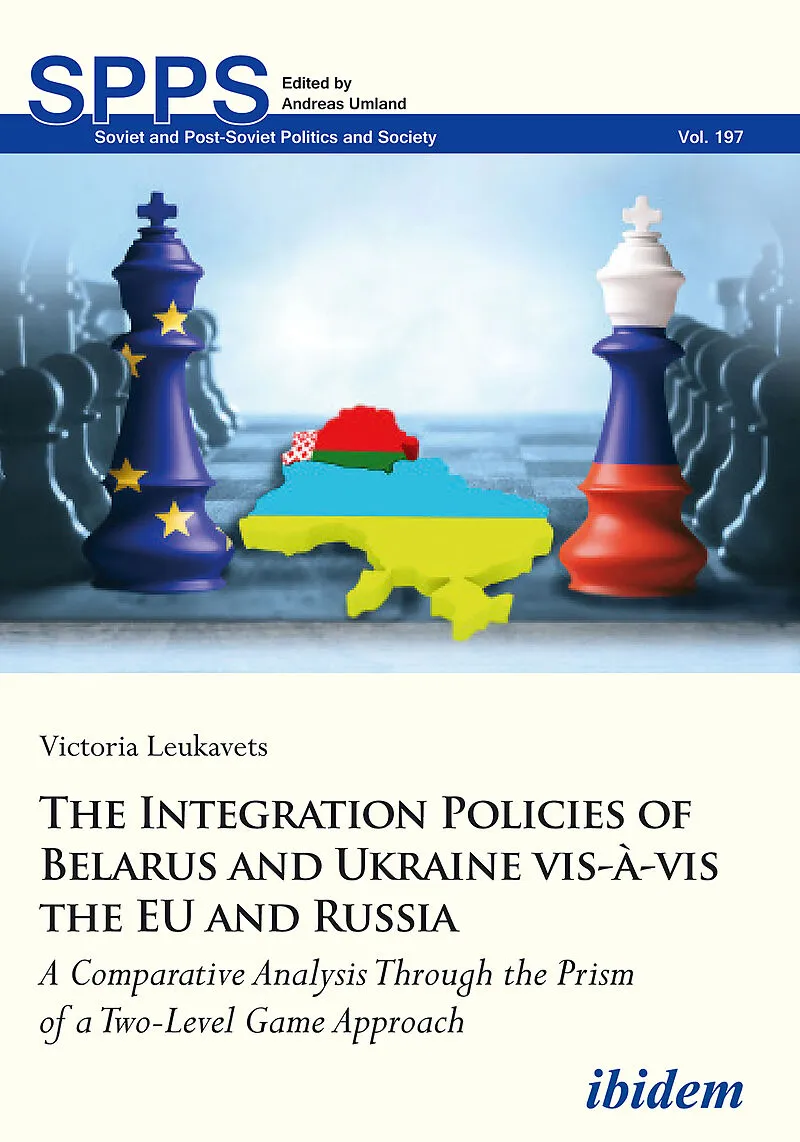
The escalating rivalry between the EU and Russia in their shared neighborhood creates important economic, political, and legal challenges for the lands-in-between. Belarus and Ukraine have received proposals of integration from both the EU and Russia. However, the extents to which they accepted these offers differ and result from a multitude of factors as well as their interplay affecting the policy choices of their governments. International integration is a foreign policy question, but it has a strong domestic dimension, too. Explaining various integration stances demands considering a country's foreign and internal affairs. Alla Leukavets applies here Putnam's two-level game-theoretical approach in combination with findings from Europeanization literature and democracy promotion studies. She develops various actor-centered and structural explanatory variables and applies them in the subsequent empirical analysis. Her research results benefit from triangulation through primary documents analysis and semi-structured interviews with elites and experts in Minsk, Moscow, Brussels, and Washington, DC. The book analyses how the simultaneity of European and Eurasian integration challenged the two countries to make a major strategic integration choice. The study sheds light on the reasons for and genesis of the Ukraine Crisis, and on how external actors, such as the EU, can succeed in facilitating domestic reforms in Eastern Partnership countries.
"Methodologically well-designed and thoroughly researched, this book, originally a doctoral thesis, scrupulously considers a number of factors [...] and delivers a detailed, empirically rich and theoretically informed account of 'two+-level games' observed in Ukraine's and Belarus' strategic interactions vis-à-vis both the European Union and Russia in 19942020. Victoria Leukavets' work deserves attention and could well serve as an authoritative source to rethink and reassess the promises and pitfalls of sovereignty games before and after February 2022." Andriy Tyushka, Europe-Asia Studies, Vol. 77:2, 2025.
Autorentext
Victoria Leukavets is a post-doctoral research fellow and a policy analyst at the Stockholm Center for Eastern European Studies. She has an interdisciplinary background and holds several postgraduate degrees, including an MA in human rights from the University of Manchester, an MA in EU international relations from the College of Europe, and a PhD in political science from the Bremen International Graduate School of Social Sciences. In addition, Dr Leukavets has held fellowships at the European Parliament in Brussels, the UK Parliament, Harvard Davis Center and Wilson International Center for Scholars. She has published in, among other outlets, Europe-Asia Studies, Belarus-Analysen, Russian Analytical Digest, Caucasus Survey and New Perspectives.
Klappentext
After the break-up of the Soviet Union, the escalating rivalry between the EU and Russia in their shared neighbourhood created major economic, political and security challenges for the two states that border them: Belarus and Ukraine. Both countries were made integration offers by the EU and Russia. Their responses, and the consequences of these choices, were driven by a complex range of domestic and foreign policy factors. Drawing widely on extensive empirical research, Dr Leukavets shows how the EU s and Russiäs rival integration projects challenged the leaders of Belarus and Ukraine to make major strategic choices while aiming to ensure the independence and sovereignty of their countries. The study sheds important light on the genesis of the 2020 Belarus crisis and the 2022 Russia-Ukraine war.