Haben Sie noch nichts passendes gefunden? Stöbern Sie durch unser komplettes Sortiment.
Oder melden Sie sich an bzw. registrieren Sie sich.


Beschreibung
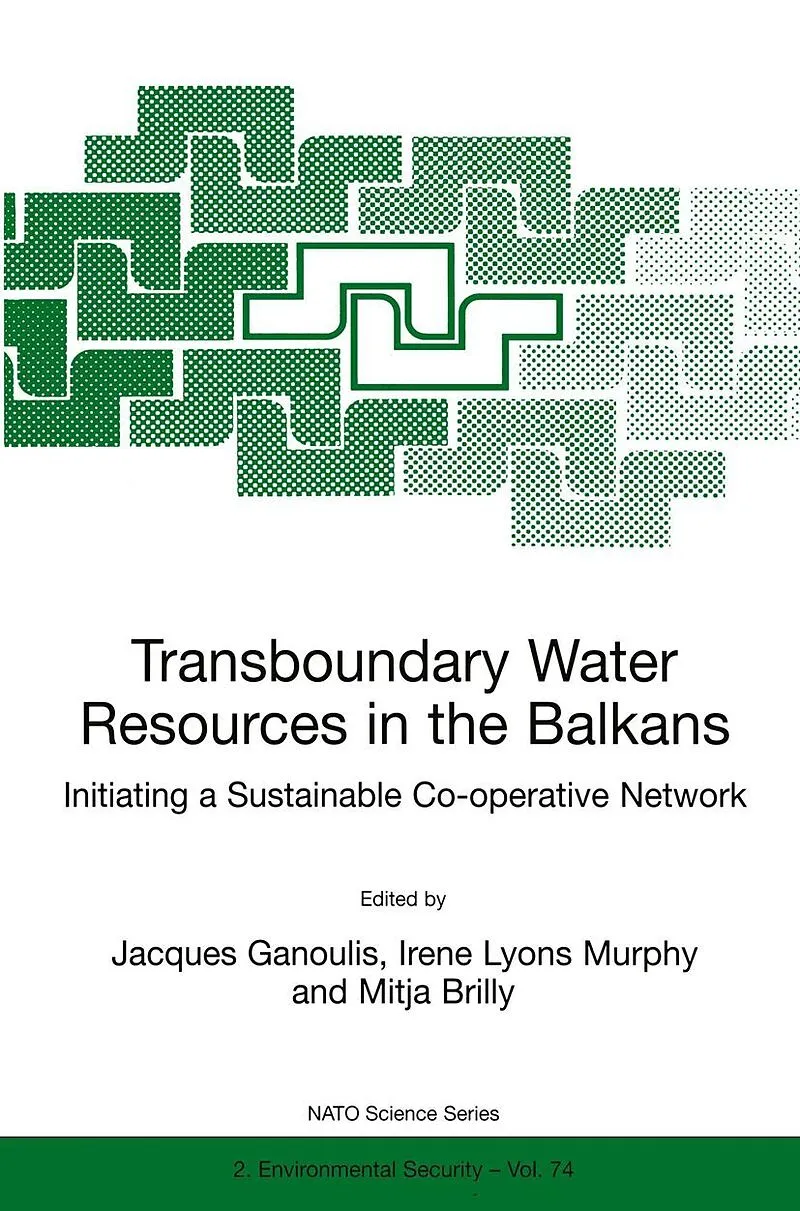
A source of up-to-date information on current water resources, their quality and quantity, in every country in the Balkans. Institutional structures, water management issues and water monitoring problems are analyzed, with special reference to international wa...A source of up-to-date information on current water resources, their quality and quantity, in every country in the Balkans. Institutional structures, water management issues and water monitoring problems are analyzed, with special reference to international waters, using characteristic case studies, including the Sava River, Lake Ohrid, The Nestos/Mesta River, the Neretva River estuary, and coastal waters in Turkey. Contributions written by experts from France, the UK and the USA demonstrate state-of-the-art electronic networking and the management of distributed water databases.
The protection of water resources in the Balkans has become a high profile issue since the collapse of communism in the area, the break up of former Yugoslavia, and ethnic tensions in Kosovo. Transboundary river pollution and the development of international water basins call demand urgent regional co-operation, which will be facilitated by the International Network of Water-Environment Centres for the Balkans, the initiation of which is described in the final conclusions of the book.
Autorentext
Jacques Ganoulis is Emeritus Professor of Civil Engineering at the Aristotle University of Thessaloniki (Greece), Ph.D. (Doctorat d'Etat) in Natural Sciences from the University of Toulouse (France) and visiting scholar at the Universities of Erlangen (Germany), McGill (Canada), Melbourne (Australia) and Paris VI (France). He has more than 35 years' experience in IWRM (Integrated Water Resources Management), risk analysis, climate change and transboundary water management, including transboundary aquifer resources and conflict resolution. He is currently the State Secretary for Water at the Ministry of Environment and Energy in Athens, Greece, the Director of the UNESCO Chair/International Network of Water-Environment Centres for the Balkans (INWEB), UNESCO's Senior Consultant and Greece representative in UNESCO's International Hydrological Programme (IHP), Paris. He has published more than 200 papers in International Journals and Conferences and he is the co-editor/author of10 books including "Transboundary Water Resources Management: a Multidisciplinary Approach" (WILEY, 2011), "Risk Analysis of Water Pollution" (WILEY, 2009; 2nd edition; translated into Chinese) and "Transboundary Groundwater Resources: Sustainable Management and Conflict Resolution" (Lambert Academic Publishing, 2016). Jean Fried, Project Scientist, Urban Planning and Public Policy, School of Social Ecology, University of California, Irvine, USA, and Senior Consultant, UNESCO.J. Fried is Ingénieur Civil des Ponts et Chaussées (Ecole Nationale des Ponts et Chaussées, Paris, France); M.S. Civil Engineering (University of Illinois, Urbana-Champaign, USA); Ph.D. (Doctorat d'Etat) in Physics (University of Bordeaux, France) As Professor of Fluid Mechanics at the University Louis Pasteur of Strasbourg, France, Expert-Consultant at the European Commission in Brussels and President of the European Institute forWater, J. Fried developed an expert competence in directing multidisciplinary and multicultural professional groups of scientists, policy-makers and planners, administrators and their technical staff, to prepare the scientific background of water legislation in the European Union (EU), and draft the corresponding water directives (laws). He also directed water governance capacity-building programs of the EU in various countries and regions, such as, among others, the Middle East, South America, the European Union and most of its member states, the Maghreb countries, Uzbekistan, South Africa, with an emphasis on water, groundwater and sustainable development. He has been a visiting professor and a guest lecturer in many universities world wide in the US, Australia, Canada, Russia and Siberia, among others. J. Fried has published more than 150 articles in international journals and conferences and is the author/co-author/co-editor of several books and chapters in books or conference proceedings, including Transboundary Water Resources Management: a Multidisciplinary Approach (Wiley, 2011) and Proceedings of the 3rd International Symposium on Transboundary Waters Management (Universidad de Castilla-La Mancha, Spain, 2006). He has directed the UNESCO Pilot Courses on Transboundary Groundwater Sustainable Management of Thessaloniki, Greece (2008) and Paris, France (2010).
Zusammenfassung
Proceedings of the NATO Advanced Research Workshop on Transboundary Water Resources in the Balkans: Initiating Regional Monitoring Networks, held in Thessaloniki, Greece, 11-15 October 1999
Inhalt
I. Introduction and Key Issues.- Workshop Goals: A Balkan Monitoring Network.- Sharing Transboundary Water Resources: The Role of Regional Partnerships in the Balkans.- Electronic Networking: Essential to Improved Transboundary Water Management in the Balkans.- II. Case Studies.- The Sava River.- The Nestos/Mesta River: A Transboundary Water Quality Assessment.- The Monitoring Programme of the Lake Ohrid Conservation Project.- The Neretva River: Integrated Coastal Area and River Basin Management.- Coastal Zone Management Applications in Turkey.- III. The Status of Water Resources Monitoring in the Balkans.- Albania.- Bosnia and Herzegovina.- Bulgaria.- Croatia.- FYR of Macedonia.- Greece.- Romania.- Slovenia.- Turkey.- FR of Yugoslavia.- IV. Support for a Balkan Water Network.- Eurowaternet: A Freshwater Monitoring and Reporting Network for All European Countries.- Monitoring Water Systems: The USA Experience.- Managing Human Resources for Water Monitoring: A Role for the International Water Environment Centre for the Balkans.- The Status of Transboundary Water Resources in the Balkans: Establishing a Context for Hydrodiplomacy.- A Plan for a Balkan Water-environment Centre.- V. Consensus on a Strategy.- Conclusions and Recommendations: An International Network of Water-environment Centres for the Balkans (INWEB).- List of Workshop Participants.- Website Contacts.