
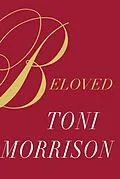
Beloved
Beschreibung
Zusatztext A masterwork. . . . Wonderful. . . . I can't imagine American literature without it. John Leonard! Los Angeles Times A triumph. Margaret Atwood! The New York Times Book Review Toni Morrison's finest work. . . . [It] sets her apart [and] displays her...Format auswählen
- Fester EinbandCHF 40.70

Wird oft zusammen gekauft
Andere Kunden kauften auch
Beschreibung
Zusatztext A masterwork. . . . Wonderful. . . . I can't imagine American literature without it. John Leonard! Los Angeles Times A triumph. Margaret Atwood! The New York Times Book Review Toni Morrison's finest work. . . . [It] sets her apart [and] displays her prodigious talent. Chicago Sun-Times Dazzling. . . . Magical. . . . An extraordinary work. The New York Times A masterpiece. . . . Magnificent. . . . Astounding. . . . Overpowering. Newsweek Brilliant. . . . Resonates from past to present. San Francisco Chronicle A brutally powerful! mesmerizing story. . . . Read it and tremble. People Toni Morrison is not just an important contemporary novelist but a major figure in our national literature. New York Review of Books A work of genuine force. . . . Beautifully written. The Washington Post There is something great in Beloved : a play of human voices! consciously exalted! perversely stressed! yet holding true. It gets you. The New Yorker A magnificent heroine . . . a glorious book. The Baltimore Sun Superb. . . . A profound and shattering story that carries the weight of history. . . . Exquisitely told. Cosmopolitan Magical . . . rich! provocative! extremely satisfying. Milwaukee Journal Beautifully written. . . . Powerful. . . . Toni Morrison has become one of America's finest novelists. The Plain Dealer Stunning. . . A lasting achievement. The Christian Science Monitor Written with a force rarely seen in contemporary fiction. . . . One feels deep admiration. USA Today Compelling . . . . Morrison shakes that brilliant kaleidoscope of hers again! and the story of pain! endurance! poetry and power she is born to tell comes right out. The Village Voice A book worth many rereadings. Glamour In her most probing novel! Toni Morrison has demonstrated once again the stunning powers that place her in the first ranks of our living novelists. St. Louis Post-Dispatch Heart-wrenching . . . mesmerizing. The Atlanta Journal-Constitution Shattering emotional power and impact. New York Daily News A rich! mythical novel . . . a triumph. St. Petersburg Times Powerful . . . voluptuous. New York Informationen zum Autor Toni Morrison Klappentext Upon the original publication of Beloved, John Leonard wrote in the Los Angeles Times: "I can't imagine American literature without it." Nearly two decades later, The New York Times chose Beloved as the best American novel of the previous fifty years. Toni Morrison's magnificent Pulitzer Prize-winning work-first published in 1987-brought the wrenching experience of slavery into the literature of our time, enlarging our comprehension of America's original sin. Set in post-Civil War Ohio, it is the story of Sethe, an escaped slave who has lost a husband and buried a child; who has withstood savagery and not gone mad. Sethe, who now lives in a small house on the edge of town with her daughter, Denver, her mother-in-law, Baby Suggs, and a disturbing, mesmerizing apparition who calls herself Beloved. Sethe works at "beating back the past," but it makes itself heard and felt incessantly: in her memory; in Denver's fear of the world outside the house; in the sadness that consumes Baby Suggs; in the arrival of Paul D, a fellow former slave; and, most powerfully, in Beloved, whose childhood belongs to the hideous logic of slavery and who has now come from the "place over there" to claim retribution for what she lost and for what was taken from her. Sethe's struggle to keep Beloved from gaining possession of the present-and to throw off the long-dark legacy of...
Autorentext
Toni Morrison
Klappentext
Upon the original publication of Beloved, John Leonard wrote in the Los Angeles Times: "I can't imagine American literature without it." Nearly two decades later, The New York Times chose Beloved as the best American novel of the previous fifty years.
Toni Morrison's magnificent Pulitzer Prize-winning work-first published in 1987-brought the wrenching experience of slavery into the literature of our time, enlarging our comprehension of America's original sin. Set in post-Civil War Ohio, it is the story of Sethe, an escaped slave who has lost a husband and buried a child; who has withstood savagery and not gone mad. Sethe, who now lives in a small house on the edge of town with her daughter, Denver, her mother-in-law, Baby Suggs, and a disturbing, mesmerizing apparition who calls herself Beloved.
Sethe works at "beating back the past," but it makes itself heard and felt incessantly: in her memory; in Denver's fear of the world outside the house; in the sadness that consumes Baby Suggs; in the arrival of Paul D, a fellow former slave; and, most powerfully, in Beloved, whose childhood belongs to the hideous logic of slavery and who has now come from the "place over there" to claim retribution for what she lost and for what was taken from her. Sethe's struggle to keep Beloved from gaining possession of the present-and to throw off the long-dark legacy of the past-is at the center of this spellbinding novel. But it also moves beyond its particulars, combining imagination and the vision of legend with the unassailable truths of history.
Zusammenfassung
PULITZER PRIZE WINNER • NEW YORK TIMES **BESTSELLER • A spellbinding novel that transforms history into a story as powerful as Exodus and as intimate as a lullaby.
This "brutally powerful, mesmerizing story” (People) is an unflinchingly look into the abyss of slavery, from the acclaimed Nobel Prize winner.**
One of The Atlantic’s Great American Novels of the Past 100 Years
Sethe was born a slave and escaped to Ohio, but eighteen years later she is still not free. Sethe has too many memories of Sweet Home, the beautiful farm where so many hideous things happened. And Sethe’s new home is haunted by the ghost of her baby, who died nameless and whose tombstone is engraved with a single word: Beloved.
“A masterwork.... Wonderful.... I can’t imagine American literature without it.” —John Leonard, Los Angeles Times
Leseprobe
I
124 WAS SPITEFUL. Full of a baby's venom. The women in the house knew it and so did the children. For years each put up with the spite in his own way, but by 1873 Sethe and her daughter Denver were its only victims. The grandmother, Baby Suggs, was dead, and the sons, Howard and Buglar, had run away by the time they were thirteen years old--as soon as merely looking in a mirror shattered it (that was the signal for Buglar); as soon as two tiny band prints appeared in the cake (that was it for Howard). Neither boy waited to see more; another kettleful of chickpeas smoking in a heap on the floor; soda crackers crumbled and strewn in a line next to the doorsill. Nor did they wait for one of the relief periods: the weeks, months even, when nothing was disturbed. No. Each one fled at once--the moment the house committed what was for him the one insult not to be borne or witnessed a second time. Within two months, in the dead of winter, leaving their grandmother, Baby Suggs; Sethe, their mother; and their little sister, Denver, all by themselves in the gray and white house on Bluestone Road. It didn't have a number then, because Cincinnati didn't stretch that far. In fact, Ohio had been calling itself a state only seventy years when first one brother and then the next stuffed quilt packing into his hat, snatched up his shoes, and crept away from the lively spite the house felt for them.
Baby Suggs didn't even raise her head. From her sickbed she heard them go but that wasn't the reason she lay still. It was a wonder to her that her grandsons had taken so long to realize that every house wasn't like the one on Bluestone Road. Suspended between the nastiness of life and the meanness of the dead, she couldn't get interested in leaving life or living it, let alone the fright of two creeping…