
IHR WARENKORB IST AKTUELL LEER.
Haben Sie noch nichts passendes gefunden? Stöbern Sie durch unser komplettes Sortiment.
Oder melden Sie sich an bzw. registrieren Sie sich.
- Kostenlose Lieferung
- Kauf auf Rechnung
- Ex Libris Tiefpreis
- Filiallieferung und 650+ Abholorte
- Rabatt-Bons als Club-Mitglied
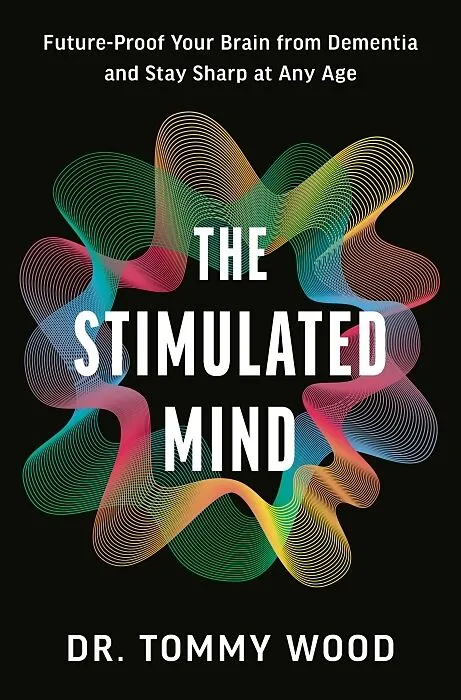
The Stimulated Mind
Beschreibung
Boost mental sharpness today and prevent cognitive decline tomorrow, including Alzheimer’s disease, with science-backed strategies that will extend your brain’s longevity beyond what you thought was possible--from a cutting-edge neuroscientist and ...Format auswählen
- Fester EinbandCHF 36.70
Wird oft zusammen gekauft
Andere Kunden kauften auch
Beschreibung
Boost mental sharpness today and prevent cognitive decline tomorrow, including Alzheimer’s disease, with science-backed strategies that will extend your brain’s longevity beyond what you thought was possible--from a cutting-edge neuroscientist and F1 performance coach. The most important part of the body, especially as we age, is our brain. So why aren’t we taking our brain health as seriously as our heart and achy joints, particularly when people are struggling to focus every day, and dementia and Alzheimer’s cases continue to rise? In Dr. Wood explains that a brain that improves with age is not the result of expensive pills, far-off discoveries, or strict lifestyle “optimizations,” but rather of actions within our control--diet, sleep, physical activity, social connection, and stress tolerance. Driven by how we use our brains on a daily basis, these modifiable factors come together in his groundbreaking “3-S” model that describes what a brain needs to thrive for a lifetime: Stimulation, Sleep, and Nutrient Supply. In <The Stimulated Mind<, Dr. Wood presents actionable science drawn from his research and experience as a physician, neuroscientist, and performance coach in F1. Packed with insights and cutting-edge research, <The Stimulated Mind< offers a path toward true cognitive longevity, ensuring that our brains perform at their best no matter what the coming years throw at us.
Autorentext
Tommy Wood, BM BCh, PhD, is a neuroscientist, performance coach, and elite-level professional nerd. He is currently an associate professor of pediatrics and neuroscience at the University of Washington. He received a bachelor’s degree in biochemistry from the University of Cambridge, a medical degree from the University of Oxford, and a PhD in physiology and neuroscience from the University of Oslo.
Leseprobe
Chapter 1
Baby Neuroscientist’s First Reality Check
I can still vividly remember the first time I had to completely reevaluate the landscape of my work in neuroscience. This happened just over a decade after first hearing my dad’s reminder of how little we all truly know. My journey in between involved a fair amount of luck and indecision, but also an ever-increasing curiosity about how to understand and impact human health.
It was now the summer of 2014. I was just nine months into my PhD studies when I attended a scientific conference with some of the biggest names in my new field. While I’d made early inroads into at least two other careers (medicine and athletic performance coaching), I knew very little about cutting-edge neuroscience.
On the first day of the conference, we heard a talk that referenced a scientific paper with the catchy title “1,026 Experimental Treatments in Acute Stroke.” The essence of the paper is this: At the time it was written (now more than twenty years ago), there were over a thousand treatments that could dramatically decrease the injury caused by a stroke. In rats. But none of these treatments, with the exception of thrombolysis (clot busting), which has been used in humans since the 1950s, have improved outcomes in human stroke patients.
For days afterwards, I couldn’t get this study out of my head. If decades of research and billions of dollars had been invested in the search for better stroke treatments, and literally nothing that worked in the lab had successfully worked in humans, why should we expect the next decades and next billion dollars to have a different result?
This situation is unfortunately not unique to strokes. When it comes to almost every brain injury or neurodegenerative condition, the last major breakthrough in treatment occurred several decades ago. Or, in the case of age-related cognitive decline and dementias such as Alzheimer’s disease, no breakthrough has occurred at all. During the conference, I couldn’t shake the feeling that there was something missing in how we research the brain as we look for ways to treat or support it. And since that day, there is one question that I have continued to reflect on as I’ve built my career as a professor and neuroscientist: What if we’re thinking about the brain all wrong?
The Current State of the Brain
Before we delve into a little neuroscience to understand what we do and don’t know about the brain, and how that applies to our own brains, I think it would be useful to start with a discussion of brain health. Because ultimately, that’s what we are all striving to improve.
Most simply, a healthy brain is one that performs the (cognitive) functions you want, at the time you want it to perform them.
Obviously, my simple definition of brain health has to be applied within the reality of our individual experiences. For example, as much as I would love for my brain to suddenly allow me to clear a dance floor with jaw-dropping breakdancing moves, that’s not going to happen. Anyone who has seen me strut my stuff at an after-hours neuroscience conference disco will gladly attest as much. But, as somebody who has lived and worked in many countries, I might reasonably expect my brain to understand and speak one of the languages I’ve learned, even when I’m under pressure or haven’t slept well.
Brain health, therefore, is incredibly personal. What I want my brain to do could be very different from what you want yours to do, especially as we age. As we’ll see later, this information can help us tailor the skills and tasks we engage our brains in. Of course, there are also common functions that we all want our brains to perform: remember day-to-day occurrences and conversations, sustain focus on specific tasks that are important to us, process a wide range of information, and make decisions in a calm and timely manner. Luckily, the factors that help us achieve our individual goals of brain health and cognition also support these more general components of daily brain function.
There’s one final piece to my definition of a healthy brain that’s critically important—the element of time. In addition to supporting our cognitive function right now, I believe a healthy brain should be as future-proof as possible. This means minimizing the effects of aging on the brain and making sure we’re able to function in, and adapt to, unknown future situations for decades to come. Unfortunately, at least right now, that’s not necessarily the future that our brains can expect.
It’s undeniable that we as a society appear to be at a critical moment when it comes to our collective mental and cognitive health. Everywhere we look, it seems that our brains are increasingly under duress. The sheer volume of information we’re expected to handle—unthinkable to previous generations—keeps increasing, and we’re fracturing our attention by moving from one cognitive task to another much more frequently than we did even twenty years ago. Among the generations who grew up with smartphones and social media as part of their daily lives, more women are receiving prescriptions of antidepressant medications than ever before, and men have a higher-than-ever risk of dying by suicide. At the same time, one in nine American adults over forty-five says they’ve noticed worsening cognitive function, and more than one in ten adults over sixty-five has dementia. In the next fifteen to twenty years, the burden of dementia is expected to at least double, if not triple, worldwide, becoming either the first or second most common cause of death in most high-income countries by 2040.
Phew. Deep breath.
When contemplating statistics like these, it’s not surprising that the default feeling is one of helplessn…