Beschreibung
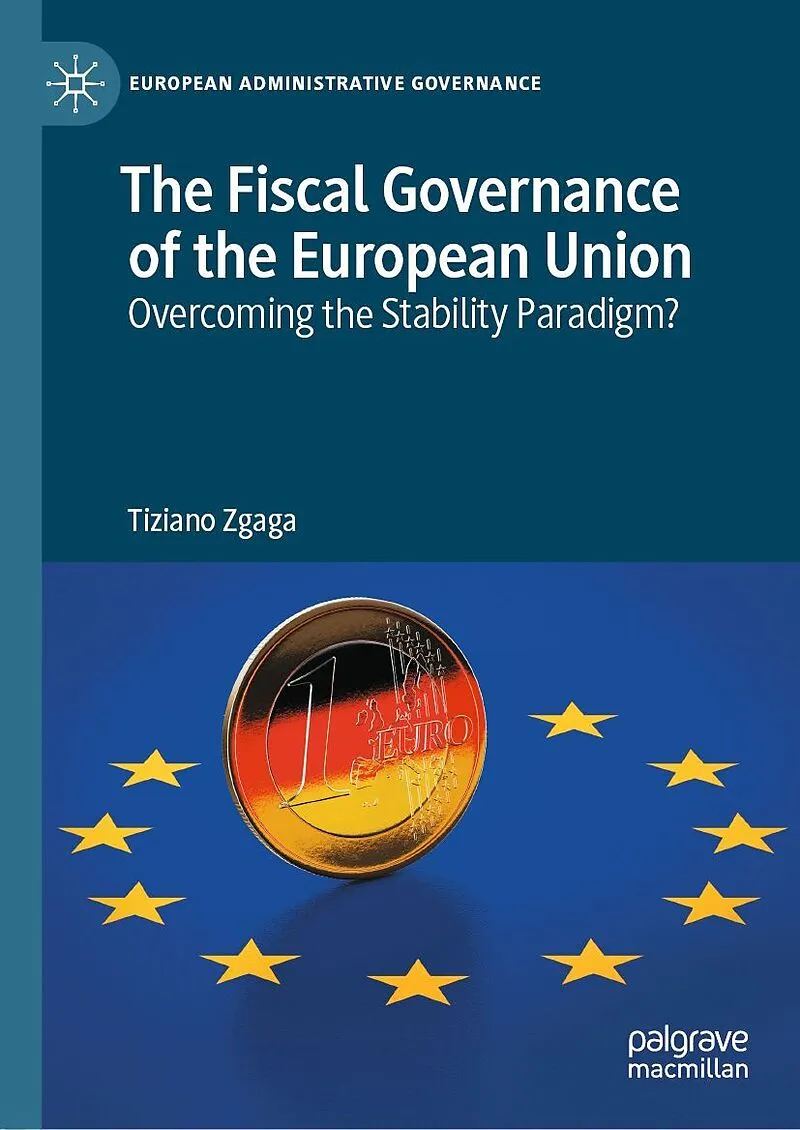
This book provides a comprehensive analysis of the fiscal governance of the European Union (EU) from the Maastricht Treaty (1992) to the reform of the Stability and Growth Pact (2024) until the new wave of 'defence spending' in Europe in 2025. It shows how an...This book provides a comprehensive analysis of the fiscal governance of the European Union (EU) from the Maastricht Treaty (1992) to the reform of the Stability and Growth Pact (2024) until the new wave of 'defence spending' in Europe in 2025. It shows how and why the stability paradigm of Economic and Monetary Union has changed across three major crises (the euro crisis, the COVID-19 pandemic and Russia's invasion of Ukraine) as a compromise between different fiscal ideas supported in particular by Germany, France and Italy. Since the intricate set of fiscal rules has become increasingly more flexible to allow for more spending both at the national and the European level, the book investigates to what extent the original stability paradigm has been replaced by a new fiscal paradigm. It zooms on the drivers behind crucial moments of fiscal change and reflects upon the implications on the future of the EU. The book will appeal to scholars, practitioners and students of EU fiscal integration in political science, public administration, and law.
Provides a comprehensive analysis of EU fiscal integration from 1992 to 2025 Examines the positions of the three largest European member statesGermany, France and Italyon EU fiscal governance Explains the EU fiscal paradigm across the euro crisis, the COVID-19 pandemic and Russia's invasion of Ukraine
Autorentext
Tiziano Zgaga is the Principal Investigator of the three-year project (2025-2028) Towards a post-pandemic fiscal union? Differentiated member state governance of EU money: the National Recovery and Resilience Plans (EUMONEY), financed by the Deutsche Forschungsgemeinschaft (German Research Agency) and conducted at the Geschwister-Scholl-Institute of Political Science at the LMU Munich, Germany. From 2021 to 2025, he has been postdoctoral researcher at the University of Konstanz, Germany. Tiziano Zgaga specialised in EU integration, Europeanization and comparative public administration, especially in the fiscal realm.
Klappentext
After finishing this book, readers will end up with a better grasp of fiscal
governance but also learning more about the EU itself. A must read for anyone
who wishes to understand European integration.
Amy Verdun , Professor, University of Victoria, Canada and Leiden University,
Netherlands
Based on a timely and insightful analysis, this book offers a comprehensive
exploration of the evolving landscape of EU fiscal regulation.
Christoph Knill , Professor, Ludwig Maximilian University of Munich, Germany
This book provides a comprehensive examination of the fiscal governance of the
European Union (EU) from the Maastricht Treaty (1992) to the reform of the
Stability and Growth Pact (2024) and the new wave of 'defence spending' in
Europe in 2025. It shows how and why the stability paradigm of Economic and
Monetary Union has changed across three major crises the euro crisis, the
COVID-19 pandemic, and Russia's invasion of Ukraine and as a compromise
between different fiscal ideas supported in particular by Germany, France and
Italy. Since the intricate set of fiscal rules has become increasingly more flexible
to allow for additional spending both at the national and the European level, the book
investigates to what extent the original stability paradigm has been replaced by
a new fiscal paradigm. It examines the drivers behind crucial moments of fiscal
change and reflects upon the implications for the future of the EU. The book will
appeal to scholars, practitioners and students of EU fiscal integration in political
science, public administration, and law.
Tiziano Zgaga is Researcher at the LMU Munich, Germany. He is the
Principal Investigator of the three-year project (2025-2028) Towards a post-
pandemic fiscal union? Differentiated member state governance of EU money:
the National Recovery and Resilience Plans (EUMONEY), financed by the Deutsche Forschungsgemeinschaft (DFG, German Research Foundation).
Inhalt