
IHR WARENKORB IST AKTUELL LEER.
Haben Sie noch nichts passendes gefunden? Stöbern Sie durch unser komplettes Sortiment.
Oder melden Sie sich an bzw. registrieren Sie sich.
- Kostenlose Lieferung
- Kauf auf Rechnung
- Ex Libris Tiefpreis
- Filiallieferung und 650+ Abholorte
- Rabatt-Bons als Club-Mitglied
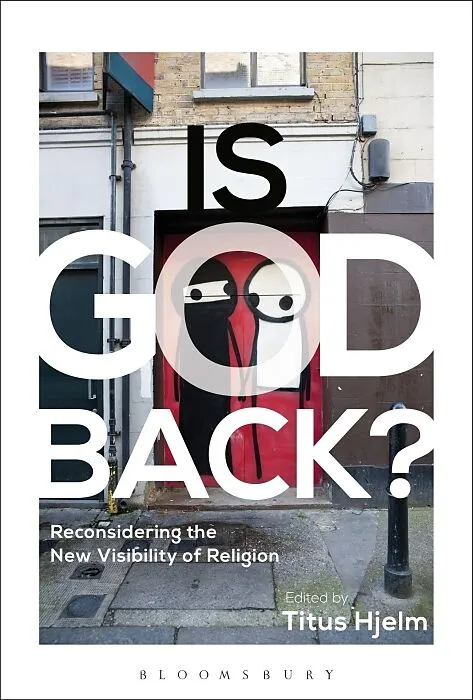
Is God Back?
Beschreibung
Is God Back? Reconsidering the New Visibility of Religion examines the shifting boundary between religion and the public sphere in Europe and the Middle East. Asking what the ''new visibility of religion'' means and challenging simplistic notions of living in ...Format auswählen
- Kartonierter EinbandCHF 52.70

Wird oft zusammen gekauft
Andere Kunden kauften auch
Beschreibung
Is God Back? Reconsidering the New Visibility of Religion examines the shifting boundary between religion and the public sphere in Europe and the Middle East. Asking what the ''new visibility of religion'' means and challenging simplistic notions of living in a ''post-secular'' age, the chapters explore how religion is contested and renegotiated in the public sphere - or rather, in different publics - and the effects of these struggles on society, state and religion itself. Whereas religion arguably never went away in the USA, the re-emergence of public religion is a European phenomenon. Is God Back? provides timely case studies from Europe, as well as extending to the Middle East, where fledgling democracies are struggling to create models of governance that stem from the European secular model, but which need to be able to accommodate a much more public form of religiosity. Discussions include the new visibility of neo-Pagan and Native Faith groups in Europe, Evangelical Christians and Church teaching on sexuality in the UK, and Islamic social Movements in the Arab world. Drawing from empirical and theoretical research on religion and national identity, religion and media, church-state relationships, and religion and welfare, Is God Back? is a rich source for students and scholars interested in the changing face of public religion in the modern world, including those studying the sociology of religion, social policy, and theology.>
This collection is outstanding: lively, timely, wide-ranging, probing and sceptical about woolly notions of religion's return to the public sphere. It's a must-read book for anyone with interests in religion as a social fact.
Vorwort
Examines the shifting boundary between religion and the public sphere in Europe and Middle East, providing case-studies and critical perspectives on secularization and public religion.
Autorentext
Titus Hjelm is Reader in Sociology at University College London, UK. His publications include Is God Back? Reconsidering the New Visibility of Religion (ed., Bloomsbury, 2015), and Social Constructionisms: Approaches to the Study of the Human World (2014). He is founding chair of the American Academy of Religion's Sociology of Religion Group.
Klappentext
Is God Back? Reconsidering the New Visibility of Religion examines the shifting boundary between religion and the public sphere in Europe and the Middle East. Asking what the 'new visibility of religion' means and challenging simplistic notions of living in a 'post-secular' age, the chapters explore how religion is contested and renegotiated in the public sphere - or rather, in different publics - and the effects of these struggles on society, state and religion itself. Whereas religion arguably never went away in the USA, the re-emergence of public religion is a European phenomenon. Is God Back? provides timely case studies from Europe, as well as extending to the Middle East, where fledgling democracies are struggling to create models of governance that stem from the European secular model, but which need to be able to accommodate a much more public form of religiosity. Discussions include the new visibility of neo-Pagan and Native Faith groups in Europe, Evangelical Christians and Church teaching on sexuality in the UK, and Islamic social Movements in the Arab world. Drawing from empirical and theoretical research on religion and national identity, religion and media, church-state relationships, and religion and welfare, Is God Back? is a rich source for students and scholars interested in the changing face of public religion in the modern world, including those studying the sociology of religion, social policy, and theology.
Inhalt
- Is God Back? Reconsidering the New Visibility of Religion , Titus Hjelm (UCL, UK)
Part I: Conceptualizing Public Religion - Studying Public Religions: Visibility, Authority and the Public/Private Distinction, Marta Axner (Uppsala University, Sweden)
- Conceptualizing the Public in Mediatized Religion, Mia Löveheim (Uppsala University, Sweden) and Alf Linderman (Uppsala Universitym, Sweden)
- Religious Cleavages and National Identity in European Civil Societies, Annette Schnabel (Bergische Universität Wuppertal,Germany)
- Illiberal Secularism? Pro-Faith Discourse in the United Kingdom, Steven Kettell (University of Warwick, UK)
- Negotiating the Public and Private in Everyday Evangelicalism, Anna Strhan (University ofKent, UK)
- The Gods Are Back: Nationalism and Transnationalism in Contemporary Pagan and Native Faith Groups in Europe, Kathryn Rountree (Massey University, New Zealand)
Part II: Rethinking the Religion-State Relationship - Religion and the State in the 21st Century:the Alternative between Laicité and Religious Freedom, Luca Diotallevi (University of Rome TRE)
- The Sacred State: Religion, Ritual and Power in the United Kingdom, Norman Bonney (Edinburgh Napier University, UK)
- Social Class and Christianity: Imagining Sovereignty and Scottish Independence, Paul Gilfillian (Queen Margaret University, UK)
- National Piety: Religious Equality, Freedom of Religion and National Identity in Finnish Political Discourse, Titus Hjelm (UCL, UK)
- Religion, Democracy and the Challenge of the Arab Spring, Ian Morrison (American University in Cairo, Egypt)
Part III:Religion and Social Action - Social Welfare Provision and Islamic Social Movements in the Middle East and North Africa (MENA): A Viable Form of Social Action?, Rana Jawad (University of Bath, UK)
- Understanding Definitions and Experiences of Care and Caring amongst Hindu and Muslim Older People: The Role of Ethnicity and Religion, Akile Ahmet (Brunel University London, UK) and Christina Victor (Brunel University London, UK)
- Religion and Transnational Roma Mobilization: From Local Religious Participation to Transnational Social Activism in the Case of the Finnish Roma, Raluca Bianca Roman (University of St Andrews, UK)
- Finding God in the Process: Recovery from Addiction in Sarajevo, Eleanor Ryan-Saha (Durham University, UK)
Bibliography
Index