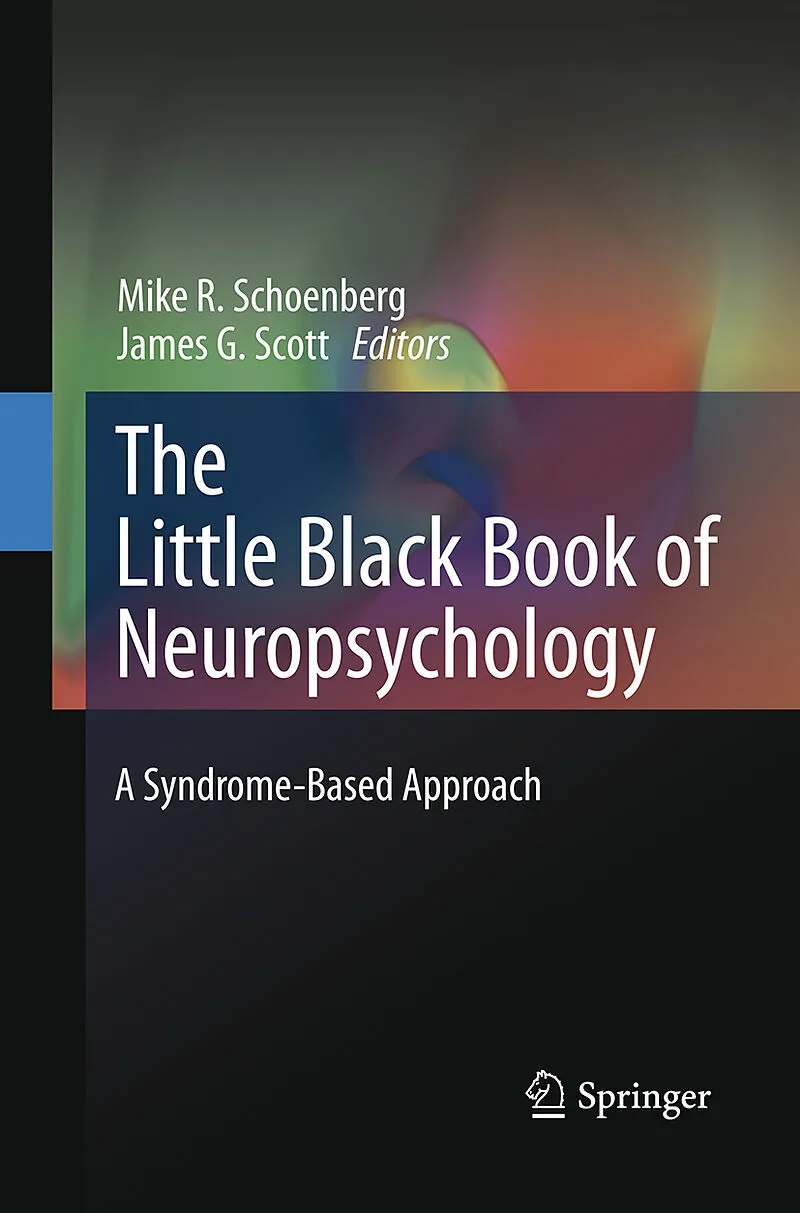
The Little Black Book of Neuropsychology
Beschreibung
This concise neuropsychology assessment reference outlines signs, symptoms and complaints according to neuropsychological domain with descriptions of possible deficits involved, inpatient and outpatient assessment methods and possible etiologies. Quite simply,...Format auswählen
- Kartonierter EinbandCHF 122.00
- Fester EinbandCHF 149.20
- E-Book (pdf)CHF 118.90

Wird oft zusammen gekauft
Andere Kunden kauften auch
Beschreibung
This concise neuropsychology assessment reference outlines signs, symptoms and complaints according to neuropsychological domain with descriptions of possible deficits involved, inpatient and outpatient assessment methods and possible etiologies.
Quite simply, this is an essential training tool for those learning neuropsychology. It provides a concise yet academically rigorous overview of clinical neuropsychology from a presenting syndrome or symptoms approach. Because clinical neuropsychology practice necessitates an understanding of functional neuroanatomy, a basic review is provided along with a description of a basic neurobehavioral examination. This book is not meant to supplant the longer, more encompassing texts of clinical neuropsychology or neurology. Rather, it supplements these textbooks as a concise and user-friendly reference guide. The unifying thread for this book is the practical approach to assessing a clinical problem (sign, symptom, or complaint) and applying an algorithmic rationale to the associated brain-behavior relationship. Thus, it is designed to be a practical book for the daily practice of clinical neuropsychology.
Only compact neuropsychology handbook that provides detailed symptom-based descriptions for neuropsychological assessment of neurological and psychiatric syndromes Convenient outline format Appendix features a neuropsychological formulary, cranial nerve examination review, and dermatome/myotome chart Includes supplementary material: sn.pub/extras
Autorentext
Mike R. Schoenberg, Ph.D., is an Assistant Professor of Neurology at University Hospitals of Cleveland and Case Western Reserve University School of Medicine. He completed a two year post-doctoral fellowship in clinical neuropsychology at the University of Oklahoma Health Sciences Center and an internship at the University of Kansas School of Medicine, Wichita. He provides academic instruction and supervision in clinical neuropsychology to medical students and psychology trainees, and conducts research in clinical neuropsychology. James G. Scott, Ph.D., ABPP-Cn is a Professor of Psychiatry at the University of Oklahoma Health Sciences Center. He completed two years of postdoctoral training in clinical neuropsychology at the University of Oklahoma Health Sciences Center and an internship at Tulane University Medical School. He is board certified by the American Board of Professional Psychology in clinical neuropsychology and provides academic instruction and supervision to medical students and psychology trainees in clinical neuropsychology and conducts research in clinical neuropsychology.
Inhalt
Part I: Neuropsychology General Issues: The Neuropsychological Referral.- Medical Records.- Basic Neuroanatomy.- Basic components of a Neuropsychological Evaluation.- Part II: Neuropsychological Domains: Arousal: The drowsy, lethargic, or stuporous patient.- Attention/Concentration Problems: The distractible patient.- Inattention/Neglect Syndromes.- Language Problems.- Learning and Memory: The Forgetful Patient.- Visuospatial/Visuoconstructional Problems.- Apraxias.- Agnosias.- Executive Functions (problem solving, abstraction, sequencing, inhibition, self-monitoring, planning, and initiation).- Emotional/Mood.- Episodic Neurological Dysfunction.- Part III: Specific Neurological Diseases: Aphasia.- Cerebrovascular Disease and Stroke.- Dementia.- Seizures/Epilepsy.- Somatization Disorders, blackout spells, fits/convulsions.- Parkinson's Disease and other movement disorders.- Multiple Sclerosis and Other Demyelinating Disorders.- Traumatic Brain Injury and Concussion.- Infections.- Neoplasms/Neoplastic Syndromes .- Psychiatric depression and anxiety.- Part IV: Special Considerations: Medicolegal exposure.- Reporting Test performance/scores.- Limitations.- Answering Referral Questions.- Placement issues.