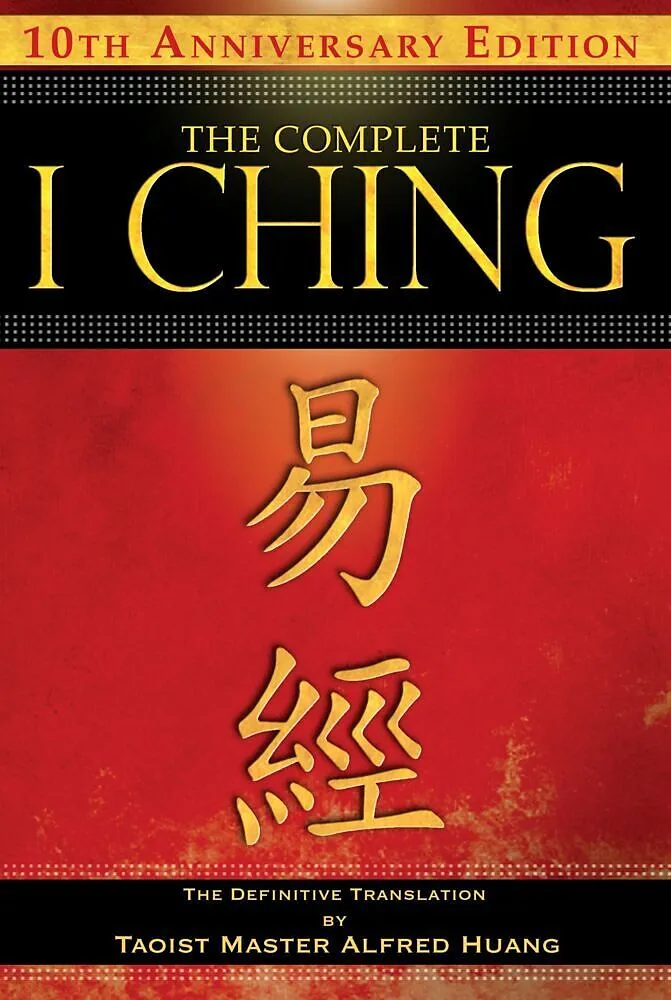
The Complete I Ching 10th Anniversary Edition
Beschreibung
Zusatztext This book is an absolute requirement for those who rely upon the I-Ching! and most highly recommended as a primary text for anyone wishing to learn how to use it. Highest recommendations to author and publisher - excellent! Informationen zum Autor A...Format auswählen
- Kartonierter EinbandCHF 27.10

Wird oft zusammen gekauft
Andere Kunden kauften auch
Beschreibung
Zusatztext This book is an absolute requirement for those who rely upon the I-Ching! and most highly recommended as a primary text for anyone wishing to learn how to use it. Highest recommendations to author and publisher - excellent! Informationen zum Autor A third-generation master of Wu style Tai Chi Chuan, Chi Kung, and Oriental meditation, Master Alfred Huang is a professor of Taoist philosophy who studied the I Ching with some of China's greatest minds--only to be imprisoned during the Cultural Revolution in 1966 and sentenced to death. For 13 years in prison Master Huang meditated on the I Ching and found the strength to survive. Released in 1979 weighing only 80 pounds, he emigrated to the United States. Master Huang is the founder of New Harmony, a nonprofit organization devoted to teaching self-healing, and is the author of The Numerology of the I Ching and Complete Tai-Chi. He lives on the island of Maui. Klappentext Translated by the eminent Taoist Master Alfred Huang, The Complete I Chinghas been praised by scholars and new students of the I Ching since its first edition. A native Chinese speaker, Master Huang first translated the original ideograms of the I Ching into contemporary Chinese and then into English, bringing forth the intuitive meanings embodied in the images of the I Ching and imbuing his translation with an accuracy and authenticity not possible in other English translations. However, what makes his translation truly definitive is his return to prominence of the Ten Wings, the commentaries by Confucius that are essential to the I Ching's insights. This 10th anniversary edition offers a thorough introduction to the history of the I Ching, how to use it, and several new divination methods; in-depth and easy-to-reference translations of each hexagram name, description, and pictogram; and discussions of the interrelations between the hexagrams and the spiritual meaning of their sequence. Chapter 16 Yü-Delight Zhen-Thunder Kun-Earth Name and Structure Yü originally meant delight: today it also means peace and happiness. Delight is the inverse of the preceding gua, Humbleness. Humbleness leads people to delight. Thus, Humbleness and Delight are complementary. Wilhelm translates Yü as Enthusiasm; Blofeld translates it as Repose. In this book I follow the original meaning, Delight. Sequence of the Gua: When one's harvest is great and one can still remain humble, there is sure to be an outburst of delight. Thus, after Humbleness, Delight follows. The ideograph of this gua is a very old form consisting of two parts. The left portion is an ideograph of yü, which means hand out or give something away. There are two hands at the top and a vertical straight line connected to the lower hand, representing the arm. Between the two hands there is a little object. Taken as a whole it is a picture of the act of giving and receiving. The right portion of the ideograph represents an elephant, xiang. The elephant is standing upright on two rear legs with the tail touching the ground. The two front legs are held up in the air. The head of the elephant is looking forward with the long trunk curling upward. In the past there were elephants in the southern part of China, though they no longer exist there. In southern China, elephants were trained to help workers carry heavy things, but in the north they were trained for the purpose of giving people pleasure and delight. People performed a kind of dance known as the elephant dance, which King Wu was fond of. The two parts of the ideograph together mean delight--enjoyed by oneself or given to others. The structure of this gua is Thunder above, Earth below. Thunder represents action, and Earth submission. These two primary gua standing together symbolize the action of the yang element followed delightfully by all the yin elements. I...
ldquo;This book is an absolute requirement for those who rely upon the I-Ching, and most highly recommended as a primary text for anyone wishing to learn how to use it. Highest recommendations to author and publisher - excellent!”
Autorentext
A third-generation master of Wu style Tai Chi Chuan, Chi Kung, and Oriental meditation, Master Alfred Huang is a professor of Taoist philosophy who studied the I Ching with some of China’s greatest minds--only to be imprisoned during the Cultural Revolution in 1966 and sentenced to death. For 13 years in prison Master Huang meditated on the I Ching and found the strength to survive. Released in 1979 weighing only 80 pounds, he emigrated to the United States. Master Huang is the founder of New Harmony, a nonprofit organization devoted to teaching self-healing, and is the author of The Numerology of the I Ching and Complete Tai-Chi. He lives on the island of Maui.
Klappentext
Translated by the eminent Taoist Master Alfred Huang, The Complete I Chinghas been praised by scholars and new students of the I Ching since its first edition. A native Chinese speaker, Master Huang first translated the original ideograms of the I Ching into contemporary Chinese and then into English, bringing forth the intuitive meanings embodied in the images of the I Ching and imbuing his translation with an accuracy and authenticity not possible in other English translations. However, what makes his translation truly definitive is his return to prominence of the Ten Wings, the commentaries by Confucius that are essential to the I Ching’s insights. This 10th anniversary edition offers a thorough introduction to the history of the I Ching, how to use it, and several new divination methods; in-depth and easy-to-reference translations of each hexagram name, description, and pictogram; and discussions of the interrelations between the hexagrams and the spiritual meaning of their sequence.
Zusammenfassung
A revised edition of the definitive translation of the world's most important book of divination.
Leseprobe
**
Chapter 16
Yü-Delight
Zhen-Thunder
Kun-Earth
Name and Structure**
Yü originally meant delight: today it also means peace and happiness. Delight is the inverse of the preceding gua, Humbleness. Humbleness leads people to delight. Thus, Humbleness and Delight are complementary. Wilhelm translates Yü as Enthusiasm; Blofeld translates it as Repose. In this book I follow the original meaning, Delight.
Sequence of the Gua: When one’s harvest is great and one can still remain humble, there is sure to be an outburst of delight. Thus, after Humbleness, Delight follows.
The ideograph of this gua is a very old form consisting of two parts. The left portion is an ideograph of yü, which means hand out or give something away. There are two hands at the top and a vertical straight line connected to the lower hand, representing the arm. Between the two hands there is a little object. Taken as a whole it is a picture of the act of giving and receiving. The right portion of the ideograph represents an elephant, xiang. The elephant is standing upright on two rear legs with the tail touching the ground. The two front legs are held up in the air. The head of the elephant is looking forward with the long trunk curling upward. In the past there were elephants in the southern part of China, though they no longer exist there. In southern China, elephants were trained to help workers carry heavy things, but in the north they were trained for the purpose of giving people pleasure and delight. People performed a kind of dance known as the elephant dance, which King Wu was fond of. The two parts of the ideograph together mean delight--enjoyed by oneself or given to others.
The structure of this gua is Thunder above, Earth below. Thunder represents action, and Earth submission. These two primary gua standing together symbolize the action of the yang element followed delightfully by all the yin elements. In ancient Chi…