
IHR WARENKORB IST AKTUELL LEER.
Haben Sie noch nichts passendes gefunden? Stöbern Sie durch unser komplettes Sortiment.
Oder melden Sie sich an bzw. registrieren Sie sich.
- Kostenlose Lieferung
- Kauf auf Rechnung
- Ex Libris Tiefpreis
- Filiallieferung und 650+ Abholorte
- Rabatt-Bons als Club-Mitglied
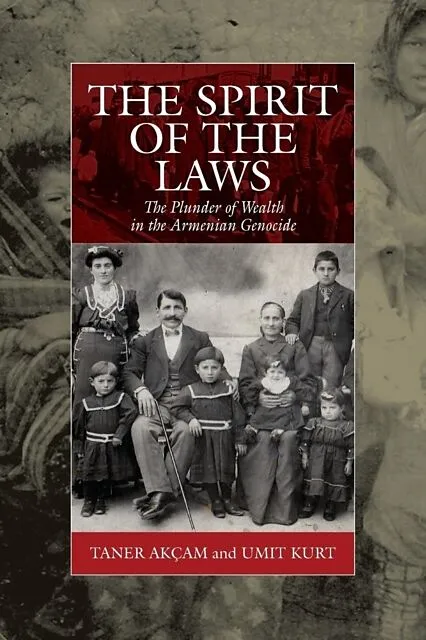

The Spirit of the Laws
Beschreibung
Zusatztext This book is a valuable addition to filling the gaps of our understanding of genocide and helps readers navigate complex terrain in the case study presented I recommend this book as a case study to be included in graduate level courses. In addition ...Format auswählen
- Kartonierter EinbandCHF 47.90

Wird oft zusammen gekauft
Andere Kunden kauften auch
Beschreibung
Zusatztext This book is a valuable addition to filling the gaps of our understanding of genocide and helps readers navigate complex terrain in the case study presented I recommend this book as a case study to be included in graduate level courses. In addition to its thorough review of the questionable statecraft of genocidal states, it is a reminder of the merits of engaged scholarship. Akçam and Kurt, by sharing their research as an act of solidarity with citizens who continue to challenge state restraints and master narratives based on genocide, make a contribution to the ongoing process of crafting a just society. • Histoire Sociale/Social History [This volume] will make an invaluable contribution to the field of genocide studies. It is meticulously researched and features superb attention to detail. • Deborah Mayersen , University of Wollongong Akçam and Kurt have written a fundamentally important book... We know that genocides are accompanied by the expropriation of the assets possessed by the targeted population But nothing like that has been done for the Armenian Genocideuntil now. • Eric Weitz , CUNY City College Informationen zum Autor Umit Kurt received his PhD in History from Clark University in 2016, and his MA in European Studies from Sabanci University in 2008. He was a visiting professor in the Armenian Studies Program at California State University in 2015-16, and a post-doctoral fellow at CMES, Harvard University in 2016-17. Currently, he is the Polonsky Fellow at the Van Leer Jerusalem Institute, Polonsky Academy for Advanced Studies. Klappentext Examines the confiscation of Armenian properties during the Genocide and subsequent attempts to retain seized Armenian wealth. Reveals that decrees issued during the Genocide constitute central pillars of the Turkish system of property rights, retaining their legal validity. Demonstrates that the perpetrators of genocide manipulate the legal system to facilitate their plans. Zusammenfassung Pertinent to contemporary demands for reparations from Turkey is the relationship between law and property in connection with the Armenian Genocide. This book examines the confiscation of Armenian properties during the genocide and subsequent attempts to retain seized Armenian wealth. Through the close analysis of laws and treaties! it reveals that decrees issued during the genocide constitute central pillars of the Turkish system of property rights! retaining their legal validity! and although Turkey has acceded through international agreements to return Armenian properties! it continues to refuse to do so. The book demonstrates that genocides do not depend on the abolition of the legal system and elimination of rights! but that! on the contrary! the perpetrators of genocide manipulate the legal system to facilitate their plans. Inhaltsverzeichnis Introduction Chapter 1. The Laws and Decrees of the Committee of Union and Progress Period The Decrees and Regulations of 17, 30 and 31 May 1915 The Regulation of 10 June 1915 The Temporary Law of 26 September 1915 and the Regulation of 8 November 1915 A Brief Evaluation Chapter 2. The Armistice Period and the Returning Armenians The First Ones Returning from Deportation 12 January 1920: The Ittihadist Laws Are Annulled A Brief Evaluation The Treaty of Sèvres of 10 August 1920 The Prohibition against the Return of Greeks and Armenians Staying Outside of Turkey The Articles of Law Used to Prevent Their Return Policies to Obstruct Repatriation The Prohibition of Domestic Travel and Migration A Brief Evaluation Chapter 3. The Turkish Republic Prior to Lausanne The First Laws and Regulations of the Turkish Grand National Assembly The 20 Ap...
Autorentext
Umit Kurt received his PhD in History from Clark University in 2016, and his MA in European Studies from Sabanci University in 2008. He was a visiting professor in the Armenian Studies Program at California State University in 2015-16, and a post-doctoral fellow at CMES, Harvard University in 2016-17. Currently, he is the Polonsky Fellow at the Van Leer Jerusalem Institute, Polonsky Academy for Advanced Studies.
Klappentext
Examines the confiscation of Armenian properties during the Genocide and subsequent attempts to retain seized Armenian wealth. Reveals that decrees issued during the Genocide constitute central pillars of the Turkish system of property rights, retaining their legal validity. Demonstrates that the perpetrators of genocide manipulate the legal system to facilitate their plans.
Zusammenfassung
Pertinent to contemporary demands for reparations from Turkey is the relationship between law and property in connection with the Armenian Genocide. This book examines the confiscation of Armenian properties during the genocide and subsequent attempts to retain seized Armenian wealth. Through the close analysis of laws and treaties, it reveals that decrees issued during the genocide constitute central pillars of the Turkish system of property rights, retaining their legal validity, and although Turkey has acceded through international agreements to return Armenian properties, it continues to refuse to do so. The book demonstrates that genocides do not depend on the abolition of the legal system and elimination of rights, but that, on the contrary, the perpetrators of genocide manipulate the legal system to facilitate their plans.
Inhalt
Introduction
Chapter 1. The Laws and Decrees of the Committee of Union and Progress Period
The Decrees and Regulations of 17, 30 and 31 May 1915
The Regulation of 10 June 1915
The Temporary Law of 26 September 1915 and the Regulation of 8 November 1915
A Brief Evaluation
Chapter 2. The Armistice Period and the Returning ArmeniansThe First Ones Returning from Deportation
12 January 1920: The Ittihadist Laws Are Annulled
A Brief Evaluation
The Treaty of Sèvres of 10 August 1920
The Prohibition against the Return of Greeks and Armenians Staying Outside of Turkey
The Articles of Law Used to Prevent Their Return
Policies to Obstruct Repatriation
The Prohibition of Domestic Travel and Migration
A Brief Evaluation
Chapter 3. The Turkish Republic Prior to LausanneThe First Laws and Regulations of the Turkish Grand National Assembly
The 20 April 1922 Abandoned Properties Law
The Regulations of November to December 1922
Regulations Relevant to Istanbul
The 14 September 1922 "Abrogation of the Property Regulation"
Why Was There a Return to the Ittihadist Laws of the Genocide?
The Plunder of Izmir and the Independence Tribunals
Return to the Ittihadist Mentality: The 15 April Law and 29 April Regulation of 1923
A Brief Evaluation
Abandoned Properties and National Tax Obligations (Tekalif-i Milliye)
Chapter 4. The Treaty of Lausanne: A Turning PointThe Abandoned Properties Question in the Negotiations and Treaty
Mass and Individual Repatriations and the Armenian Homeland
A Plan to Expel the Armenian Population
The Question of the Belongings Which Were Left Behind
The Amnesty: Draft Proposal and Final Form
The Lausanne Regulations: The Question of Nationality
The Lausanne Regulations: Property, Rights and Interests, or, The Issue of Compensation
A Brief Evaluation of Lausanne
Chapter 5. After Lausanne: The Armenians Remaining Outside of TurkeyThe Treaties of Alexandrapol (Gyumri), Kars and Moscow
Turkey-France: A Pair of Treaties
The 25 October 1934 Turkey-US Compensation Treaty
An Interim Note on the US Compensation Treaty
The International Commission and Mixed Arbitral Tribunals
Chapter 6. Turkey after Lausanne: Virtually Raising a Wall around Its Borders Like a FortressArmerican Armenians Are Not Permitted to Enter Turkey
The Return of the Armenians: A Questio…