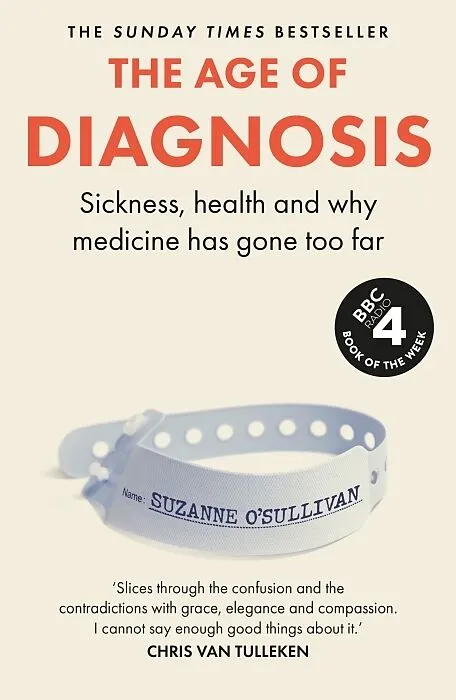
The Age of Diagnosis
Beschreibung
'Slices through the confusion with grace and compassion. I cannot say good enough things about it.' - CHRIS VAN TULLEKEN'A brilliant study of the dangers of overdiagnosis' - GUARDIAN'Compassionate and bracingly independent thinking' - THE TIMES, best books of ...Format auswählen
- Kartonierter EinbandCHF 25.90
Wird oft zusammen gekauft
Andere Kunden kauften auch
Beschreibung
'Slices through the confusion with grace and compassion. I cannot say good enough things about it.' - CHRIS VAN TULLEKEN'A brilliant study of the dangers of overdiagnosis' - GUARDIAN'Compassionate and bracingly independent thinking' - THE TIMES, best books of 2025From autism to allergies, ADHD to long Covid, more people are being labelled with medical conditions than ever before. But can a diagnosis do us more harm than good?The boundaries between sickness and health are being redrawn. Mental health categories are shifting and expanding all the time, radically altering what we consider to be 'normal'. Genetic tests can now detect pathologies decades before people experience symptoms, and sometimes before they're even born. And increased health screening draws more and more people into believing they are unwell.An accurate diagnosis can bring greater understanding and of course improved treatment. But many diagnoses aren't as definitive as we think. And in some cases they risk turning healthy people into patients. Drawing on the stories of real people, as well as decades of clinical practice and the latest medical research, Dr Suzanne O'Sullivan overturns long held assumptions and reframes how we think about illness and health.
Vorwort
An ambitious and nuanced book about modern diagnosis from the neurologist and prize-winning author of It's All In Your Head.
Autorentext
Dr Suzanne O'Sullivan has been a consultant in neurology since 2004, first working at The Royal London Hospital and now as a consultant in clinical neurophysiology and neurology at The National Hospital for Neurology and Neurosurgery, and for a specialist unit based at the Epilepsy Society. She specialises in the investigation of complex epilepsy and also has an active interest in psychogenic disorders. Suzanne's first book It's All in Your Head, won both the Wellcome Book Prize and the Royal Society of Biology Book Prize and The Sleeping Beauties was shortlisted for the Royal Society Science Book Prize. She is from Dublin, Ireland.
Klappentext
She is in my view the best science writer around' SATHNAM SANGHERA
We live in an age of diagnosis: from autism to allergies, ADHD to long Covid, more people are being labelled with medical conditions than ever before. But can a diagnosis do us more harm than good?
In The Age of Diagnosis, neurologist Suzanne O'Sullivan explores how modern medicine is redrawing the boundaries between sickness and health. Genetic tests can now detect pathologies decades before people become unwell, and sometimes before they're even born. Mental health categories like ADHD and depression are shifting and expanding all the time, radically altering what we consider to be 'normal'.
When we are suffering, it's natural to want answers. An accurate diagnosis can bring greater understanding and of course improved treatment. But many diagnoses aren't as definitive as we think. And in some cases they risk turning healthy people unnecessarily into patients.
Drawing on the stories of real people, as well as decades of clinical practice and the latest medical research, O'Sullivan takes us on a moving and revelatory journey through modern illness. Overturning long held assumptions about medical progress, The Age of Diagnosis will change the way you think about your health forever.
Zusammenfassung
'She is in my view the best science writer around' SATHNAM SANGHERA
We live in an age of diagnosis. But have we gone too far?
We live in an age of diagnosis. The advance of sophisticated genetic sequencing techniques means that we may all soon be screened for potential abnormalities. The internet provides a vast array of information that helps us speculate about our symptoms. Conditions like ADHD and Autism are on the rapid rise, while other new categories like Long Covid are driven by patients themselves.
When we are suffering, it feels natural to seek a diagnosis. We want a clear label, understanding, and, of course, treatment. But is diagnosis an unqualified good thing? Could it sometimes even make us worse instead of better?
Through the moving stories of real people, neurologist Suzanne O'Sullivan explores the complex world of modern diagnosis, comparing the impact of a medical label to the pain of not knowing. With scientific authority and compassionate storytelling, she opens up new possibilities for how we might approach our health and our suffering.