
IHR WARENKORB IST AKTUELL LEER.
Haben Sie noch nichts passendes gefunden? Stöbern Sie durch unser komplettes Sortiment.
Oder melden Sie sich an bzw. registrieren Sie sich.
- Kostenlose Lieferung
- Kauf auf Rechnung
- Ex Libris Tiefpreis
- Filiallieferung und 650+ Abholorte
- Rabatt-Bons als Club-Mitglied
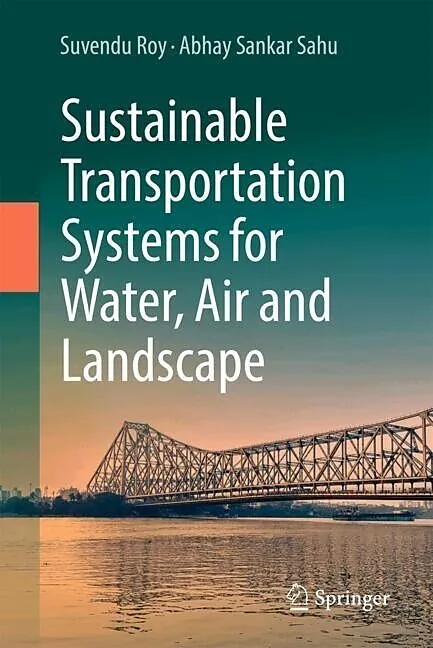
Sustainable Transportation Systems for Water, Air and Landscape
Beschreibung
This book provides an integrated approach to developing transportation infrastructures (TIs) in ways that reduce their effects on water resources, air quality, hydro-geomorphological processes, and ecological systems. It examines the interface between diverse ...Format auswählen
- Fester EinbandCHF 164.40

Wird oft zusammen gekauft
Andere Kunden kauften auch
Beschreibung
This book provides an integrated approach to developing transportation infrastructures (TIs) in ways that reduce their effects on water resources, air quality, hydro-geomorphological processes, and ecological systems. It examines the interface between diverse forms of TI and processes occurring across topography, riverscapes, and ecological landscapes, documenting their effects on the lithosphere, hydrosphere, atmosphere, and biosphere. The book identifies and assesses the negative consequences of transportation infrastructure development through literature reviews, case studies, mapping, geo-environmental modelling and simulation, and practical examples from different countries. It examines impacts including changes to hydrological and geomorphological processes, atmospheric and water pollution, disruption of ecological connectivity, and loss of biodiversity. It also presents approaches for bringing anthropogenic development and environmental processes into greater harmony, with attention to sustainable and resilient transport network planning. The book further considers the effects of climate change on the integrity and serviceability of existing transportation infrastructures and addresses climate change mitigation in transportation systems as part of sustainable development in the Anthropocene. The integrated assessment and management approaches presented provide a basis for informing transportation infrastructure development in other regions and environmental settings.
Provides comprehensive insights into the changing interface between transportation systems and Earth's natural systems Explores sustainable methods to build transport infrastructures with less impact on air, water, and landscapes Covers the effect of climate change on the transport system and recommends future needs for constructing TIs
Autorentext
Dr Suvendu Roy is an Assistant Professor in the Department of Geography, Khalisani Mahavidyalaya, West Bengal, India, with over eight years of teaching and research experience. His research focuses on the interface between anthropogenic activities and changing channel and hillslope geomorphology in tropical regions, integrating field-based investigations of geomorphological processes and landforms with the application of GIS and remote sensing to assess human impacts on landscapes and river systems. Dr. Roy has been actively engaged in research on human-induced changes in river systems since 2013. His work contributes significantly to the emerging domains of Anthropogeomorphology and Transportation Geomorphology, with particular emphasis on infrastructurelandscape interactions, river channel modification, sediment dynamics, flood processes, and sustainability of transportation networks. He also applies GIS and remote sensing techniques to assess geomorphic sensitivity, hydro-geomorphic responses, and anthropogenic stress on riverine and terrestrial systems. Dr. Roy earned his BA in Geography from Burdwan Raj College, The University of Burdwan, his MA in Geography with specialisation in Advanced Geomorphology from The University of Burdwan, and his PhD in Geography (Anthropogeomorphology) from the University of Kalyani, India. He has published more than 27 research papers in Scopus- and SCI-indexed journals and serves as an invited reviewer for leading publishers including Springer, Elsevier, Taylor & Francis, Wiley, and Science Domain. He is a life member of the International Association of Hydrological Sciences (IAHS), Wallingford, UK, the Foundation of Practicing Geographer, Kolkata, India, and the Indian Institute of Geomorphologists, Prayagraj (Allahabad), India. His recent scholarly contributions include the authored book Disturbing Geomorphology by Transportation Infrastructure: Problem, Prospect, and Solution (Springer Geography, 2023) and two edited volumes, Anthropogeomorphology of the BhagirathiHooghly River System in India (CRC Press, 2020) and Floods in the GangaBrahmaputraMeghna Delta (Springer Geography, 2023). Through his teaching, research, and publications, Dr. Roy continues to advance critical discourse on sustainable infrastructure development and humanenvironment interactions in geomorphic systems.
Dr Abhay Sankar Sahu is Professor in the Department of Geography, University of Kalyani, Kalyani, West Bengal, India. He has also served as an Assistant Professor in the Department of Geography, Kashipur M.M. Mahavidyalaya, Purulia, West Bengal, India. He pursued his B.Sc. (Honours), M. Sc., and Ph.D. in Geography from The University of Burdwan, West Bengal, India. His Ph. D. thesis is on 'Environmental Significance of Water-Front Embankments in South and Eastern Medinipur Coast' and he has been awarded in the year of 2010. His research interest covers Environmental Geomorphology, Environmental Geography and Hazard Geography. He is continuously engaged in study and research works on river morphology, waterfront embankments, flood and waterlogging, riverbank erosion, coastal erosion, ecotourism, EIA and EMP, remote sensing and GIS, geographical bigdata and machine learning. He has nearly 20 years of experience in research and teaching, and has contributed more than 45 research papers published in different reputed national and international level journals and edited volumes. Recently, he has published an edited book Environmental Management and Sustainability in India: Case Studies from West Bengal, published by Springer Geography in July 2023. He has completed as a Principal Investigator of a project sponsored by the UGC, New Delhi, India, on 'Toward an Exploration of an Embankment System in the Moyna Flood Basin', and also completed as a Research Investigator of a project under the UGC-BSR start-up grant on 'Environmental Consequences of Water-logging Problem in Purba Medinipur District, West Bengal: Evaluation, Mapping, and Management'. Presently he is working as a Principal Investigator of a project under the RUSA Component- 10 (Entrepreneurship and Career Hub), University of Kalyani, W.B., India, on 'Understanding the problems of homestay tourism in the Mousuni Island of Sundarbans and entrepreneurship development'. He has successfully completed a lot of courses, training programmes and workshops on geospatial technologies, climate change, data analysis and machine learning in geoinformatics organized by the reputed governmental institutions like NATMO, Kolkata; NRSC (ISRO), Hyderabad; ICFRE, Dehradun; IIRS, Dehradun; NRDMS-DST, New Delhi; DSTBT, Kolkata; etc. At present, he is guiding as a supervisor a number of scholars towards their doctoral degree and already five research scholars achieved their Ph.D. award. He is a life member of more than ten different academic associations and institutions.
Inhalt
Chapter 1: Reimagining Transportation Infrastructure: BlueGreenGrey Integration.- Chapter 2: Impacts of Transportation Infrastructures on Water, Air, and Landscape.- Chapter 3: Climate Change and Sustainable Transportation Infrastructures .- Chapter 4: Sustainable Transportation Infrastructures for Water Resources.- Chapter 5: Sustainable Transportation Infrastructures for Improving Air Quality.- Chapter 6: Sustainable Transportation Infrastructures for Geomorphic Landscape.- Chapter 7: Sustainable Transportation Infrastructures for Ecological Landscape.- Chapter 8: Sustainable Transportation Infrastructures: Lessons, Realities, and Futures.