Beschreibung
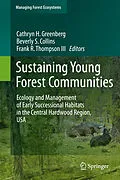
Early successional habitats are disappearing as abandoned farmland, pastures, and cleared forest patches return to forest. This book synthesizes current knowledge and original research to address key issues such as carbon sequestration and sustainability. This...Early successional habitats are disappearing as abandoned farmland, pastures, and cleared forest patches return to forest. This book synthesizes current knowledge and original research to address key issues such as carbon sequestration and sustainability.
This edited volume addresses a rising concern among natural resource scientists and management professionals about decline of the many plant and animal species associated with early-successional habitats, especially within the Central Hardwood Region of the USA. These open habitats, with herbaceous, shrub, or young forest cover, are disappearing as abandoned farmland, pastures, and cleared forest patches return to forest. There are many questions about why, what, where, and how to manage for early successional habitats. In this book, expert scientists and experienced land managers synthesize knowledge and original scientific work to address questions on such topics as wildlife, water, carbon sequestration, natural versus managed disturbance, future scenarios, and sustainable creation and management of early successional habitat in a landscape context.
Only book in print to focus on early successional habitats and their importance for declining wildlife Addresses multiple aspects of early successional habitats on topics including wildlife, water, carbon storage, natural versus managed disturbance, and how they can be sustainably created and managed in a landscape context Focuses on the upland hardwood forest ecosystem, allowing indepth examinations from multiple perspectives Unique, accessible resource for natural resource scientists and management professionals Written by natural resource scientists and management professionals for scientists and management professionals
Klappentext
There is a rising concern among natural resource scientists and managers about decline of the many plant and animal species associated with early successional habitats, especially within the Central Hardwood Region. Open sites with grass, herbaceous, shrub, or incomplete young forest cover are disappearing as abandoned farmland and pastures return to forest and recently harvested or disturbed forests re-grow. There are many questions about why, what, where, and how to manage for early successional habitats. Tradeoffs among ecological services such as carbon storage, hydrologic processes, forest products, and biotic diversity between young, early successional habitats and mature forest are not fully understood. Personal values and attitudes regarding forest management for conservation purposes versus "letting nature take its course," complicate finding common ground on whether and how to create or sustain early successional habitats. In this book, expert scientists and experienced land managers synthesize knowledge and original scientific work to address critical questions sparked by the decline of early successional habitats. We focus on habitats created by natural disturbances or management of upland hardwood forests and discuss how they can be sustainably created and managed in a landscape context. Together, chapters written by ecologists, conservationists, and land managers provide a balanced view of how past, current, and future scenarios affect the extent and quality of early successional habitat and implications for ecosystem services and disturbance-dependant plants and animals in upland hardwood forest of the Central Hardwood Region.
Inhalt
10%
10%