
IHR WARENKORB IST AKTUELL LEER.
Haben Sie noch nichts passendes gefunden? Stöbern Sie durch unser komplettes Sortiment.
Oder melden Sie sich an bzw. registrieren Sie sich.
- Kostenlose Lieferung
- Kauf auf Rechnung
- Ex Libris Tiefpreis
- Filiallieferung und 650+ Abholorte
- Rabatt-Bons als Club-Mitglied
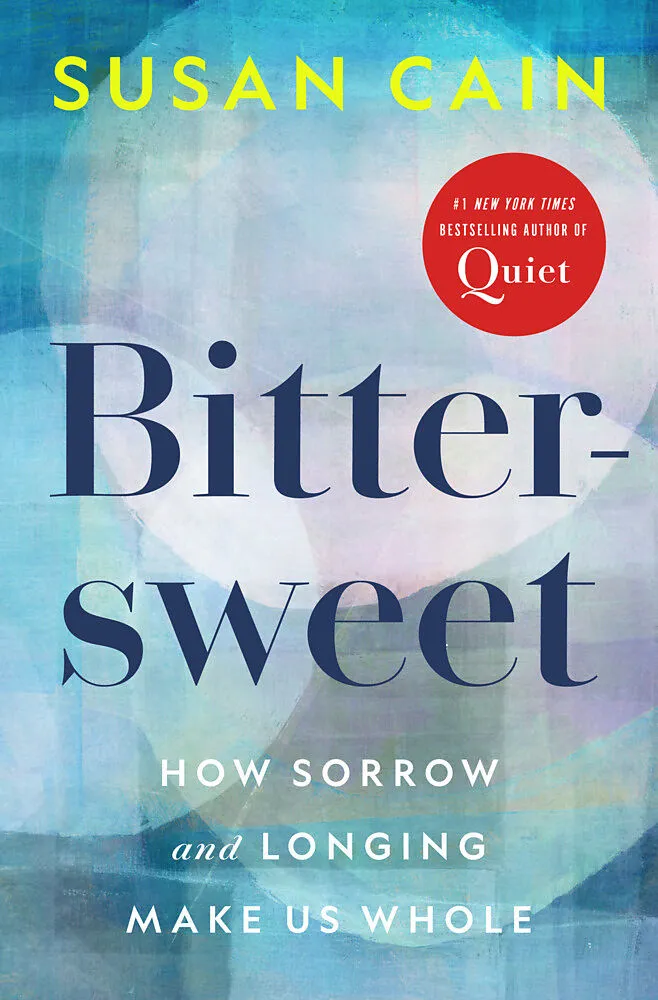
Bittersweet
Beschreibung
Informationen zum Autor Susan Cain Klappentext #1 NEW YORK TIMES BESTSELLER • OPRAH'S BOOK CLUB PICK • The author of the bestselling phenomenon Quiet explores the power of the bittersweet personality, revealing a misunderstood side of mental health a...Format auswählen
- Kartonierter EinbandCHF 13.80
- Fester EinbandCHF 31.10

Wird oft zusammen gekauft
Andere Kunden kauften auch
Beschreibung
Informationen zum Autor Susan Cain Klappentext #1 NEW YORK TIMES BESTSELLER • OPRAH'S BOOK CLUB PICK • The author of the bestselling phenomenon Quiet explores the power of the bittersweet personality, revealing a misunderstood side of mental health and creativity while offering a roadmap to facing heartbreak in order to live life to the fullest. Bittersweet has the power to transform the way you see your life and the world.OPRAH Grabs you by the heart and doesn't let go.BRENÉ BROWN, author of Atlas of the Heart Susan Cain has described and validated my existence once again!GLENNON DOYLE, author of Untamed The perfect cure for toxic positivity.ADAM GRANT, author of Think Again LONGLISTED FOR THE PORCHLIGHT BUSINESS BOOK AWARD • ONE OF THE BEST BOOKS OF THE YEAR: The Wall Street Journal, Mashable Bittersweetness is a tendency to states of longing, poignancy, and sorrow; an acute awareness of passing time; and a curiously piercing joy at the beauty of the world. It recognizes that light and dark, birth and deathbitter and sweetare forever paired. If you've ever wondered why you like sad music . . . If you find comfort or inspiration in a rainy day . . . If you react intensely to music, art, nature, and beauty . . . Then you probably identify with the bittersweet state of mind. With Quiet, Susan Cain urged our society to cultivate space for the undervalued, indispensable introverts among us, thereby revealing an untapped power hidden in plain sight. Now she employs the same mix of research, storytelling, and memoir to explore why we experience sorrow and longing, and how embracing the bittersweetness at the heart of life is the true path to creativity, connection, and transcendence. Cain shows how a bittersweet state of mind is the quiet force that helps us transcend our personal and collective pain, whether from a death or breakup, addiction or illness. If we don't acknowledge our own heartache, she says, we can end up inflicting it on others via abuse, domination, or neglect. But if we realize that all humans knowor will knowloss and suffering, we can turn toward one another. At a time of profound discord and personal anxiety, Bittersweet brings us together in deep and unexpected ways. Leseprobe CHAPTER 1 What is sadness good for? Before you know kindness as the deepest thing inside, you must know sorrow as the other deepest thing. NAOMI SHIHAB NYE In 2010, celebrated Pixar director Pete Docter decided to make an animated film about the wild and woolly emotions of an eleven-year-old girl named Riley. He knew the rough outlines of the story he wanted to tell. The film would open with Riley, uprooted from her Minnesota hometown and plunked down in a new house and school in San Francisco, while also caught in the emotional storm of incoming adolescence. So far, so good. But Docter faced a creative puzzle. He wanted to depict Riley's feelings as lovable animated characters running a control center in her brain, shaping her memories and daily life. But which feelings? Psychologists told him that we have up to twenty-seven different emotions. But you can't tell a good story about so many different characters. Docter needed to narrow it down, and to pick one emotion as the main protagonist. He considered a few different emotions for the starring role, then decided to place Fear at the center of the movie, alongside Joy; partly, he says, because Fear is funny. He considered Sadness, but this seemed unappealing. Docter had grown up in Minnesota, where, he told me, the sanguine norms were clear: The idea that you'd cry in front of people was very uncool. But three years into the development of the filmwith the dialogue already done, the movi...
Autorentext
Susan Cain
Klappentext
#1 NEW YORK TIMES BESTSELLER • OPRAH’S BOOK CLUB PICK • Sadness is your superpower. In her new masterpiece, the author of the bestselling phenomenon Quiet explores the power of the bittersweet personality, revealing a misunderstood side of mental health and creativity while offering a roadmap to facing grief in order to live life to the fullest.
“Bittersweet has the power to transform the way you see your life and the world.”—OPRAH
“Grabs you by the heart and doesn’t let go.”—BRENÉ BROWN, author of Atlas of the Heart
**“Susan Cain has described and validated my existence once again!”—GLENNON DOYLE, author of *Untamed
*“The perfect cure for toxic positivity.”—ADAM GRANT, author of *Think Again
LONGLISTED FOR THE PORCHLIGHT BUSINESS BOOK AWARD • ONE OF THE BEST BOOKS OF THE YEAR: The Wall Street Journal, Mashable
Bittersweetness is a tendency to states of longing, poignancy, and sorrow; an acute awareness of passing time; and a curiously piercing joy at the beauty of the world. It recognizes that light and dark, birth and death—bitter and sweet—are forever paired.
If you’ve ever wondered why you like sad music . . .
If you find comfort or inspiration in a rainy day . . .
If you react intensely to music, art, nature, and beauty . . .
Then you probably identify with the bittersweet state of mind.
With Quiet, Susan Cain urged our society to cultivate space for the undervalued, indispensable introverts among us, thereby revealing an untapped power hidden in plain sight. Now she employs the same mix of research, storytelling, and memoir to explore why we experience sorrow and longing, and how embracing the bittersweetness at the heart of life is the true path to creativity, connection, and transcendence.
Cain shows how a bittersweet state of mind is the quiet force that helps us transcend our personal and collective pain, whether from a death or breakup, addiction or illness. If we don’t acknowledge our own heartache, she says, we can end up inflicting it on others via abuse, domination, or neglect. But if we realize that all humans know—or will know—loss and suffering, we can turn toward one another.
At a time of profound discord and personal anxiety, Bittersweet brings us together in deep and unexpected ways.
Leseprobe
CHAPTER 1
What is sadness good for?
Before you know kindness as the deepest thing inside,
you must know sorrow as the other deepest thing.
—NAOMI SHIHAB NYE
In 2010, celebrated Pixar director Pete Docter decided to make an animated film about the wild and woolly emotions of an eleven-year-old girl named Riley. He knew the rough outlines of the story he wanted to tell. The film would open with Riley, uprooted from her Minnesota hometown and plunked down in a new house and school in San Francisco, while also caught in the emotional storm of incoming adolescence.
So far, so good. But Docter faced a creative puzzle. He wanted to depict Riley’s feelings as lovable animated characters running a control center in her brain, shaping her memories and daily life. But which feelings? Psychologists told him that we have up to twenty-seven different emotions. But you can’t tell a good story about so many different characters. Docter needed to narrow it down, and to pick one emotion as the main protagonist.
He considered a few different emotions for the starring role, then decided to place Fear at the center of the movie, alongside Joy; partly, he says, because Fear is funny. He considered Sadness, but this seemed unappealing. Docter had grown up in Minnesota, where, he told me, the sanguine norms were clear: “The idea that you’d cry in front of people was very uncool.”
But three years into the development of the film—with the dialogue already done, the movie partially animated, the gags with Fear already in place, some of them “qu…