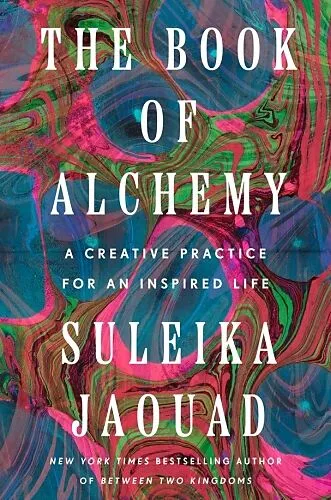
The Book of Alchemy
Beschreibung
A guide to the art of journaling--and a meditation on the central questions of life--by the bestselling author of From the time she was young, Suleika Jaouad has kept a journal. She’s used it to mark life''s biggest occasions and to weather its most fero...Format auswählen
- Fester EinbandCHF 29.15

Wird oft zusammen gekauft
Andere Kunden kauften auch
Beschreibung
A guide to the art of journaling--and a meditation on the central questions of life--by the bestselling author of From the time she was young, Suleika Jaouad has kept a journal. She’s used it to mark life''s biggest occasions and to weather its most ferocious storms. Journaling has buoyed her through illness, heartbreak, and the deepest uncertainty. And she is not alone: for so many people, keeping a journal is an essential tool for navigating both the personal peaks and valleys and the collective challenges of modern life. More than ever, we need a space for puzzling through. In Their insights invite us to inhabit a more inspired life. A companion through challenging times, <The Book of Alchemy <is broken into themes ranging from new beginnings to love, loss, and rebuilding. Whether you’re a lifelong journaler or new to the practice, this book gives you the tools, direction, and encouragement to engage with discomfort, ask questions, peel back the layers, dream daringly, uncover your truest self--and in doing so, to learn to hold the unbearably brutal and astonishingly beautiful facts of life in the same palm.
Autorentext
Suleika Jaouad is the author of the New York Times bestselling memoir Between Two Kingdoms, which has been translated into more than twenty languages. She wrote the Emmy Award-winning New York Times column and video series “Life, Interrupted,” and her essays and feature stories have appeared in The New York Times Magazine, The Atlantic, The Guardian, and Vogue, among others. She is also the subject, along with husband Jon Batiste, of the Oscar-nominated documentary American Symphony—a portrait of two artists during a year of extreme highs and lows. A visual artist, her large-scale watercolors are the focus of several upcoming exhibitions. She is also the creator of the Isolation Journals, a weekly newsletter and global community that harnesses creativity as a tool to navigate life’s interruptions.
Klappentext
NEW YORK TIMES BESTSELLER • A guide to the art of journaling—and a meditation on the central questions of life—by the bestselling author of Between Two Kingdoms, with contributions from Hanif Abdurraqib, Jon Batiste, Salman Rushdie, Gloria Steinem, George Saunders, and many more
“The Book of Alchemy proves on every page that a creative response can be found in every moment of life—regardless of what is happening in the world.”—Elizabeth Gilbert, author of Eat Pray Love
AN NPR BEST BOOK OF THE YEAR
From the time she was young, Suleika Jaouad has kept a journal. She’s used it to mark life's biggest occasions and to weather its most ferocious storms. Journaling has buoyed her through illness, heartbreak, and the deepest uncertainty. And she is not alone: for so many people, keeping a journal is an essential tool for navigating both the personal peaks and valleys and the collective challenges of modern life. More than ever, we need a space for puzzling through.
In The Book of Alchemy, Suleika explores the art of journaling and shares everything she’s learned about how this life-altering practice can help us tap into that mystical trait that exists in every human: creativity. She has gathered wisdom from one hundred writers, artists, and thinkers in the form of essays and writing prompts. Their insights invite us to inhabit a more inspired life.
A companion through challenging times, The Book of Alchemy is broken into themes ranging from new beginnings to love, loss, and rebuilding. Whether you’re a lifelong journaler or new to the practice, this book gives you the tools, direction, and encouragement to engage with discomfort, ask questions, peel back the layers, dream daringly, uncover your truest self—and in doing so, to learn to hold the unbearably brutal and astonishingly beautiful facts of life in the same palm.
Also includes essays from: Martha Beck • Nadia Bolz-Weber • Alain de Botton • Susan Cheever • Lena Dunham • Melissa Febos • Liana Finck • John Green • Marie Howe • Pico Iyer • Oliver Jeffers • Quintin Jones • Michael Koryta • Hanif Kureishi • Kiese Laymon • Cleyvis Natera • Ann Patchett • Esther Perel • Adrienne Raphel • Jenny Rosenstrach • Sarah Ruhl • Sharon Salzberg • Dani Shapiro • Mavis Staples • Linda Sue Park • Nafissa Thompson-Spires • Jia Tolentino • Lindy West • Lidia Yuknavitch • And many others
Leseprobe
Chapter 1
On Beginning
Not long ago, I was invited to a conference billed as a gathering of fifty of the world’s most innovative thinkers. Each day, there were lectures by everyone from leading scientists and tech CEOs to pioneering artists and actors and Arctic explorers. Afterward, we’d meet up in breakout sessions to discuss and debate the implications of their ideas. In these smaller groups, people would often start the conversation by identifying their field, then asking, “And what do you do?”
It’s that oh-so-human need to categorize, to sort by type, but as a writer, I’ve come to dread answering the question. I know the follow-up will be: “What kind of writing?” Much of my work has lived in the realm of memoir, which is often characterized (unfairly, I believe) as navel-gazing and lacking rigor, especially when the author is a young woman. In certain company, I sometimes feel tempted to beef it up, to make it sound more “serious.” Rather than saying, “I wrote a column about being a young adult with cancer,” I find myself wanting to say, “I used to write for the New York Times science section.”
So imagine my inner panic when, in the middle of this group of intellectuals, business scions, and Nobel-winning scientists, I was asked, “A writer, huh? So what is it you’re working on now?”
I was working on this book—this distillation of a practice that has saved my life. “A book about journaling,” I replied. I watched the answer fall flat, just as I’d feared. In that knee-jerk way, I felt I needed to justify it. To explain that, though journaling is sometimes dismissed as a childish pastime you do in a pretty diary with a tiny lock, its physical and mental benefits have been extolled in study after study—everything from reducing symptoms of depression and anxiety to improving working memory and strengthening the immune system. “It’s something everyone could benefit from,” I wanted to shout, “maybe especially you!”
I didn’t say that. Instead, I quickly changed the subject back to them and their pursuits. I have always thought of journaling as serious—it has had very serious applications in my life—but I’ve never been very good at the one-sentence pitch. If I could go back and explain why I feel called to share my particular approach to journaling, I would say this: I do this work because I know it works—and it’s necessary. The studies may be useful to sway the skeptics, but they’re just confirmation of what I already know on a soul level.
This is not just true in my own life. I have heard from more people than I can count testifying to how transformative this practice has been. A fifty-year-old woman who was stuck in a soul-sucking corporate job used these tools to realize her lifelong dream of becoming a writer: Her journal entries turned into prize-winning essays; she wrote a memoir, got an agent, and quit her day job. A mother reeling from the loss of her daughter began making art from these prompts, which allowed her to feel connected to her daughter and begin to process her grief. An oncologist who saw th…