
IHR WARENKORB IST AKTUELL LEER.
Haben Sie noch nichts passendes gefunden? Stöbern Sie durch unser komplettes Sortiment.
Oder melden Sie sich an bzw. registrieren Sie sich.
- Kostenlose Lieferung
- Kauf auf Rechnung
- Ex Libris Tiefpreis
- Filiallieferung und 650+ Abholorte
- Rabatt-Bons als Club-Mitglied
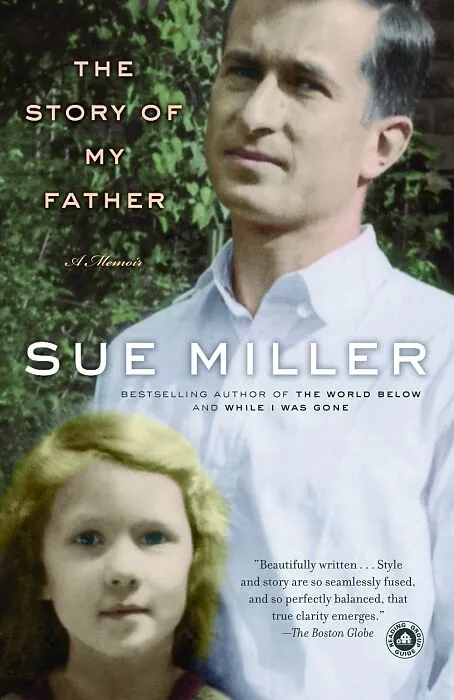
The Story of My Father
Beschreibung
Zusatztext Deft! sincere and eloquent. . . With the care! restraint! and consummate skill that define her well-crafted and bestselling fiction! Sue Miller has now written a beautiful! compelling memoir about her father and his downward spiral into the demonic ...Format auswählen
- Kartonierter EinbandCHF 18.00

Wird oft zusammen gekauft
Andere Kunden kauften auch
Beschreibung
Zusatztext Deft! sincere and eloquent. . . With the care! restraint! and consummate skill that define her well-crafted and bestselling fiction! Sue Miller has now written a beautiful! compelling memoir about her father and his downward spiral into the demonic grasp of Alzheimer's disease. San Francisco Chronicle Stunning. . . A remarkable yet self-effacing testament to the vagaries of memory . . . [Miller] turns a man's simple life and tragic death into a lively and unforgettable narrative. Atlanta Journal-Constitution Deeply affecting . . . Like any memoir! this one is a way of bringing its subject back to life. . . . [This] beautifully written little book takes on the narrative power of first-rate fiction. Milwaukee Journal Sentinel Beautifully written . . . Style and story are so seamlessly fused! and so perfectly balanced! that true clarity emerges." The Boston Globe Informationen zum Autor Sue Miller Klappentext A NEW YORK TIMES NOTABLE BOOK In the fall of 1988, Sue Miller found herself caring for her father, James Nichols, once a truly vital man, as he succumbed to Alzheimer's disease. Beginning an intensely personal journey, she recalls the bitter irony of watching this church historian wrestle with his increasingly befuddled notion of time and meaning. She details the struggles with doctors, her own choices, and the attempt to find a caring response to a disease whose special cruelty is to diminish the humanity of those it strikes. In luminous prose, Sue Miller has fashioned a compassionate inventory of two lives, a memoir destined to offer comfort to all sons and daughters struggling to make peace with their fathers and with themselves.Chapter One SOME QUALITY in my father's voice always changed when he spoke of my unclesthe one who'd been incarcerated in a federal prison in the Second World War, and the one who'd given a year of his life at that time to alternate service. I don't remember now how or even whether my father explained their choices to me, or how I came to know what those choices were; but long before I understood any of that, I understood by the shift in my father's voice how much he admired them. I understood that he believed they'd done the right thing, the hard thing. They were conscientious objectors, my uncles, in a war that was seen as good and justthough they made their stand even before America entered that war, when they were required to register for the draft in 1940, the first peacetime draft in the nation's history. Both of my uncles felt that even in a just warperhaps especially in a just war men should follow their conscience. Like my father, both were radical Christians. They believed that the Jesus who conceived of human life as having the potential for moral goodness was speaking of a necessary action to be taken when he called on his followers to love their enemies, to pray for those who persecuted them, to turn the other cheek to those who struck them. And so my uncles acted. One of them refused to acknowledge that the state might have the right to command him to kill another human being and didn't register at all; he was the one who went to jail. The other registered but asked to be exempted from that command on religious grounds and was given alternative service. For years I didn't think to question my father about his own choices during World War Two. I suppose I assumed, on those rare occasions when it might have occurred to me to think about it at all, that he had escaped the issue somehow because of having childrenmy older brother was born in August of 1941. I'm not sure when I learned he'd taken the exemption available to him as an ordained minister, or whether that too was just an assumption, accurate in this case. At any rate, it is what I finally assumed. And then further assumed that t...
#8220;Deft, sincere and eloquent. . . With the care, restraint, and consummate skill that define her well-crafted and bestselling fiction, Sue Miller has now written a beautiful, compelling memoir about her father and his downward spiral into the demonic grasp of Alzheimer’s disease.”
*—San Francisco Chronicle
*“Stunning. . . A remarkable yet self-effacing testament to the vagaries of memory . . . [Miller] turns a man’s simple life and tragic death into a lively and unforgettable narrative.”
*—Atlanta Journal-Constitution
*“Deeply affecting . . . Like any memoir, this one is a way of bringing its subject back to life. . . . [This] beautifully written little book takes on the narrative power of first-rate fiction.”
*—Milwaukee Journal Sentinel
*“Beautifully written . . . Style and story are so seamlessly fused, and so perfectly balanced, that true clarity emerges."
*—The Boston Globe
Autorentext
Sue Miller
Klappentext
A NEW YORK TIMES NOTABLE BOOK
In the fall of 1988, Sue Miller found herself caring for her father, James Nichols, once a truly vital man, as he succumbed to Alzheimer's disease. Beginning an intensely personal journey, she recalls the bitter irony of watching this church historian wrestle with his increasingly befuddled notion of time and meaning. She details the struggles with doctors, her own choices, and the attempt to find a caring response to a disease whose special cruelty is to diminish the humanity of those it strikes. In luminous prose, Sue Miller has fashioned a compassionate inventory of two lives, a memoir destined to offer comfort to all sons and daughters struggling to make peace with their fathers and with themselves.
Leseprobe
Chapter One
SOME QUALITY in my father’s voice always changed when he spoke of my uncles—the one who’d been incarcerated in a federal prison in the Second World War, and the one who’d given a year of his life at that time to alternate service. I don’t remember now how or even whether my father explained their choices to me, or how I came to know what those choices were; but long before I understood any of that, I understood by the shift in my father’s voice how much he admired them. I understood that he believed they’d done the right thing, the hard thing.
They were conscientious objectors, my uncles, in a war that was seen as “good” and “just”—though they made their stand even before America entered that war, when they were required to register for the draft in 1940, the first peacetime draft in the nation’s history. Both of my uncles felt that even in a just war—perhaps especially in a just war— men should follow their conscience. Like my father, both were radical Christians. They believed that the Jesus who conceived of human life as having the potential for moral goodness was speaking of a necessary action to be taken when he called on his followers to love their enemies, to pray for those who persecuted them, to turn the other cheek to those who struck them.
And so my uncles acted. One of them refused to acknowledge that the state might have the right to command him to kill another human being and didn’t register at all; he was the one who went to jail. The other registered but asked to be exempted from that command on religious grounds and was given alternative service.
For years I didn’t think to question my father about his own choices during World War Two. I suppose I assumed, on those rare occasions when it might have occurred to me to think about it at all, that he had escaped the issue somehow because of having children—my older brother was born in August of 1941. I’m not sure when I learned he’d taken the exemption available to him as an ordained minister, or whether that too was just an assumption, accurate in this case. At any rate, it is what I finally assumed. And then further assumed that the tone of awe and admiration that…