
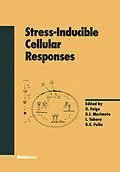
Stress-Inducible Cellular Responses
Beschreibung
This book will deal with heat shock proteins and more generally with stress-related inducible gene expression as a pleiotropic adaptive response to stress. It presents a textbook-like overview of the field not only to heat shock experts, but to physiologists, ...Format auswählen
- Kartonierter EinbandCHF 69.20

Wird oft zusammen gekauft
Andere Kunden kauften auch
Beschreibung
This book will deal with heat shock proteins and more generally with stress-related inducible gene expression as a pleiotropic adaptive response to stress. It presents a textbook-like overview of the field not only to heat shock experts, but to physiologists, pharmacologists, physicians, neuropsychologists and others as well. It is intended to be a state-of-the-art and perspective book rather than an up-to-date presentation of recent data. It should provide a basis for new experimetal approaches to fields at the edge of the classical heat shock field. Drugs, UV irradiation and environmental toxics will be considered as important modulators of the stress response. Radical scavengers such as superoxide dismutases and inducible regulatory proteins of metallic ion status such as ferritin as well as immunophilins and protein disulfide isomerases will be considered within the frame of stress proteins. The potential practical applications of heat shock proteins in toxicology and medicine for the diagnosis, prognosis and eventually therapy of clinical conditions associated with an increased oxidative burden will be outlined. The role of heat shock proteins in the modulation of immune responses will also be included. The book considers heat shock from a broad perspective including fields for which heat-shock may become of importance in the very near future such as cellular responses to environmental stresses and complex stress responses under specific conditions. It was also felt timely to incorporate a whole section on medical and technological applications of stress proteins. The book will be invaluable for all those working on stress and is intended for every "stress laboratory" as a source of knowledge and perspectives.
Klappentext
"Stress-Inducible Cellular Responses" are essential for survival of cells of all species under adverse conditions. At the molecular level this is ac complished by a number of essential proteins all of which are involved in various aspects of cellular homeostasis through protective or adaptive func tions. Interestingly, molecules such as heat shock proteins have properties as molecular chaperones and are involved in multiple stages of a protein biogenesis beginning with synthesis and involvement in the subsequent events of folding, translocation, and degradation. Heat shock proteins have a critical role to stabilize folding intermediates and to prevent protein aggregation. In addition, stress-proteins serve as targets for immune re sponses in immune homeostasis and during infections. The term Stress Response reflects the rapid growth and breadth of this field which includes the molecular and cellular response to drugs, UV irra diation, oxidative stress, and environmental toxins. Radical scavengers such as superoxide dismutases and inducible regulatory proteins of metall ic ion status such as ferritin and protein disulfide isomerases are also con sidered within the frame of stress proteins and represent a new and growing class of stress responses.
Inhalt
I: Functions of stress proteins in unstressed cells.- Normal protein folding machinery.- Roles for hsp70 in protein translocation across membranes of organelles.- Protein folding and assembly in the endoplasmic reticulum.- Involvement of molecular chaperones in intracellular protein breakdown.- Molecular chaperoning of steroid hormone receptors.- Protein disulfide isomerase: A multifunctional protein of the endoplasmic reticulum.- II: Regulation of inducible stress responses.- Sensing stress and responding to stress.- The transcriptional regulation of heat shock genes: A plethora of heat shock factors and regulatory conditions.- Transcriptional regulation of stress-inducible genes in procaryotes.- The impact of oxidative stress on eukaryotic iron metabolism.- Heat-shock induced protein modifications and modulation of enzyme activities.- SOS response as an adaptive response to DNA damage in prokaryotes.- III: Cellular responses to specific stresses.- Transcriptional regulators of oxidative stress-inducible genes in prokaryotes and eukaryotes.- UV activation of mammalian stress proteins.- Signaling events controlling the molecular response to genotoxic stress.- Mammalian DNA repair responses and genomic instability.- Toxic metal-responsive gene transcription.- Tumor necrosis factor and lymphotoxin: Protection against oxidative stress through induction of MnSOD.- IV: Paradigms for complex stress responses.- Viral infection.- Infection, autoimmunity and autoimmune disease.- Stress proteins in inflammation.- Attenuated heat shock transcriptional response in aging: Molecular mechanism and implication in the biology of aging.- V: Applications of stress responses in toxicology and pharmacology.- Stress proteins as molecular biomarkers for environmental toxicology.- Thermotolerance and heat shock proteins: Possible involvement of Ku autoantigen in regulating HSP70 expression.- Heat shock proteins as immunological carriers and vaccines.- Regulation of thermotolerance and ischemic tolerance.- Future applications.- Outlook.


