
IHR WARENKORB IST AKTUELL LEER.
Haben Sie noch nichts passendes gefunden? Stöbern Sie durch unser komplettes Sortiment.
Oder melden Sie sich an bzw. registrieren Sie sich.
- Kostenlose Lieferung
- Kauf auf Rechnung
- Ex Libris Tiefpreis
- Filiallieferung und 650+ Abholorte
- Rabatt-Bons als Club-Mitglied
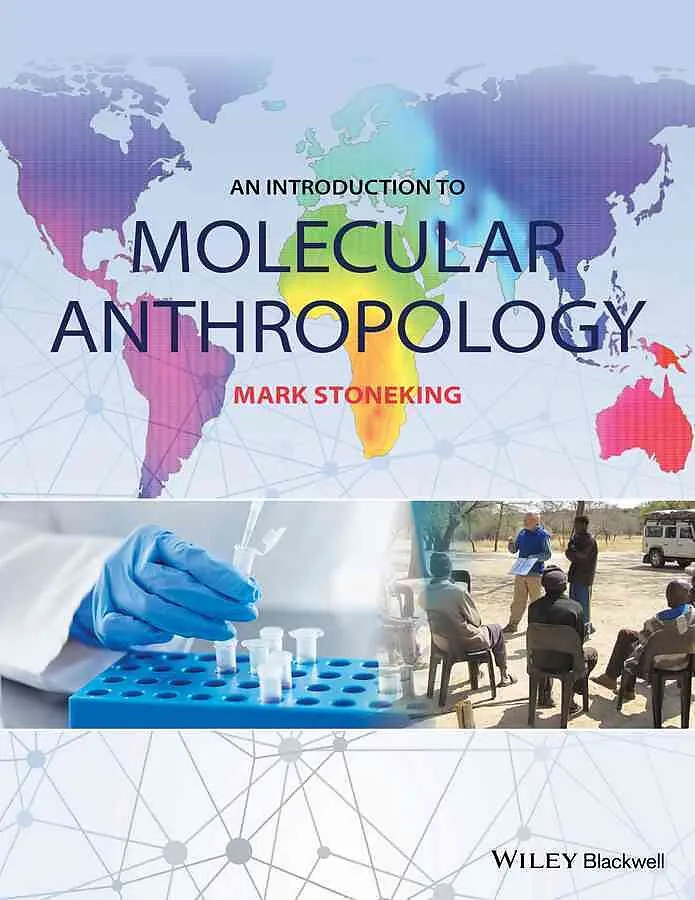
An Introduction to Molecular Anthropology
Beschreibung
Informationen zum Autor Mark Stoneking directs the Human Population History group in the Department of Evolutionary Genetics, Max Planck Institute for Evolutionary Anthropology, Leipzig, Germany, and is Honorary Professor of Biological Anthropology at the Univ...Format auswählen
- Kartonierter EinbandCHF 158.00

Wird oft zusammen gekauft
Andere Kunden kauften auch
Beschreibung
Informationen zum Autor Mark Stoneking directs the Human Population History group in the Department of Evolutionary Genetics, Max Planck Institute for Evolutionary Anthropology, Leipzig, Germany, and is Honorary Professor of Biological Anthropology at the University of Leipzig. Klappentext Molecular anthropology uses molecular genetic methods to address questions and issues of anthropological interest. More specifically, molecular anthropology is concerned with genetic evidence concerning human origins, migrations, and population relationships, including related topics such as the role of recent natural selection in human population differentiation, or the impact of particular social systems on patterns of human genetic variation.Organized into three major sections, An Introduction to Molecular Anthropology first covers the basics of genetics - what genes are, what they do, and how they do it - as well as how genes behave in populations and how evolution influences them. The following section provides an overview of the different kinds of genetic variation in humans, and how this variation is analyzed and used to make evolutionary inferences. The third section concludes with a presentation of the current state of genetic evidence for human origins, the spread of humans around the world, the role of selection and adaptation in human evolution, and the impact of culture on human genetic variation. A final, concluding chapter discusses various aspects of molecular anthropology in the genomics era, including personal ancestry testing and personal genomics. An Introduction to Molecular Anthropology is an invaluable resource for students studying human evolution, biological anthropology, or molecular anthropology, as well as a reference for anthropologists and anyone else interested in the genetic history of humans. Zusammenfassung Filling a unique and unmet need for introductory molecular anthropology texts, An Introduction to Molecular Anthropology covers basic genetic concepts, such as what genes are, what they do, and how they are inherited. Inhaltsverzeichnis Preface xi Chapter 1 Genes: How they are inherited 1 Blood and ABO blood groups 1 Inheritance of ABO blood groups 3 Inheritance of more than one gene: ABO and rhesus blood groups 4 Sex chromosomes 9 Determining how traits are inherited: Pedigree analysis 10 What is-and isn't-inherited 12 Concluding remarks 14 Chapter 2 What genes are, what they do, and how they do it 15 Chromosomes, proteins, and nucleic acids: Figuring out what genes are 15 The structure of genes and what they do: The central dogma and the flow of information 18 How genes do what they do: Transcription and translation 19 The genetic code 22 DNA replication 23 The consequences of mutations 23 What causes mutations? 25 A final cautionary note 26 Chapter 3 Genes in populations 27 What is a population? 27 The concept of "effective population size" 28 The sex ratio and Ne 29 Inbreeding and Ne 30 Variation in population size over time and Ne30 >e 31 Ne for humans 33 Chapter 4 A simple model: Hardy-Weinberg equilibrium 35 The gene pool with no evolution: The Hardy-Weinberg principle 35 Exceptions 38 A real-life example 39 Some practical uses for Hardy-Weinberg 41 Chapter 5 Evolutionary forces 45 Non-random mating 45 Small population size 48 Mutation 53 Migration 56 Selection 60 Evolutionary forces: Summary 68 Chapter 6 Molecular evolution 69 Functionally less important molecules (or parts of molecules) evolve faster than more important ones 70 Conservative substitutions occur more frequently than disruptive ones 71 The rate of molecular evo...
Autorentext
Mark Stoneking directs the Human Population History group in the Department of Evolutionary Genetics, Max Planck Institute for Evolutionary Anthropology, Leipzig, Germany, and is Honorary Professor of Biological Anthropology at the University of Leipzig.
Klappentext
Molecular anthropology uses molecular genetic methods to address questions and issues of anthropological interest. More specifically, molecular anthropology is concerned with genetic evidence concerning human origins, migrations, and population relationships, including related topics such as the role of recent natural selection in human population differentiation, or the impact of particular social systems on patterns of human genetic variation. Organized into three major sections, An Introduction to Molecular Anthropology first covers the basics of genetics - what genes are, what they do, and how they do it - as well as how genes behave in populations and how evolution influences them. The following section provides an overview of the different kinds of genetic variation in humans, and how this variation is analyzed and used to make evolutionary inferences. The third section concludes with a presentation of the current state of genetic evidence for human origins, the spread of humans around the world, the role of selection and adaptation in human evolution, and the impact of culture on human genetic variation. A final, concluding chapter discusses various aspects of molecular anthropology in the genomics era, including personal ancestry testing and personal genomics. An Introduction to Molecular Anthropology is an invaluable resource for students studying human evolution, biological anthropology, or molecular anthropology, as well as a reference for anthropologists and anyone else interested in the genetic history of humans.
Zusammenfassung
Filling a unique and unmet need for introductory molecular anthropology texts, An Introduction to Molecular Anthropology covers basic genetic concepts, such as what genes are, what they do, and how they are inherited.
Inhalt
Preface xi
Chapter 1 Genes: How they are inherited 1
Blood and ABO blood groups 1
Inheritance of ABO blood groups 3
Inheritance of more than one gene: ABO and rhesus blood groups 4
Sex chromosomes 9
Determining how traits are inherited: Pedigree analysis 10
What is-and isn't-inherited 12
Concluding remarks 14
Chapter 2 What genes are, what they do, and how they do it 15
Chromosomes, proteins, and nucleic acids: Figuring out what genes are 15
The structure of genes and what they do: The central dogma and the flow of information 18
How genes do what they do: Transcription and translation 19
The genetic code 22
DNA replication 23
The consequences of mutations 23
What causes mutations? 25
A final cautionary note 26
Chapter 3 Genes in populations 27
What is a population? 27
The concept of "effective population size" 28
The sex ratio and Ne 29
Inbreeding and Ne 30
Variation in population size over time and Ne30
e 31
Ne for humans 33
Chapter 4 A simple model: Hardy-Weinberg equilibrium 35
The gene pool with no evolution: The Hardy-Weinberg principle 35
Exceptions 38
A real-life example 39
Some practical uses for Hardy-Weinberg 41
Chapter 5 Evolutionary forces 45
Non-random mating 45
Small population size 48
Mutation 53
Migration 56
Selection 60
Evolutionary forces: Summary 68
Chapter 6 Molecular evolution 69
Functionally less important molecules (or parts of molecules) evolve faster than more important ones 70
Conservative substitutions occur more frequently than disruptive ones 71
The rate of molecular evolution is approximately constant 72
Contrasting phenotypic and molecular evolution 73
How do new gene functions arise? 74
Gene regulation and phenotypic evolution 77
Chapter 7 Genetic markers 79
Classical markers: Immunogenetic markers 79
Classical markers: Biochemical polymorphisms 81
The first DNA markers: Restriction fragment length polymorphisms 84
Polymerase chain reaction 86
DNA sequencing: The sanger method 89
Next-generation sequencing 90
Targeting single DNA bases: SNPs 92
Variation in length 94
Other structural variation 99
Concluding remarks 100
**Chapter 8 Sampli…