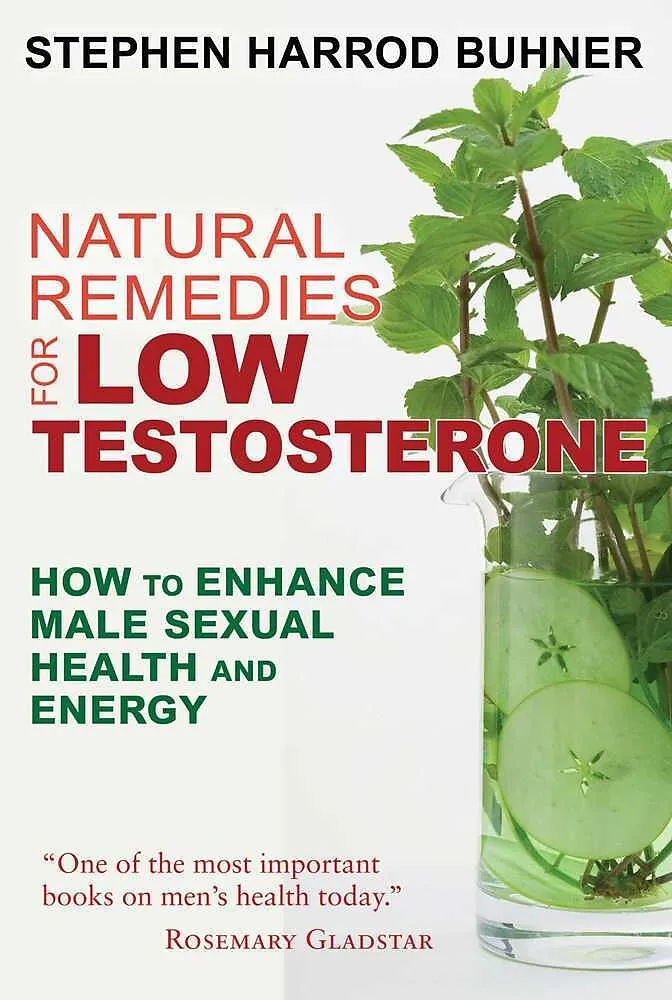
Natural Remedies for Low Testosterone
Beschreibung
Zusatztext Stephen Buhner combines scientific research! traditional knowledge! and personal experience into what may be one of the most important books available on men's health today. He primarily explores the little-known territory of men's hormonal changes ...Format auswählen
- Kartonierter EinbandCHF 18.70

Wird oft zusammen gekauft
Andere Kunden kauften auch
Beschreibung
Zusatztext Stephen Buhner combines scientific research! traditional knowledge! and personal experience into what may be one of the most important books available on men's health today. He primarily explores the little-known territory of men's hormonal changes during midlife--a transition in men's life that has unfortunately been largely ignored! often denied by modern medicine--and offers simple sensible solutions to help men navigate this important cycle of their lives. Informationen zum Autor Stephen Harrod Buhner (19522022) was the senior researcher for the Foundation for Gaian Studies. He was the award-winning author of many books, including Healing Lyme , Healing Lyme Disease Coinfections , Herbal Antibiotics , The Secret Teachings of Plants , and Plant Intelligence and the Imaginal Realm . He taught for more than 30 years throughout North America and Europe on herbal medicine, the sacredness of plants, and the intelligence of nature. Klappentext The recognition of andropause, the middle-age stage in male development comparable to women's menopause, is hampered by the lack of a clear outward manifestation of the chemistry and physiology specific to aging men. Men are still capable of reproduction well into and beyond middle age. Yet a man's sexual desire and potency varies, often according to his testosterone level. Recent studies show that the lowered testosterone levels endemic in aging men are being exacerbated by environmental agents. Testosterone-blocking estrogen agents are present in insecticides, industrial materials, pharmaceuticals, and foods. Men are daily inundated with a "cocktail" of estrogen agents that alter the fine balance of testosterone that makes them male. Chapter 1 The Importance of Natural Hormone Support for Men Most of us can remember our shift into adolescence: our bodies were changing radically, preparing us for reproduction and independence. At the same time, just as significantly, our minds and spirits were shifting--preparing us for life as adults, for love and families of our own, for careers, and for our individual and unique destinies. These shifts had tremendous physical and emotional impacts as we moved into adolescence. Our bodies changed shape, our skin altered, we began growing hair in places it had not grown before, our voices deepened. In short, our entire appearance changed. And just as impactful, how the world saw us changed. We had to get used to a new image, a new face. The person we saw when we looked in mirrors, those at home and those in people's eyes, had changed. The young boy we were was gone, a new someone had come to take his place. This new way of being--the adolescent physical, emotional, and spiritual processes that came into being as we moved out of childhood--has a certain life span, a certain arc, a period of growth, development, maturity, and then senescence or ending. A transition process, in many ways similar to adolescence, occurs again when we enter the middle of life. We look in the mirror and notice that someone new is taking the place of that young man we once were. And then, one day, we mildly flirt with a young woman, much as we have always done since our movement into adolescence, and instead of the usual response, one we had become used to over long years of social interaction, the response we get is different. Her eyes respond with, You're old enough to be my father. And in that moment the changes that have begun catch up with us. We, whether we want to or not, enter middle age. Historically, many cultures have understood this transition much better than we now do. Middle age was recognized for its importance as were the tasks that lay before the newly awakening middle-aged man. James Hillman, a Jungian analyst exploring the territory of middle and old age and its importance, makes a deeply insightful point in his book T...
ldquo;Stephen Buhner combines scientific research, traditional knowledge, and personal experience into what may be one of the most important books available on men’s health today. He primarily explores the little-known territory of men’s hormonal changes during midlife--a transition in men’s life that has unfortunately been largely ignored, often denied by modern medicine--and offers simple sensible solutions to help men navigate this important cycle of their lives.”
Autorentext
Stephen Harrod Buhner (1952–2022) was the senior researcher for the Foundation for Gaian Studies. He was the award-winning author of many books, including Healing Lyme, Healing Lyme Disease Coinfections, Herbal Antibiotics, The Secret Teachings of Plants, and Plant Intelligence and the Imaginal Realm. He taught for more than 30 years throughout North America and Europe on herbal medicine, the sacredness of plants, and the intelligence of nature.
Klappentext
How to maintain optimum testosterone levels for the male body through the use of herbs, nutritional supplements, and diet
• Explains the phenomenon of male menopause and how to deal with it
• Reveals scientific evidence of testosterone-blocking agents in the environment that alter men’s essential chemistry as they age
• Presents safe, organic plant medicines that can restore optimum testosterone levels
• Contains the most up-to-date natural treatments for impotence, infertility, and prostate disease
The recognition of andropause, the middle-age stage in male development comparable to women’s menopause, is hampered by the lack of a clear outward manifestation of the chemistry and physiology specific to aging men. Men are still capable of reproduction well into and beyond middle age. Yet a man’s sexual desire and potency varies, often according to his testosterone level. Recent studies show that the lowered testosterone levels endemic in aging men--a gradual drop that is quite normal--are being exacerbated by environmental agents. Testosterone-blocking estrogen agents are present in insecticides, industrial materials, pharmaceuticals, and foods. Men are daily inundated with a “cocktail” of estrogen agents that alter the fine balance of testosterone that makes them male. But as recent medical research has revealed, testosterone replacement therapy with Low T drugs is not a good option because of the increased risk of cardiovascular problems, such as heart attack and stroke, and because the body can become dependent on pharmaceutical testosterone and stop producing any on its own.
In this updated edition of The Natural Testosterone Plan, Stephen Harrod Buhner shows why men need help to maintain their testosterone levels as they age and explains how naturally occurring phytoandrogens--plant medicines that contain male hormones--can safely remedy the depletion exerted by the environment. Buhner details how each phytoandrogen works, when its use is indicated, and the most appropriate method of application, providing all men with safe, natural, and effective means of maintaining optimum testosterone levels well into old age.
Leseprobe
**Chapter 1
The Importance of Natural Hormone Support for Men**
Most of us can remember our shift into adolescence: our bodies were changing radically, preparing us for reproduction and independence. At the same time, just as significantly, our minds and spirits were shifting--preparing us for life as adults, for love and families of our own, for careers, and for our individual and unique destinies.
These shifts had tremendous physical and emotional impacts as we moved into adolescence. Our bodies changed shape, our skin altered, we began growing hair in places it had not grown before, our voices deepened. In short, our entire appearance changed. And just as impactful, how the world saw us changed. We had to get used to a new “image,” a new “face.” The person we saw when we looked in …