
IHR WARENKORB IST AKTUELL LEER.
Haben Sie noch nichts passendes gefunden? Stöbern Sie durch unser komplettes Sortiment.
Oder melden Sie sich an bzw. registrieren Sie sich.
- Kostenlose Lieferung
- Kauf auf Rechnung
- Ex Libris Tiefpreis
- Filiallieferung und 650+ Abholorte
- Rabatt-Bons als Club-Mitglied
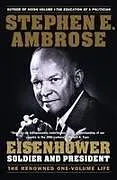
Eisenhower
Beschreibung
Zusatztext James MacGregor Bums Fascinating....An important case study in military and political leader ship. Informationen zum Autor Stephen E. Ambrose was a renowned historian and acclaimed author of more than thirty books. Among his New York Times bestselle...Format auswählen
- Kartonierter Einband (Kt)CHF 29.20
Wird oft zusammen gekauft
Andere Kunden kauften auch
Beschreibung
Zusatztext James MacGregor Bums Fascinating....An important case study in military and political leader ship. Informationen zum Autor Stephen E. Ambrose was a renowned historian and acclaimed author of more than thirty books. Among his New York Times bestsellers are Nothing Like It In the World, Citizen Soldiers, Band of Brothers, D-Day, and Undaunted Courage . Dr. Ambrose was a retired Boyd Professor of History at the University of New Orleans and a contributing editor for the Quarterly Journal of Military History . Klappentext Stephen E. Ambrose draws upon extensive sources, an unprecedented degree of scholarship, and numerous interviews with Eisenhower himself to offer the fullest, richest, and most objective rendering yet of the soldier who became president. Leseprobe Chapter 1 Abilene, West Point, World War I He was born on October 14, 1890, in a small rented frame house, not much more than a shack, beside the railroad tracks in Denison, Texas. He was the third son of David and Ida Stover Eisenhower. They were members of the Mennonites, fundamentalists in their religion, and pacifists. David was a common laborer -- he had once owned a general store in Hope, Kansas, purchased with an inheritance from his father, but it had failed. In 1891 he moved to Abilene, Kansas, where a relative had found him a job as a mechanic at the Belle Springs Creamery. When the Eisenhowers stepped onto the train platform in Abilene, David had in his pocket the sum total of his capital, $10. In a small two-story white frame house at 201 South East Fourth Street, set on a three-acre plot, David and Ida raised six strong, healthy boys -- Arthur (born 1886), Edgar (1889), Dwight, Roy (1892), Earl (1898), and Milton (1899). The Eisenhowers were respected around town, but the family was in no way prominent. David held no elective office, provided no community leadership. Still the Eisenhowers were content. The parents were frugal out of necessity, but they were proud and ambitious, if not for themselves, then for their sons. "I have found out in later years we were very poor," Dwight said on June 4, 1952, on the occasion of laying the cornerstone of the Eisenhower Museum in Abilene, across the street from his boyhood home, "but the glory of America is that we didn't know it then. All that we knew was that our parents -- of great courage -- could say to us, 'Opportunity is all about you. Reach out and take it.'" By most standards, David and Ida never reached out to take that opportunity themselves. Instead they invested in their sons the hopes they once had for themselves. They taught the simple virtues of honesty, self-reliance, integrity, fear of God, and ambition. They wanted their sons to succeed in a wider setting than Abilene, or even Kansas. They gave the boys the feeling, as one of them later put it, that "if you stay home you will always be looked upon as a boy." Eisenhower's home life revolved around worship. Every day, morning and night, the family members got down on their knees to pray. David read from the Bible before meals, then asked for a blessing. After the meals the boys washed the dishes, then gathered around David for Bible reading. "Finally there was bedtime," Earl recalled, "when Dad got up and wound the clock on the wall. You could hear the ticking no matter where you were. When Dad started winding, you might as well get ready for bed, for that was the bedtime signal." During the day, the boys saw little of their father, who worked in the creamery from 6:00 A.M. to 6:00 P.M. "Mother was by far the greatest personal influence in our lives," Dwight remembered. She supervised their chores, made their meals, selected and mended their clothes, soothed their hurts, praised their accomplishments, and lightened the atmosphere. Milton, the youngest, said that "Father and Mother complemented one anothe...
James MacGregor Bums Fascinating....An important case study in military and political leader ship.
Autorentext
Stephen E. Ambrose was a renowned historian and acclaimed author of more than thirty books. Among his New York Times bestsellers are Nothing Like It In the World, Citizen Soldiers, Band of Brothers, D-Day, and Undaunted Courage. Dr. Ambrose was a retired Boyd Professor of History at the University of New Orleans and a contributing editor for the Quarterly Journal of Military History.
Klappentext
Stephen E. Ambrose draws upon extensive sources, an unprecedented degree of scholarship, and numerous interviews with Eisenhower himself to offer the fullest, richest, and most objective rendering yet of the soldier who became president.
Zusammenfassung
This biography of Dwight D. Eisenhower takes the reader up through his military career and his leadership as Allied Supreme Commander, his presidency - the first of the Cold War - and his relations with family, friends and Roosevelt, Churchill, Stalin, McCarthy, Nixon, LBJ and others.
Leseprobe
Chapter 1
Abilene, West Point, World War I
He was born on October 14, 1890, in a small rented frame house, not much more than a shack, beside the railroad tracks in Denison, Texas. He was the third son of David and Ida Stover Eisenhower. They were members of the Mennonites, fundamentalists in their religion, and pacifists. David was a common laborer -- he had once owned a general store in Hope, Kansas, purchased with an inheritance from his father, but it had failed. In 1891 he moved to Abilene, Kansas, where a relative had found him a job as a mechanic at the Belle Springs Creamery. When the Eisenhowers stepped onto the train platform in Abilene, David had in his pocket the sum total of his capital, $10.
In a small two-story white frame house at 201 South East Fourth Street, set on a three-acre plot, David and Ida raised six strong, healthy boys -- Arthur (born 1886), Edgar (1889), Dwight, Roy (1892), Earl (1898), and Milton (1899). The Eisenhowers were respected around town, but the family was in no way prominent. David held no elective office, provided no community leadership. Still the Eisenhowers were content. The parents were frugal out of necessity, but they were proud and ambitious, if not for themselves, then for their sons.
"I have found out in later years we were very poor," Dwight said on June 4, 1952, on the occasion of laying the cornerstone of the Eisenhower Museum in Abilene, across the street from his boyhood home, "but the glory of America is that we didn't know it then. All that we knew was that our parents -- of great courage -- could say to us, 'Opportunity is all about you. Reach out and take it.'"
By most standards, David and Ida never reached out to take that opportunity themselves. Instead they invested in their sons the hopes they once had for themselves. They taught the simple virtues of honesty, self-reliance, integrity, fear of God, and ambition. They wanted their sons to succeed in a wider setting than Abilene, or even Kansas. They gave the boys the feeling, as one of them later put it, that "if you stay home you will always be looked upon as a boy."
Eisenhower's home life revolved around worship. Every day, morning and night, the family members got down on their knees to pray. David read from the Bible before meals, then asked for a blessing. After the meals the boys washed the dishes, then gathered around David for Bible reading. "Finally there was bedtime," Earl recalled, "when Dad got up and wound the clock on the wall. You could hear the ticking no matter where you were. When Dad started winding, you might as well get ready for bed, for that was the bedtime signal."
During the day, the boys saw little of their father, who worked in the creamery from 6:00 A.M. to 6:00 P.M. "Mother was by far the greatest personal influence in our lives," Dwight remembered. She supervised their chores, made their meals, selected and mended their clothes, soothed their hurts, praised their accom…