Haben Sie noch nichts passendes gefunden? Stöbern Sie durch unser komplettes Sortiment.
Oder melden Sie sich an bzw. registrieren Sie sich.


Beschreibung
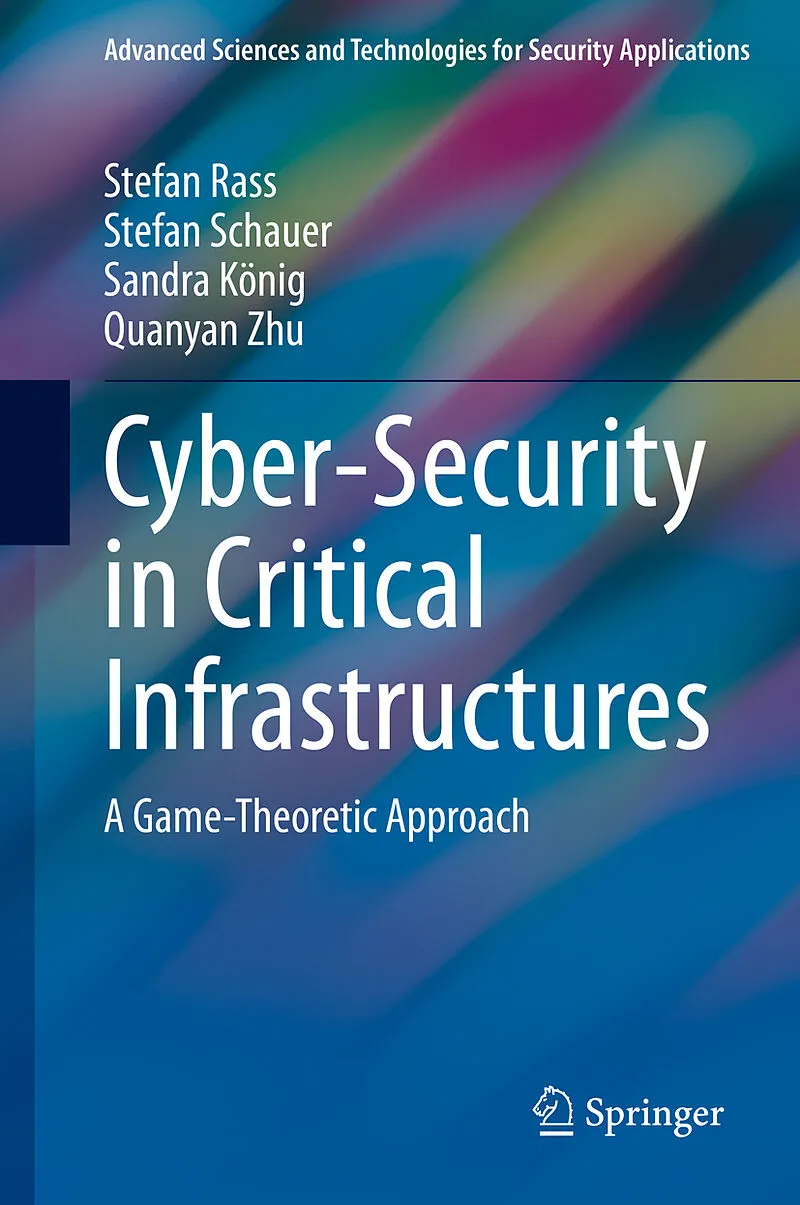
This book presents a compendium of selected game- and decision-theoretic models to achieve and assess the security of critical infrastructures. Given contemporary reports on security incidents of various kinds, we can see a paradigm shift to attacks of an inc...This book presents a compendium of selected game- and decision-theoretic models to achieve and assess the security of critical infrastructures. Given contemporary reports on security incidents of various kinds, we can see a paradigm shift to attacks of an increasingly heterogeneous nature, combining different techniques into what we know as an advanced persistent threat. Security precautions must match these diverse threat patterns in an equally diverse manner; in response, this book provides a wealth of techniques for protection and mitigation.
Much traditional security research has a narrow focus on specific attack scenarios or applications, and strives to make an attack practically impossible. A more recent approach to security views it as a scenario in which the cost of an attack exceeds the potential reward. This does not rule out the possibility of an attack but minimizes its likelihood to the least possible risk. The book follows this economic definition of security, offering a management scientific view that seeks a balance between security investments and their resulting benefits. It focuses on optimization of resources in light of threats such as terrorism and advanced persistent threats.
Drawing on the authors' experience and inspired by real case studies, the book provides a systematic approach to critical infrastructure security and resilience. Presenting a mixture of theoretical work and practical success stories, the book is chiefly intended for students and practitioners seeking an introduction to game- and decision-theoretic techniques for security. The required mathematical concepts are self-contained, rigorously introduced, and illustrated by case studies. The book also provides software tools that help guide readers in the practical use of the scientific models and computational frameworks.
Offers an educational approach to security based on game- and decision theory for critical infrastructures Contains a self-contained theory and requires only a very basic understanding of mathematics Includes showcase examples, showing where theory originates from, and how it carries to practical applications Covers quite different types of games and decision problems, even alluding to other disciplines like psychology
Autorentext
Dr. Miralem Mehic received his Ph.D. degree in telecommunications from the VSB-Technical University of Ostrava (Czechia). Also, he studied at the AGH University of Science and Technology, Krakow, Poland, Alpen-Adria-Universitat Klagenfurt, Austria and Austrian Institute of Technology (AIT) in Department of Digital Safety & Security Business Units - Optical Quantum Technology, Vienna & Klagenfurt, Austria. Miralem is the author of the unique QKD network simulator QKDNETSIM (www.qkdnetsim.info). His field of research is related to the quality of service and management of QKD networks with a focus on real-time traffic and the utilization of network resources. He is involved in several international projects. He is the national principal investigator of EU H2020 OPENQKD and the NATO SPS QUANTUM5 projects. Since 2019, Miralem is the Head of Department of Telecommunications at the University of Sarajevo, Bosnia and Herzegovina. Dr. Stefan Rass is a full professor for Security at the LIT Secure and Correct Systems Lab at the Johannes Kepler University Linz, and an associate professor at the University of Klagenfurt, Austria. He has a double master degree in Computer Science and Technical Mathematics, and a Dr. in mathematics (with a focus on security). His research interests include general system security, in particular, applications of quantum cryptography and information-theoretic security. He authored numerous papers on applied quantum cryptography, the complexity of network design and network provisioning towards quality-of-security, as well as the book "Cryptography for Security and Privacy in Cloud Computing", published by Artech House in 2013. Recent research focuses on security based on game and decision theory, which originated from the security analysis of quantum networks. This theory has been published in the "Game Theory for Security and Risk Management: From Theory to Practice", published by Springer Birkhäuser, DOI: 10.1007/978-3-319-75268-6. Dr. Peppino Fazio received a graduate degree in Computer Science in May 2004 and a PhD in Electronics and Telecommunications Engineering in January 2008, both from the University of Calabria, Cosenza, Italy. From June 2004, he was at the Telecommunications Group, University of Calabria. From May 2008 to September 2008, he was a Visiting Researcher with the UPV of Valencia (Spain), GRC Research Group. Today he is an Assistant Professor at the Ca' Foscari University (DSMN) and senior researcher at the VSB-TUO in Czechia. He has authored and co-authored more than 115 papers for international journals and conference proceedings. His research interests include IP QoS architectures, adaptive wireless networks, mobile ad hoc networks, quantum key distribution networks, and vehicular ad hoc networks. He has been a member of various startup companies and is recipient of international awards (e.g. the Intel Business Challenge Award in 2013). Dr. Miroslav Voznak received the PhD. degree in telecommunications from the Faculty of Electrical Engineering and Computer Science, VSB - Technical University of Ostrava, Czechia, and completed his habilitation in 2002 and 2009, respectively. He was appointed Professor of Electronics and Communication technologies in 2017. He is author and co-author more than 300 results indexed in WoS and over the hundred industrial outcomes incl. patents, utility models or certified metodologies. Since 2013, he has been leading the Dept. of Telecommunications and since 2017, also big data analysis lab, both in VSB-Technical University of Ostrava. His research interests include wireless networks, network security, quality of service and knowledge datamining in networks. According to the Stanford University study released in 2021, he is one of the World's Top 2% scientists in Networking and Telecommunications.
Inhalt
Part 1. Introduction.- 1. Introduction.- 2. Critical Infrastructures.- 3. Mathematical Decision Making.- 4. Types of Games.- 5. Bounded Rationality.- Part II Security Games.- 6. Risk Management.- 7. Insurance.- 8. Patrolling and Surveillance Games. 9. Optimal Inspection Plans.- 10. Defense-in-Depth-Games.- 11. Cryptographic Games.- 12. Practicalities.- Acronyms.- Glossary.- List of Symbols.- Index.