
IHR WARENKORB IST AKTUELL LEER.
Haben Sie noch nichts passendes gefunden? Stöbern Sie durch unser komplettes Sortiment.
Oder melden Sie sich an bzw. registrieren Sie sich.
- Kostenlose Lieferung
- Kauf auf Rechnung
- Ex Libris Tiefpreis
- Filiallieferung und 650+ Abholorte
- Rabatt-Bons als Club-Mitglied
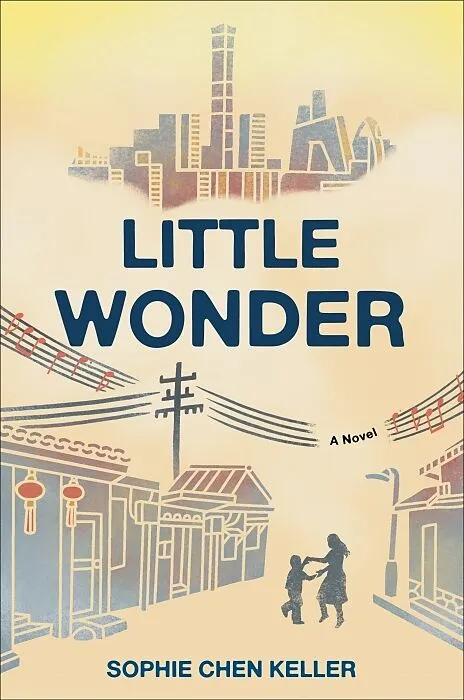
Little Wonder: Oprah's Book Club
Beschreibung
A musical prodigy and his mother spend years searching for each other in this beautiful novel of hope, perseverance, and love. A SWEEPING NOVEL FROM JENNA BUSH HAGER’S NEW VENTURE, THOUSAND VOICES. Song is a nobody--just a;food delivery worker from a vil...Format auswählen
- Fester EinbandCHF 31.60
Wird oft zusammen gekauft
Andere Kunden kauften auch
Beschreibung
A musical prodigy and his mother spend years searching for each other in this beautiful novel of hope, perseverance, and love. A SWEEPING NOVEL FROM JENNA BUSH HAGER’S NEW VENTURE, THOUSAND VOICES. Song is a nobody--just a;food delivery worker from a village in Northeastern China--but her son, River, is a little wonder.; At the age of four, he toddled to a piano and tapped out his favorite song. At eight, he mastered;Liszt''s three Liebestraume; at ten, he blazed through the complete set of Chopin''s études. And at every step, through the valleys;of loss, illness, and poverty, Song is there to light his way--until finally, at the age of eleven,;River is invited to study with a preeminent teacher in Beijing. But in the chaos of Beijing Railway Station on the busiest day of the year, Song faces every mother''s nightmare: She loses her grip on River’s;little;hand and is unable to find him after a desperate, harrowing search.; Over the next days, weeks, and eventually, years, Song and River fight to forge a path back to each other as they carve out new lives that carry them farther apart. An evocative exploration of a mother’s love and a son’s yearning, As every musician knows: You start in one key. You wander to other keys, strange and distant places. But in the end, you always come back home.
Autorentext
Sophie Chen Keller is the author of The Luster of Lost Things, which was also released in Germany, Italy, the United Kingdom, and the Netherlands. Her first publication came at the age of fifteen, with a short story in Glimmer Train literary magazine. A classically trained pianist, she was born in China and raised in California; after graduating from Harvard, she lived in New York City and Beijing before moving to Germany, where she currently resides with her husband and two children.
Klappentext
**OPRAH’S BOOK CLUB PICK • A musical prodigy and his mother spend years searching for each other in this “tender, heartfelt novel about love, loss, and the enduring power of a mother’s love” (Kristin Hannah, #1 New York Times bestselling author of The Women).
A SWEEPING NOVEL FROM JENNA BUSH HAGER’S THOUSAND VOICES
“An immersive journey amid the sights and sounds of urban China as a migrant mother and son follow a seemingly impossible dream inspired by their love of music—and their devotion to each other . . . Keep something handy to dry your eyes.”—Charmaine Wilkerson, New York Times bestselling author of Black Cake**
Song is a nobody—just a food delivery worker from a village in Northeast China—but her son, River, is a little wonder.
At the age of four, he toddles to a piano and taps out his favorite song. At eight, he masters Liszt’s three Liebestraume; at ten, he blazes through the complete set of Chopin’s études. And at every step, through the valleys of loss, illness, and poverty, Song is there to light his way—until finally, at the age of eleven, River is invited to study with a preeminent teacher in Beijing.
But in the chaos of Beijing Railway Station on the busiest day of the year, Song faces every mother’s nightmare: She loses her grip on River’s little hand and is unable to find him after a desperate, harrowing search.
Over the next days, weeks, and eventually, years, Song and River fight to forge a path back to each other as they carve out new lives that carry them farther apart. An evocative exploration of a mother’s love and a son’s yearning, Little Wonder takes us on an extraordinary journey through a modern Beijing that pulses with the music of humanity and its impossible—and impossibly brave—hopes.
As every musician knows: You start in one key. You wander to other keys, strange and distant places. But in the end, you always come back home.
Leseprobe
1
February 2016, Harbin Railway Station
on the eve of the New Year, the train to Beijing pulled into Harbin Railway Station as a thousand people jostled at the gate, bound for a thousand homes. The babble grew fierce—it was time, the time had come. Song helped River into his backpack and handed him their bag of snacks for the journey. One at a time, she loaded up the rest of their things, small and large—several bags looped around each shoulder, the biggest one on her back, looming over her head.
As the gate opened, she picked up the rice sacks she’d stuffed with winter clothes and cooking supplies, two in each hand, and shouted, “Follow me, son.”
The mass of people surged—young people in their school tracksuits, rich people in shoes that had never touched the earth, retired people and other people who collected dust, working in the sun—and Song moved forward with the determination of a mule. The bags creaked around her, straining against their straps. Someone stepped on her heel and she felt the pile of bags sway and she leaned to the other side and willed them back into place. She made sure River was beside her and there he was, as she knew he would be, hugging her side, grasping at her sleeve.
“Stay with me,” Song said anyway, and they fought through the gate and squeezed onto the escalator and spilled out onto the platform where the train waited and the tracks stretched clear to the setting sun.
People dashed toward the open doors, shouting as they pushed their suitcases past Song, and she crouched and began to run, too. A bag slipped down her shoulder, forcing her to run like she had one leg, lopsided. The pots tied to the bag clanged in warning. Making her way down the platform, she peered through the windows of the cars. She had booked their tickets two months ago but with every migrant worker in China doing the same thing, the only tickets left had been for standing room on the slow train.
It happened every year, like birds flying south and salmon swimming upstream; the nation’s people heeded the call of the Spring Festival and flooded the railways and airways and highways by the millions to rejoin their families. Now, as Song searched for standing room, she saw only people—braced against armrests, sitting on suitcases, pressed back-to-back in the aisles.
The conductor swung out of a doorway as Song passed. “All aboard! Everybody squeeze in,” he bellowed in Song’s ear, and she stopped at the next car and shouted for River over the whistle of the train.
“Quickly! Get on,” she panted, looking up and down the platform. It was emptying, the last of the passengers pushing into the train.
“Squeeze in, squeeze in,” the conductor urged, pulling people into his car, herding them closer together.
The train hissed and spat and the conductor hollered, “If you want to make it home for the Spring Festival, for heaven’s sake, squeeze. Otherwise you’ll be left behind.”
Song lunged for the nearest doorway. Setting one foot inside the car, she forced herself into a wall of bodies. “Make room, la! Make room, o!”
The bodies were warm and moist from simmering inside the train. Song pushed at them until they yielded and she kept pushing until both of her feet and all of her bags were inside the train. She set down the rice sacks.
“Come on, River. Your turn,” she puffed, sticking her hand through the doorway.
River shook his head, staring at the people crammed in the train corridor, toeing the edge of the doorway, and they blinked back at him like goldfish.
The door sighed and began to slide shut. With a yelp, River sprang toward her and she caught him by the elbows and pedaled backward, ignoring the gasps of the people behind her.
“You’re squeezing me to death,” someone snapped, pushing back a…