Beschreibung
Autorentext Dr. Richard Messnarz studierte an der TU in Graz und sponsionierte zum Diplom-Ingenieur im Jahr 1990. Von 1990-96 arbeitete er an der TU Graz als Forschungsassistent und Vortragender zu Programmiertechnik und Systemarchitekturen und arbeitete paral...Autorentext
Dr. Richard Messnarz studierte an der TU in Graz und sponsionierte zum Diplom-Ingenieur im Jahr 1990. Von 1990-96 arbeitete er an der TU Graz als Forschungsassistent und Vortragender zu Programmiertechnik und Systemarchitekturen und arbeitete parallel an seiner Dissertation zum BOOTSTRAP-Projekt. 1995 promovierte er zum Doktor der Technischen Wissenschaften. 1997 übernahm er die Leitung von ISCN. Er ist Vorsitzender der European-Software-Process-Improvement-Initiative und Conference Chair des Programmkomitees der EuroSPI-Konferenzreihe. 2003 war er Coach für Prozessverbesserungen in der deutschen SOQRATES-Initiative und ab 2004 Moderator von firmenübergreifenden Task Forces, die gemeinsam an Prozessverbesserungsthemen arbeiten. Derzeit ist er als Automotive SPICE ® und ISO 15504 Principal Assessor für führende österreichische und deutsche Unternehmen tätig und leitet einige EU-Initiativen zum Thema Innovation, Prozessverbesserung und europaweite Zertifizierung.
Klappentext
Software Process Improvement - EuroSPI 2006 Conference.- SPI and Processes.- Developing Software with Scrum in a Small Cross-Organizational Project.- Implementing an ISO 9001 Certified Process.- Software Process in Practice: A Grounded Theory of the Irish Software Industry.- SPI and Problem/Risk Management.- Improving the Software Problem Management Process: A Case Study.- A Framework for Overcoming Supplier Related Threats in Global Projects.- Three Case-Studies on Common Software Process Problems in Software Company Acquisitions.- SPI Measurement.- Simple Indicators for Tracking Software Process Improvement Progress.- Investigating Suitability of Software Process and Metrics for Statistical Process Control.- Current Practices of Measuring Quality in Finnish Software Engineering Industry.- SPI and Process Modelling.- An Industry-Based Evaluation of Process Modeling Techniques.- Process Model Difference Analysis for Supporting Process Evolution.- Changing Role of SPI - Opportunities and Challenges of Process Modeling.- SPI and Human Success Factors.- Mentality Patterns: Capturing and Dealing Explicitly with Recurring Turns of Mind in Software Development.- Improving by Involving: A Case Study in a Small Software Company.- Trust Facilitating Good Software Outsourcing Relationships.- SPI Implementation.- Assessing Software Replacement Success: An Industrial Case Study Applying Four Approaches.- Leveraging Feedback on Processes in SOA Projects.- Taba Workstation: Supporting Software Process Improvement Initiatives Based on Software Standards and Maturity Models.
Zusammenfassung
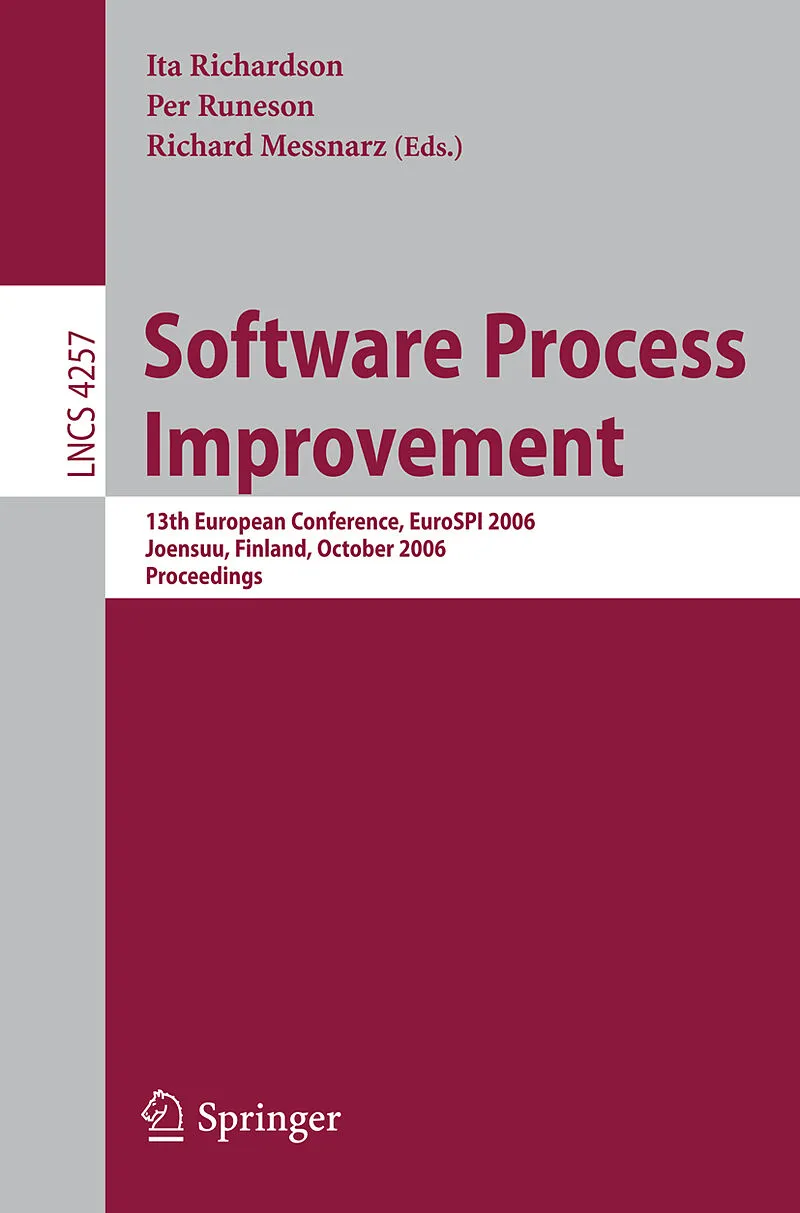
This book constitutes the refereed proceeding of the 13th European Software Process Improvement Conference, EuroSPI 2006, held in Joensuu, Finland in October 2006. The 18 revised full papers presented were carefully reviewed and selected from 62 submissions.
Inhalt
Software Process Improvement EuroSPI 2006 Conference.- SPI and Processes.- Developing Software with Scrum in a Small Cross-Organizational Project.- Implementing an ISO 9001 Certified Process.- Software Process in Practice: A Grounded Theory of the Irish Software Industry.- SPI and Problem/Risk Management.- Improving the Software Problem Management Process: A Case Study.- A Framework for Overcoming Supplier Related Threats in Global Projects.- Three Case-Studies on Common Software Process Problems in Software Company Acquisitions.- SPI Measurement.- Simple Indicators for Tracking Software Process Improvement Progress.- Investigating Suitability of Software Process and Metrics for Statistical Process Control.- Current Practices of Measuring Quality in Finnish Software Engineering Industry.- SPI and Process Modelling.- An Industry-Based Evaluation of Process Modeling Techniques.- Process Model Difference Analysis for Supporting Process Evolution.- Changing Role of SPI Opportunities and Challenges of Process Modeling.- SPI and Human Success Factors.- Mentality Patterns: Capturing and Dealing Explicitly with Recurring Turns of Mind in Software Development.- Improving by Involving: A Case Study in a Small Software Company.- Trust Facilitating Good Software Outsourcing Relationships.- SPI Implementation.- Assessing Software Replacement Success: An Industrial Case Study Applying Four Approaches.- Leveraging Feedback on Processes in SOA Projects.- Taba Workstation: Supporting Software Process Improvement Initiatives Based on Software Standards and Maturity Models.