Haben Sie noch nichts passendes gefunden? Stöbern Sie durch unser komplettes Sortiment.
Oder melden Sie sich an bzw. registrieren Sie sich.


Beschreibung
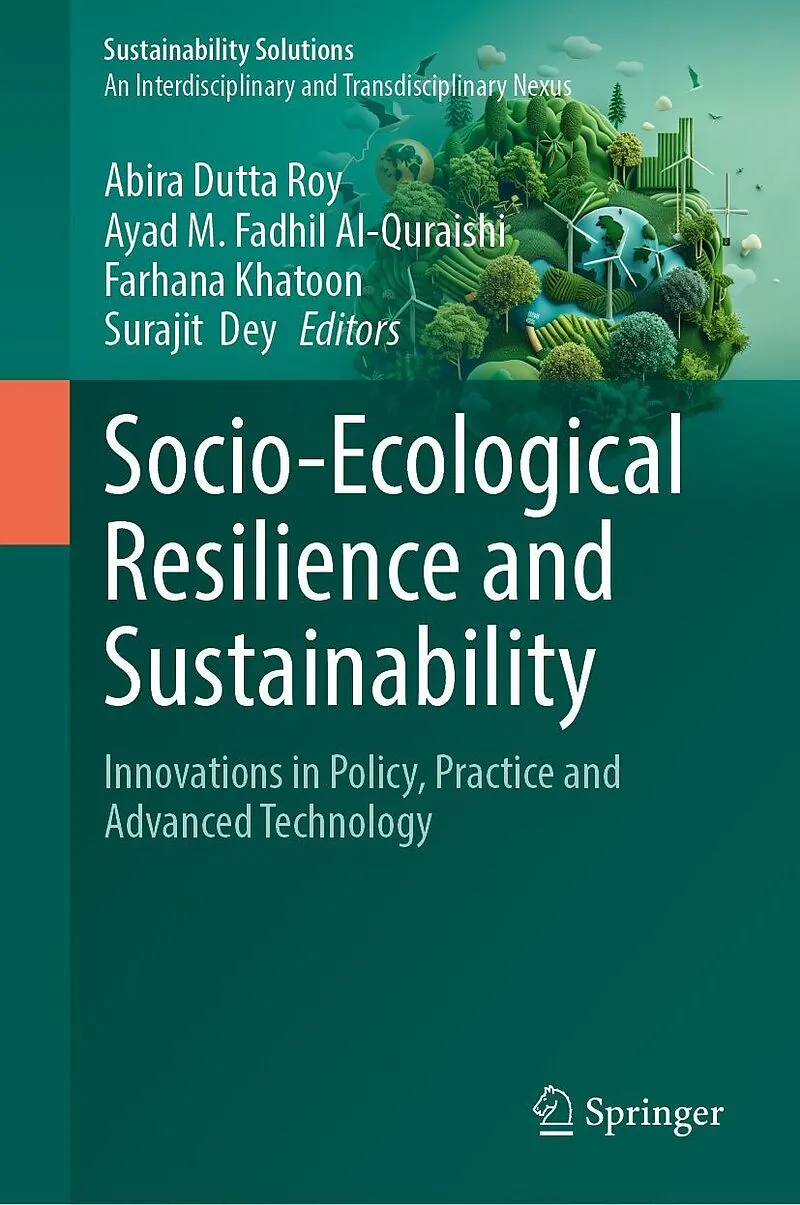
This book provides a comprehensive, interdisciplinary approach to sustainability by integrating technological innovations, governance frameworks, and socio-economic strategies to address pressing environmental issues. Using AI, GIS, remote sensing, deep learn...
This book provides a comprehensive, interdisciplinary approach to sustainability by integrating technological innovations, governance frameworks, and socio-economic strategies to address pressing environmental issues. Using AI, GIS, remote sensing, deep learning, and decision support systems, it investigates climate resilience, environmental conservation, and human-environment interactions through feasible alternatives. The book focuses on governance strategies, renewable energy transitions, smart cities, and circular economies as ways to promote sustainable development. It draws attention to the ways in which AI-powered models and GIS technology might assist in making decisions related to conserving biodiversity, disaster risk reduction, climate adaption, and sustainable resource management. This volume's emphasis on practical applications and policy integration, with case studies showcasing actual initiatives for social justice, environmental sustainability, and economic resilience, is one of its strongest points. The book is a useful tool for researchers, policymakers, corporate sustainability specialists, and practitioners looking for data-driven plans for a resilient and sustainable future since it connects scientific research with governance, financial strategies, and policymaking.
Autorentext
Dr. Abira Dutta Roy is an Assistant Professor in the Department of Geography at Bankura Zilla Saradamani Mahila Mahavidyapith. With over six years of teaching and 15 years of research experience, she specializes in hydrometeorology, urban landscapes, and glacial dynamics using remote sensing and geoinformatics. She earned her Ph.D. and M.Phil from the Centre for the Study of Regional Development, Jawaharlal Nehru University, completed her master's from the Delhi School of Economics, University of Delhi, and graduated from Banaras Hindu University.
Dr. Ayad M. Fadhil Al-Quraishi is a Professor of Remote Sensing and GIS at Tishk International University, Erbil, Iraq. He holds a Ph.D. Eng. in Geodetection and IT from China University of Geosciences, China (2004), with extensive teaching and research experience. He has supervised and examined 60+ postgraduate students at Ph.D. and M.Sc. levels in Iraqi and international universities. He has published 80+ research papers, edited four books published by Springer, and contributed to 21 book chapters. He has participated in 40+ international conferences, workshops, and symposia. He serves as Guest Editor for Remote Sensing and Water (MDPI) and the Journal of Applied Remote Sensing (SPIE), an Editorial Board Member of Discover Soil (Springer Nature), and Editor-in-Chief of the Eurasian Journal of Science and Engineering (EAJSE). He was a Fulbright Visiting Scholar at Michigan State University, USA, in 2011, and a Visiting Professor at the University of Alabama, USA, in 2022 and 2025.
Dr. Farhana Khatoon is an Assistant Professor in the Department of Geography at the University of Allahabad, Prayagraj. Her doctoral research, titled An Intergenerational Analysis of Employment Characteristics and Educational Levels of Muslims in Urban India (19992010), provides an in-depth examination of employment patterns among Muslims in urban India, highlighting inter-religious disparities, low participation in regular wage employment, and significant occupational mobility across generations.
Dr. Khatoon is the author of a book and 15 research articles published in reputed journals by Springer and Elsevier. She has extensive experience with large-scale sample survey data, such as the Census, NFHS, and NSSO, and with software such as ArcGIS, QGIS, SPSS, and R-Studio. Her primary research interest is analysing and exploring issues confronting society's marginalised groups, with a focus on the fundamental issues affecting the Scheduled Castes, Scheduled Tribes, Women, and Minorities.
Surajit Dey is a doctoral research scholar in the Department of Geography at Bankura University, West Bengal, with a strong academic orientation toward applied geospatial science and environmental analysis. His research interests focus on remote sensing- and GIS-based hydro-climatological assessment under climate change scenarios, with particular emphasis on water resources, hydrological processes, and environmental sustainability. He has developed substantial technical expertise in satellite data processing, spatial analysis, and geospatial modelling using advanced platforms and programming tools such as Google Earth Engine, Python, SPSS, and R. His use of Python supports geospatial data analysis, workflow automation, and the integration of remote sensing datasets with statistical and machine-learning approaches for environmental assessment.
Inhalt
SectionI: Foundations Of Sustainability An Interdisciplinary Approaches.- Introduction.- Global Dynamics of Climate Resilience Research within the Sustainable Development Goals Framework: A Bibliometric Analysis (20152025).- SectionII: Environmental Impacts, Climate Change, And Disaster Resilience.- Environmental Impacts of Kufa and Najaf Cement Factories Waste on Biodiversity State in Semi-Desert Soils, Najaf-Iraq.- Urban Growth and Environmental Change in Bandarawela, Sri Lanka: A Two-Decade Geospatial Study (20052025).- Land Use/Land Cover Transformations and Their Interactions with Climate Change: A Spatio-Temporal Analysis in Alexandria Governorate, Egypt.- Climate-Induced Agricultural Vulnerability in Bankura District: A Spatial Mapping Approach.- Women as Pillars of Resilience: Their Role in Disaster Management in India.- Dimensions of Vulnerability to COVID-19: A Situational Analysis.- Climate Change and Vector-Borne Diseases: Integrating Geospatial Epidemiology with Multi-Omics Approaches for Sustainable Solutions.- SectionIII: Smart Technologies, Ai, Gis, And Data-Driven Sustainability.- Integrating Remote Sensing and GIS for Land Cover Change Detection and Sustainable Strategy Development in the Lake Guiers Basin, Senegal.- Monitoring and Predicting Change in Wetlands Using Remote Sensing and GIS: A Case Study of Dankuni Wetlands and Its Adjoining Areas.- A GeospatialGeomorphological Framework for Assessing Land Use and Land Cover Changes and Their Impacts on Sustainable Development in El-Arish, Northern Sinai.- Monitoring urban growth and land use dynamics in Medinipur Sadar subdivision of West Bengal: An integrated Remote Sensing and GIS based approach.- Google Earth Engine for Sustainability: An Agricultural Perspective.-
Multidimensional Poverty Modelling Using a Multi-Criteria Decision-Making Approach: A Case Study of Egypt's Governorates.- SectionIV: Food, Water, Energy, And Circular Economy Models.- Potential of Existing Agricultural Practices in Enhancing Soil Organic Carbon in the Lateritic Soils of Birbhum, West Bengal, India.- Circular Economy: A New Pathway to Sustainability in Africa.- SectionV: Societal Impacts, Equity, And Sustainable Livelihoods.- NTFP Diversity, Socio-Economic Potential and Their Management in Surguja District, Chhattisgarh, India.- Assessing Public Awareness of Egypt's Natural Protectorates: Cairo as a Case Study.- Sustainability Concerns of Ganga Sagar Mela: A Yearly Event of a Mass Pilgrimage Organised on The Vulnerable Sagar Island, West Bengal, India.- Social Sustainability in an Underdeveloped Region: A Study from Bankura District in West Bengal, India.- Sustainability and Forest-Based Livelihoods under Climate Change: Adaptive Practices of the Cholanaickan Community in Karimpuzha Wildlife Sanctuary, Nilgiri Biosphere Reserve.- Tourism Sustainability in Manali, Himachal Pradesh: A Tourist's Perception Study.-
Gendering Sustainability in Urban Spaces: A Case Study of Kolkata.- Tracking Synergies Between Gender Equality and Climate Action SDGs: Progress and Gaps in Performance Measurement in India.- Women Hawkers and Public Toilet Services: An Analysis of Kolkata's Organised and Unorganised Se…